Sourdough Ratio Logo

Sourdough Baking Blog

Expert guides, tips, and techniques to master every aspect of sourdough baking. From basics to advanced methods.

Baker pouring water into flour on a kitchen scale with percentage calculations notebook
Beginner Guide

How to Calculate Sourdough Hydration: A Beginner's Guide

Learn the exact formula for calculating hydration percentage and understand how it affects your bread's texture, crust, and flavor.

April 15, 2024
8 min read
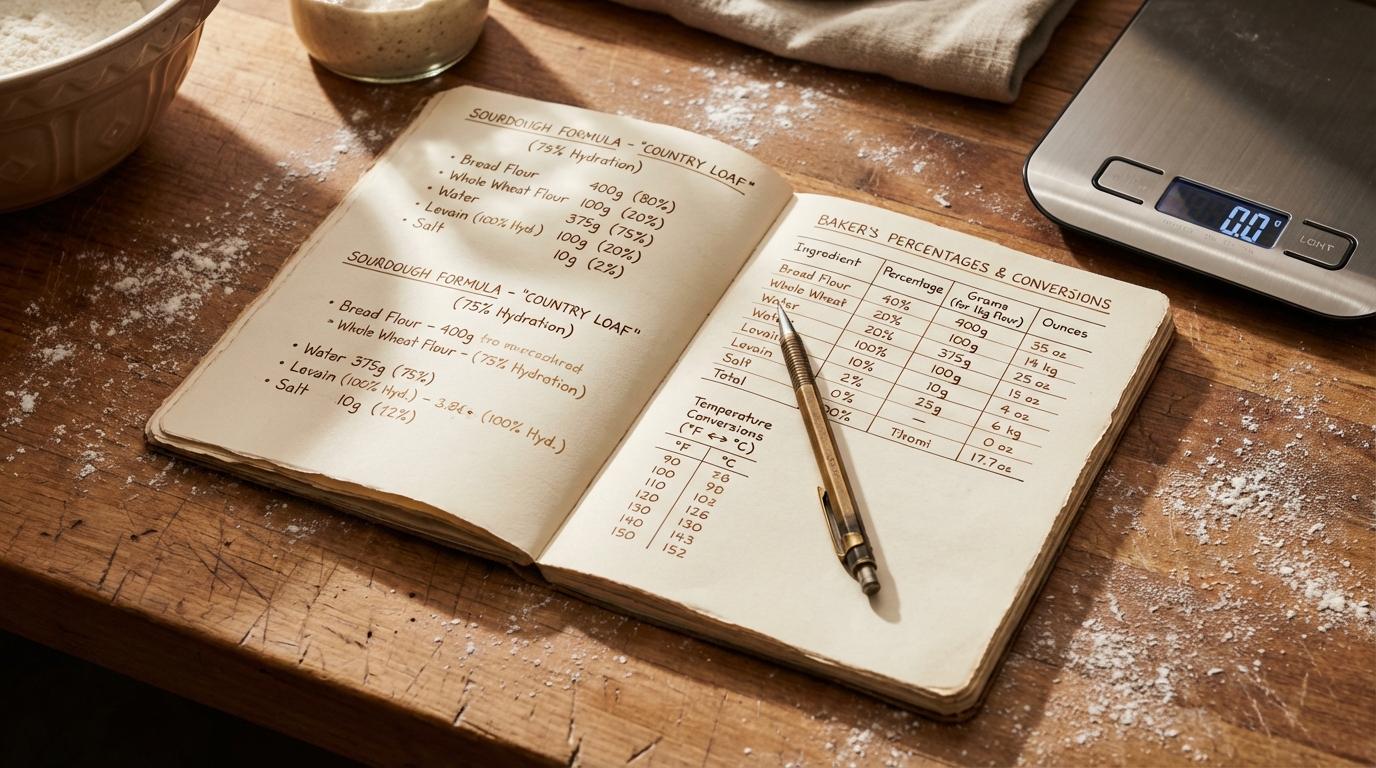
Flour-dusted notebook with baker percentage formulas, bowl of dough in background
Baker's Math

Baker's Percentage Explained: Master the Math Behind Sourdough

Discover the baker's percentage system and how it makes scaling recipes and maintaining consistency effortless.

April 12, 2024
10 min read
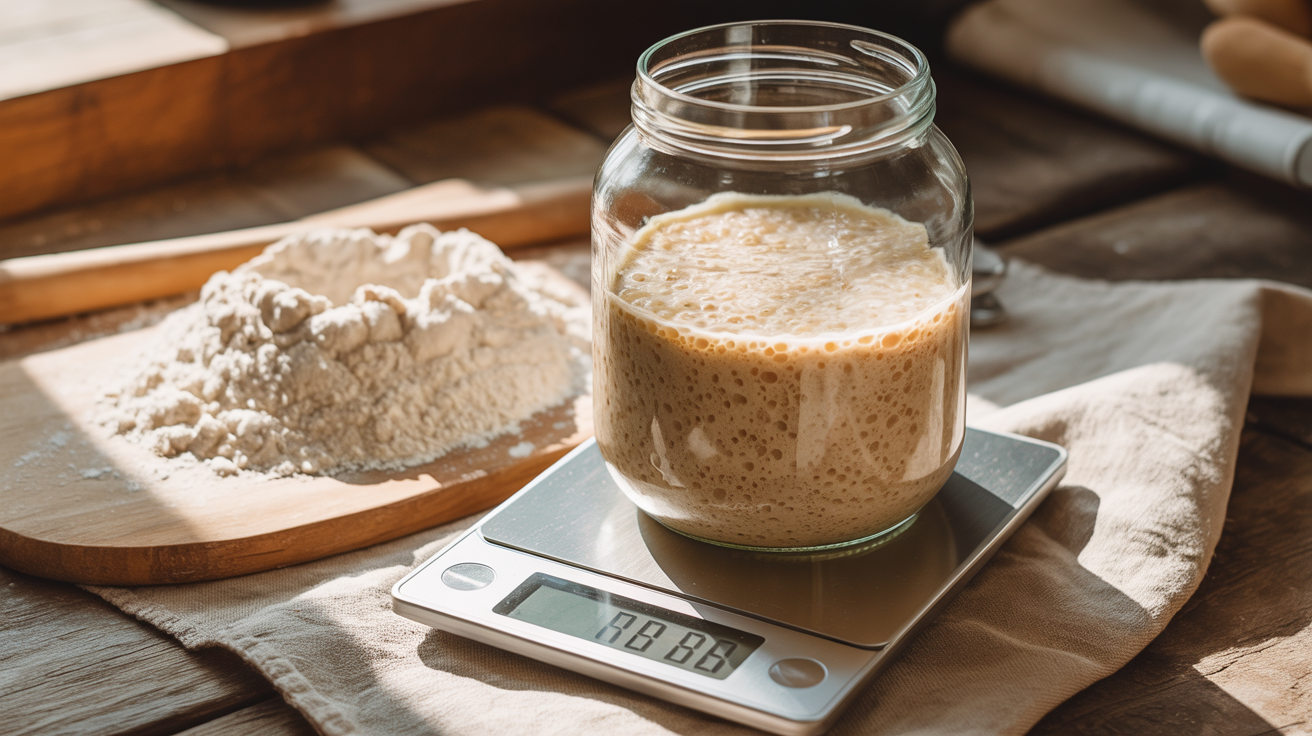
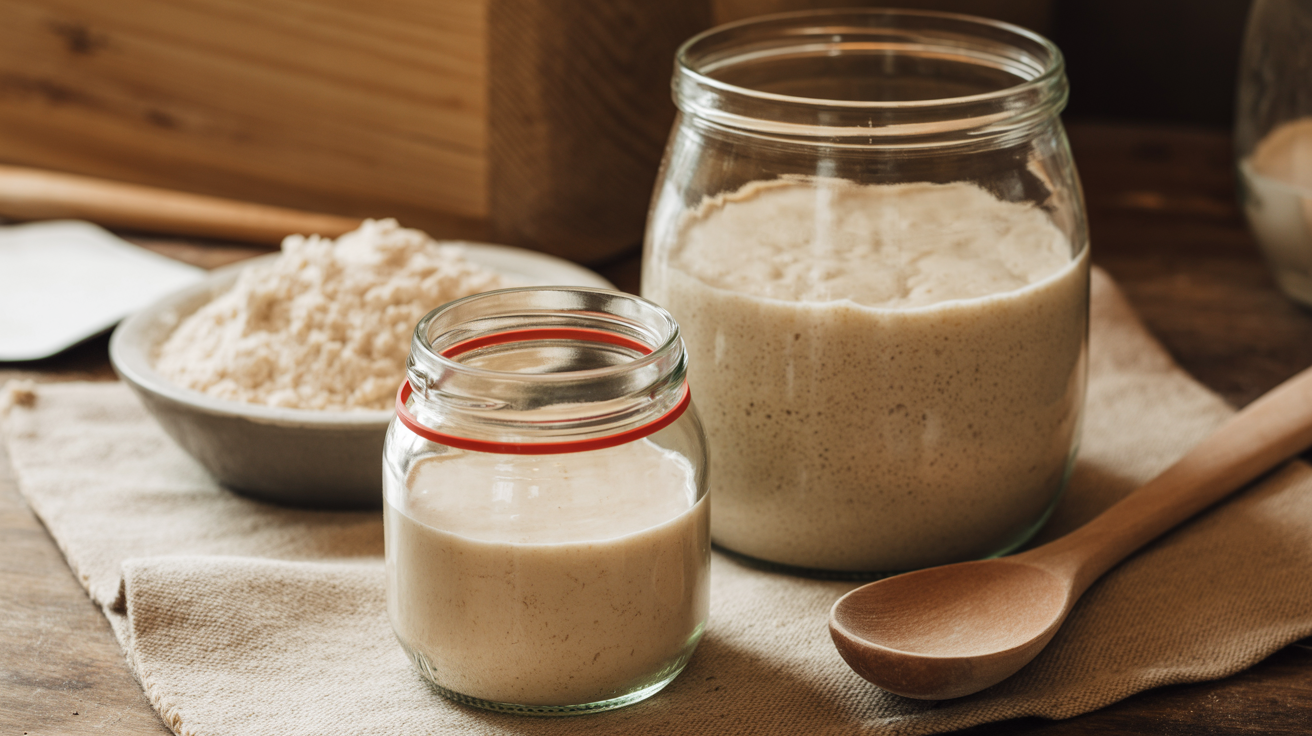
Glass jar of bubbly active sourdough starter next to digital scale on linen cloth
Starters

Sourdough Starter Ratio: Finding the Perfect Balance

Understand starter percentages and how different ratios affect fermentation speed, flavor development, and final results.

April 10, 2024
7 min read
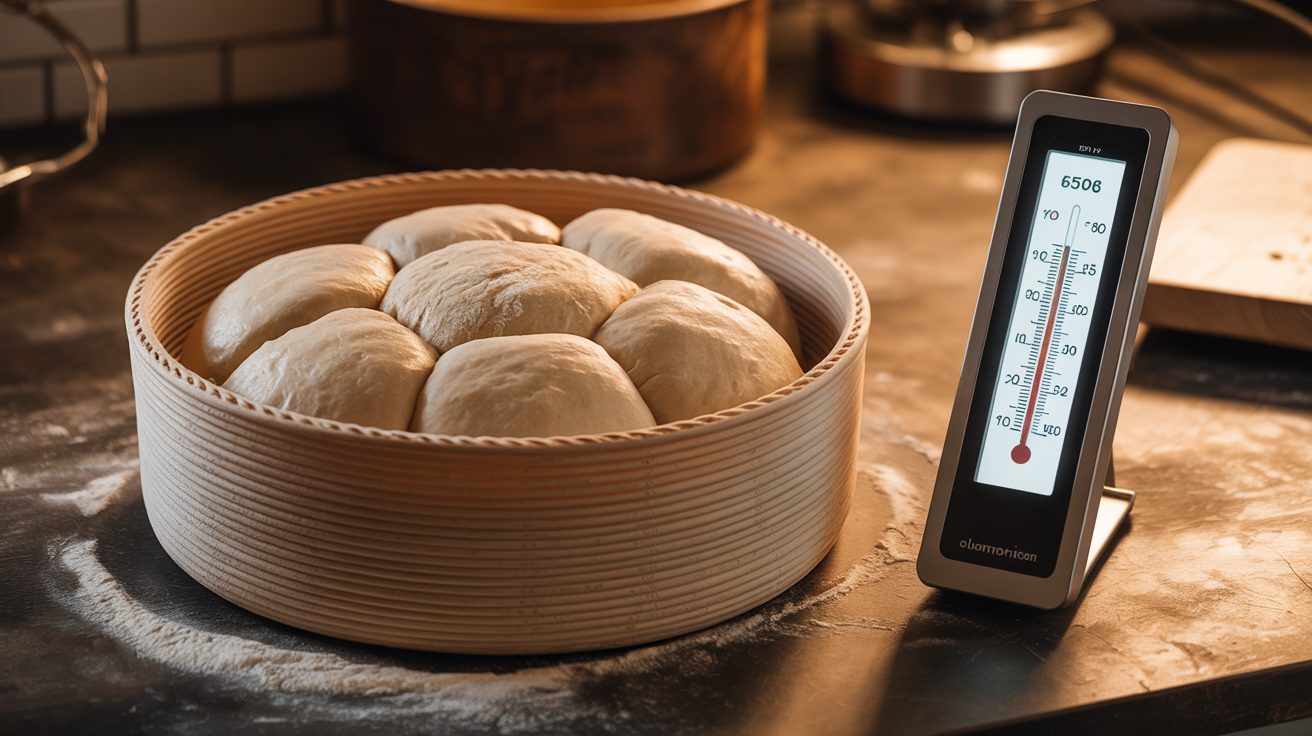
Banneton with shaped sourdough dough next to kitchen thermometer
Fermentation

Fermentation Temperature Guide: Timing Your Sourdough Perfectly

Learn how temperature affects fermentation speed and get a complete guide to timing your bulk and final proofs.

April 8, 2024
9 min read
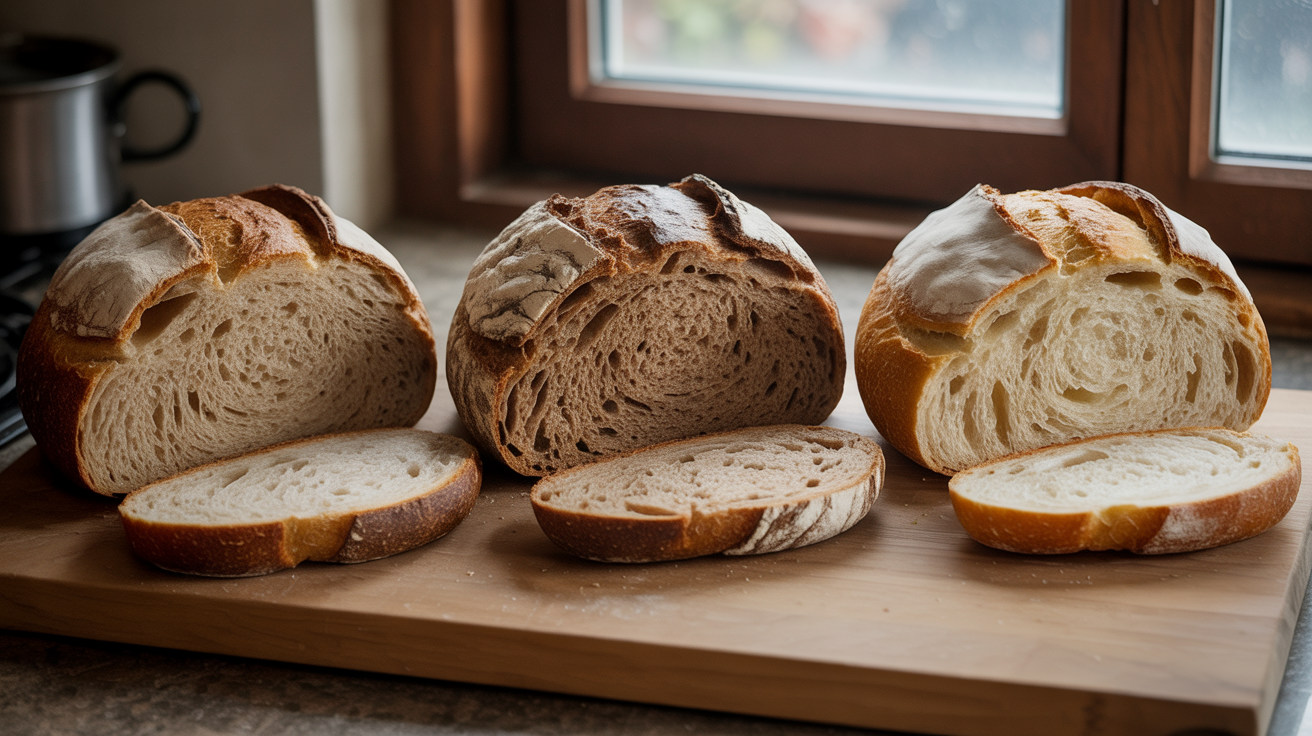
Three sourdough loaves at different hydration levels showing crumb structure
Technical

Sourdough Hydration Percentage: 60% to 150% Explained

Complete guide to understanding hydration ranges and how different percentages impact your sourdough characteristics.

April 5, 2024
11 min read
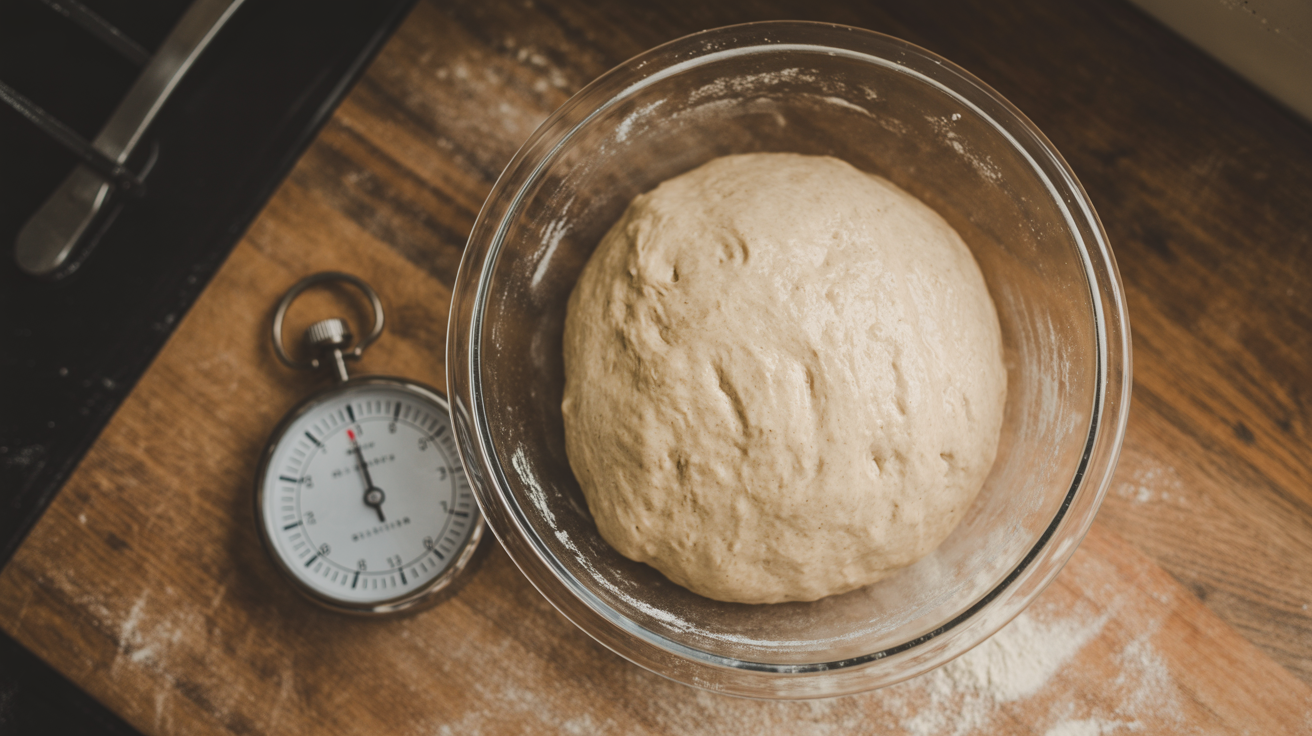
Overhead view of risen sourdough dough with bubbles in glass bowl beside timer
Timing

Sourdough Bulk Fermentation Timing: Room Temperature Matters

Exact formulas for calculating bulk fermentation time based on your room temperature and desired dough development.

April 1, 2024
8 min read
Young levain jar with rubber band rise marker next to mature sourdough starter
Starters

Levain Hydration Explained: Managing Your Pre-Ferment

Understand levain hydration and how it affects fermentation activity and final dough hydration percentage.

March 28, 2024
7 min read
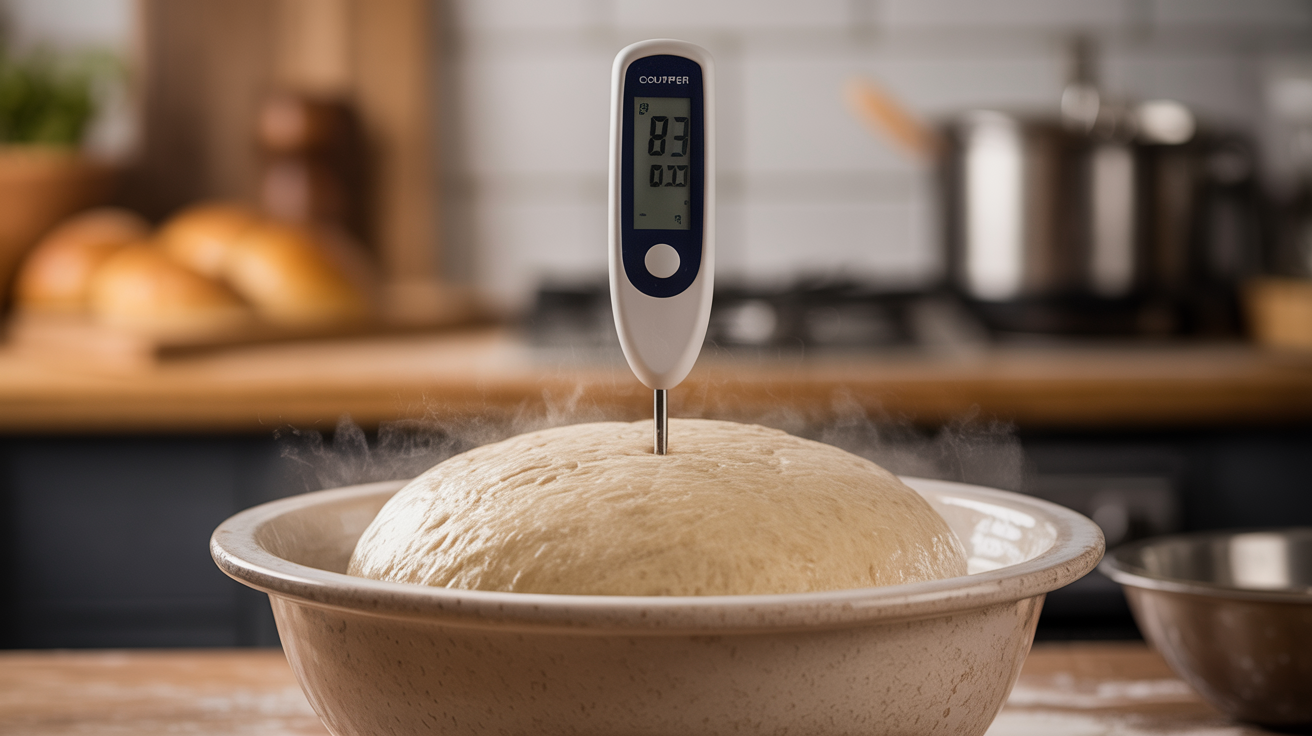
Digital probe thermometer inserted into fresh sourdough dough in mixing bowl
Technical

Desired Dough Temperature: The Key to Consistent Sourdough

Learn how to calculate and control dough temperature for predictable fermentation and consistent results every time.

March 25, 2024
9 min read
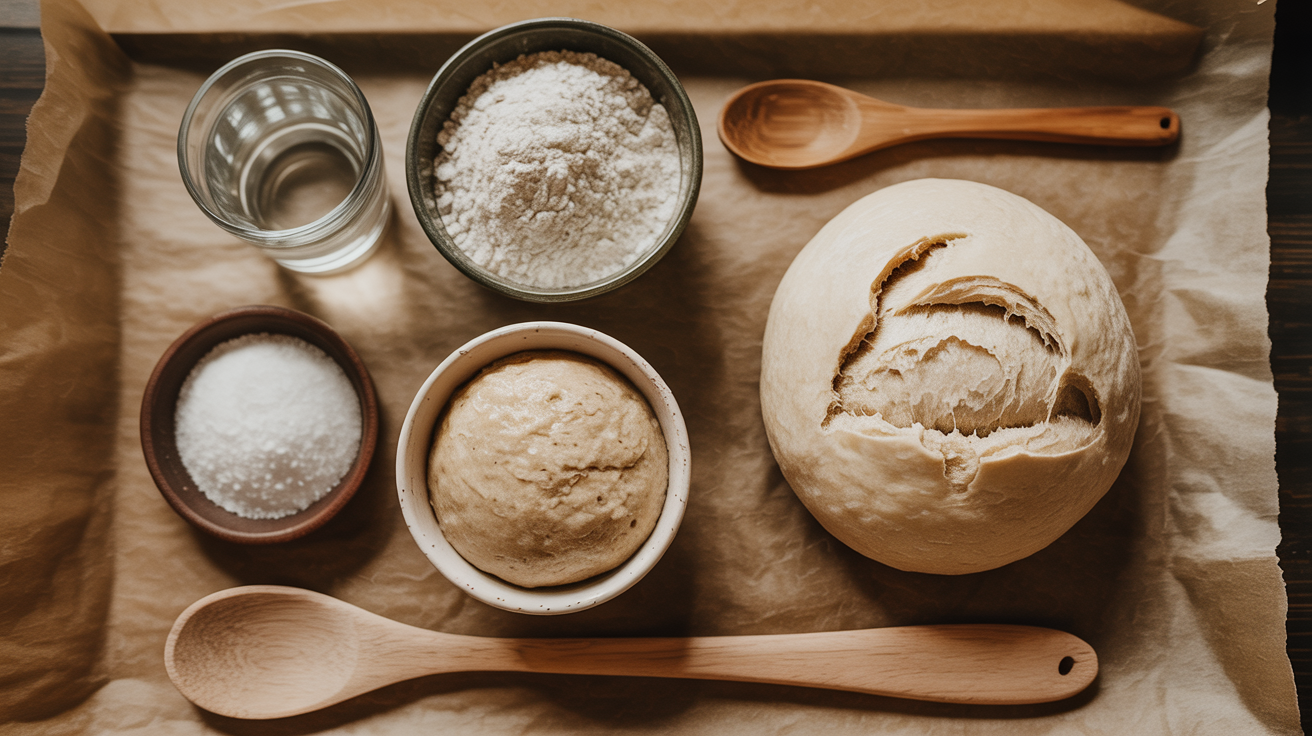
Overhead flatlay of measured sourdough ingredients in bowls on parchment paper
Tools

Using Our Sourdough Recipe Calculator: Step-by-Step

Complete guide to using our free calculator for scaling recipes, experimenting with hydration, and saving your favorites.

March 22, 2024
6 min read
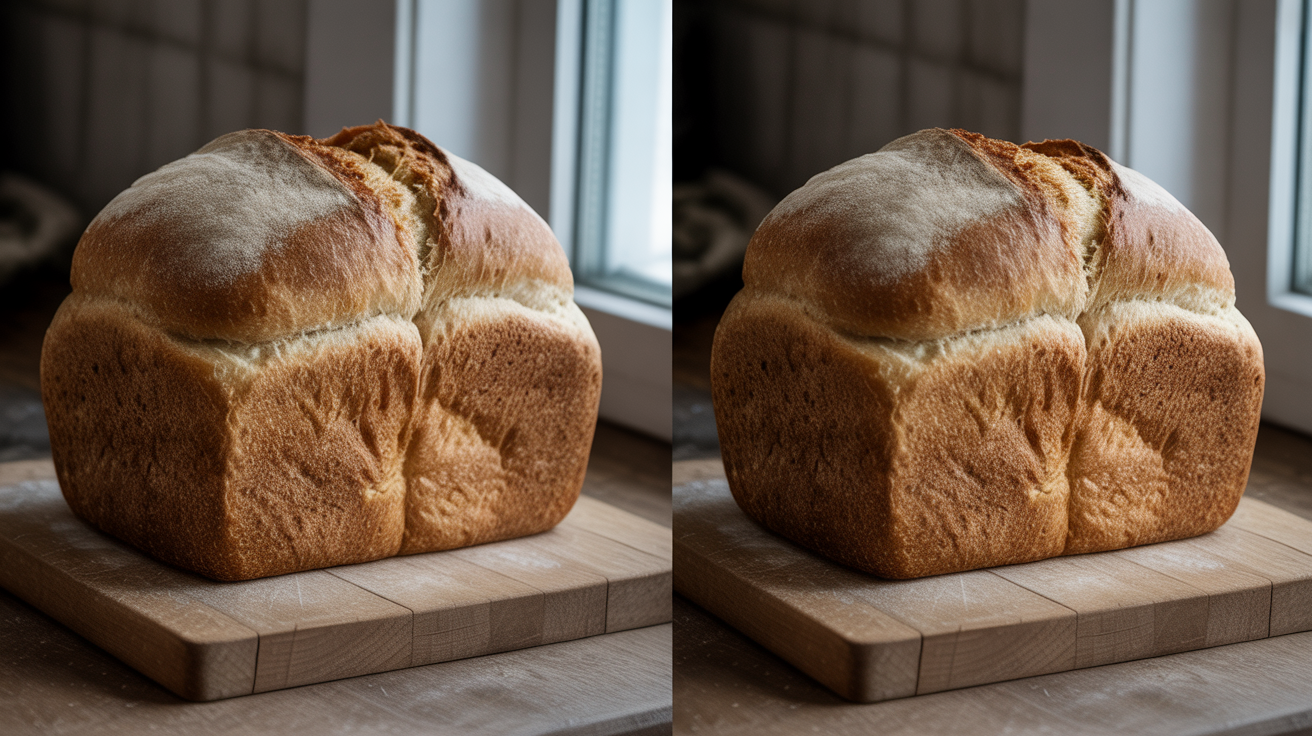
Side-by-side comparison of perfectly risen sourdough loaf versus dense flat loaf
Troubleshooting

Sourdough Troubleshooting: Solve Your Baking Problems

Solutions for common issues like dense crumb, too much sourness, weak oven spring, and sticky dough.

March 20, 2024
12 min read
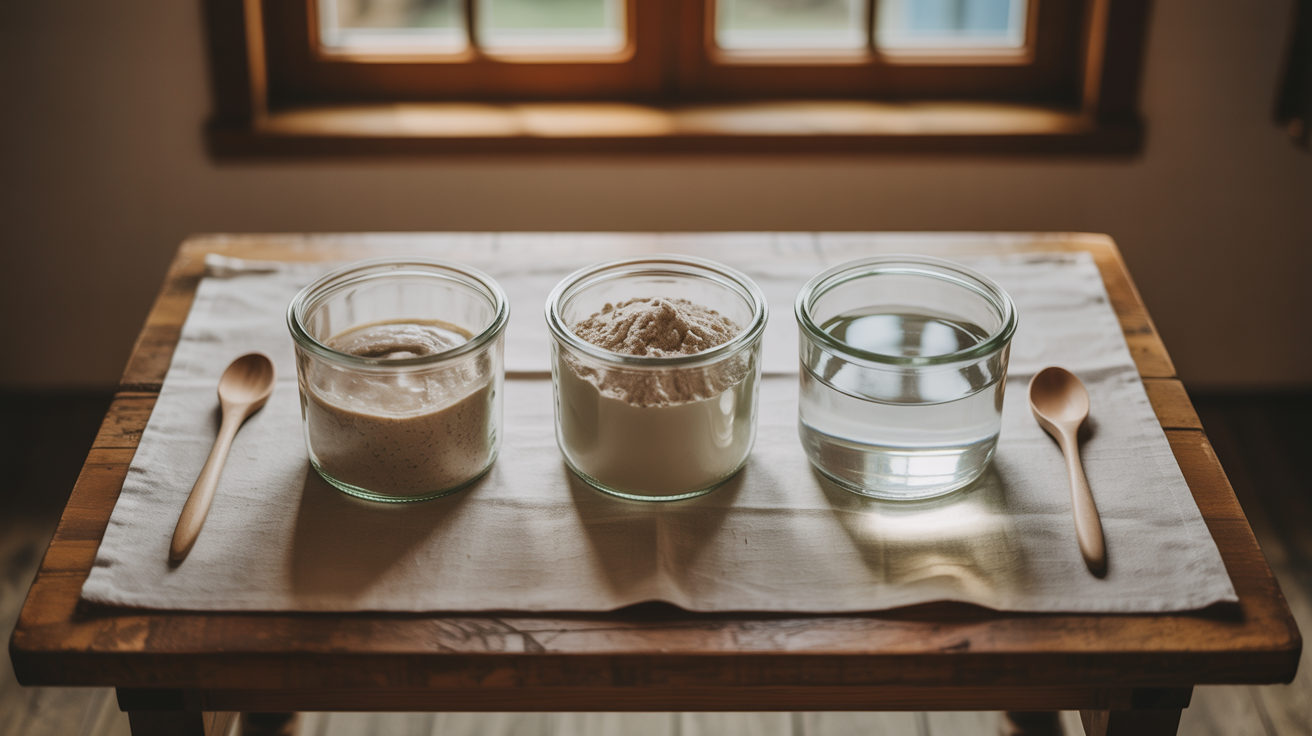
Three identical glass jars of equal-weight sourdough starter, flour, and water on rustic linen
Starter Care

1:1:1 Sourdough Starter Feeding Ratio Explained

A 1:1:1 feeding ratio means equal weights of starter, flour, and water. Learn when to use it, how to time it, and why it’s the go-to ratio for daily home bakers.

April 21, 2026
7 min read
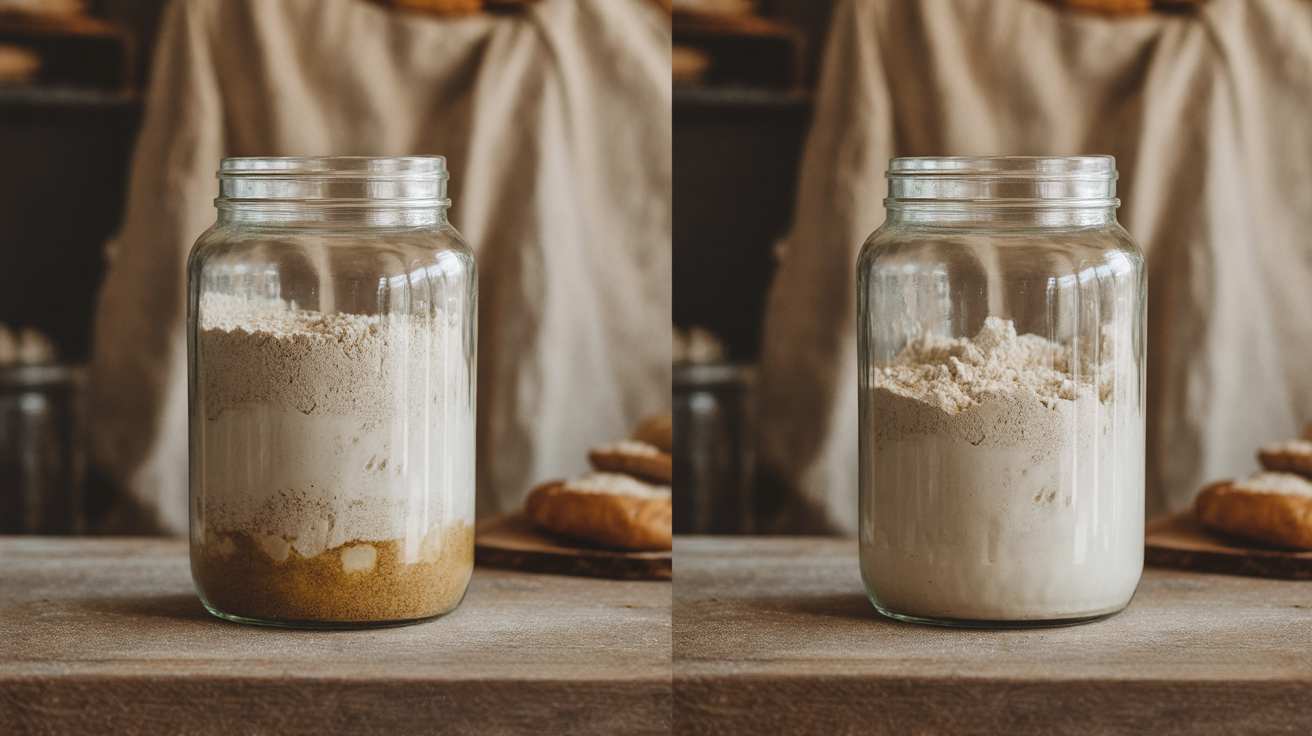
Two glass jars showing 1:2:2 and 1:3:3 sourdough starter feeding ratios side-by-side
Starter Care

1:2:2 vs 1:3:3 Sourdough Starter Feeding Ratios

The difference between a 1:2:2 and 1:3:3 feeding ratio is how long your starter stays usable. 1:2:2 peaks in 6–8 hours; 1:3:3 stretches that to 8–10 hours at room temperature.

April 21, 2026
8 min read
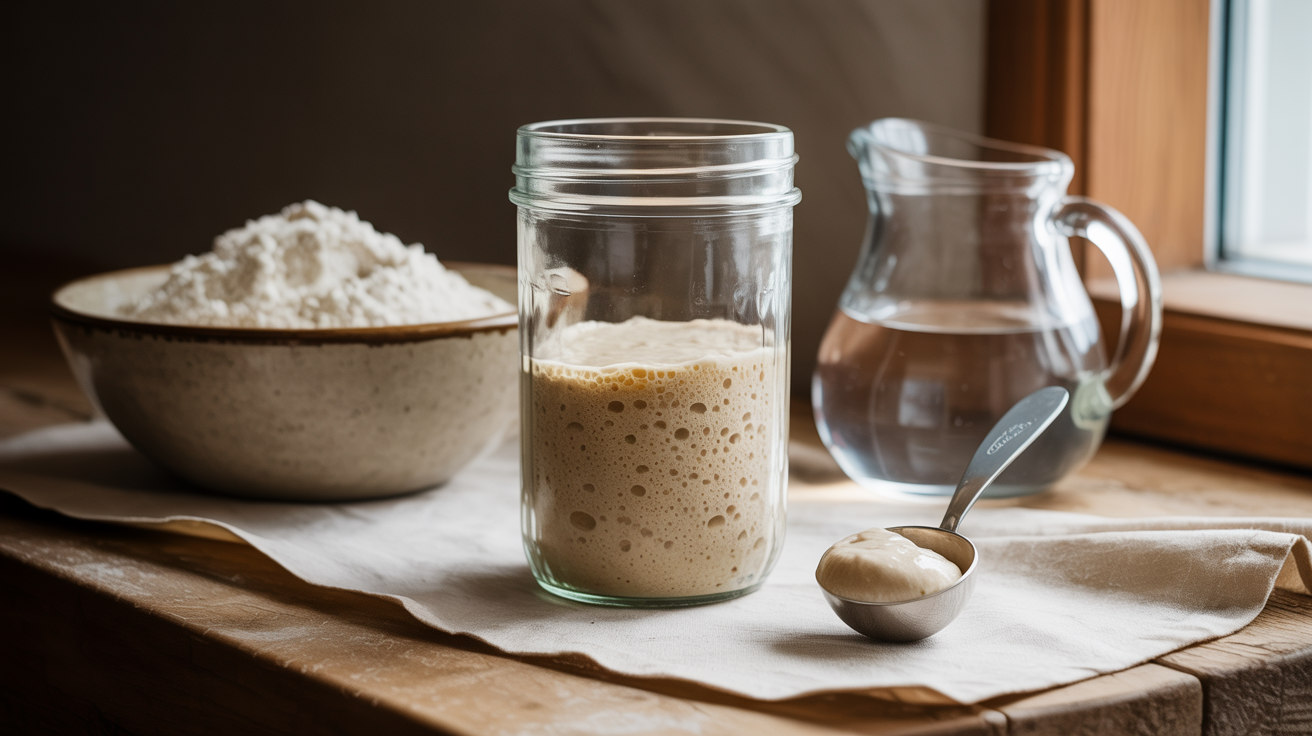
Active bubbly sourdough starter in glass jar next to flour bowl and water vessel showing 1:5:5 ratio
Starter Care

1:5:5 Sourdough Starter Feeding Ratio: The Overnight Method

A 1:5:5 feeding ratio is the overnight baker’s secret weapon. Learn why it peaks at 10–14 hours, how it shapes flavour, and when to pick it over 1:1:1 or 1:2:2.

April 21, 2026
8 min read
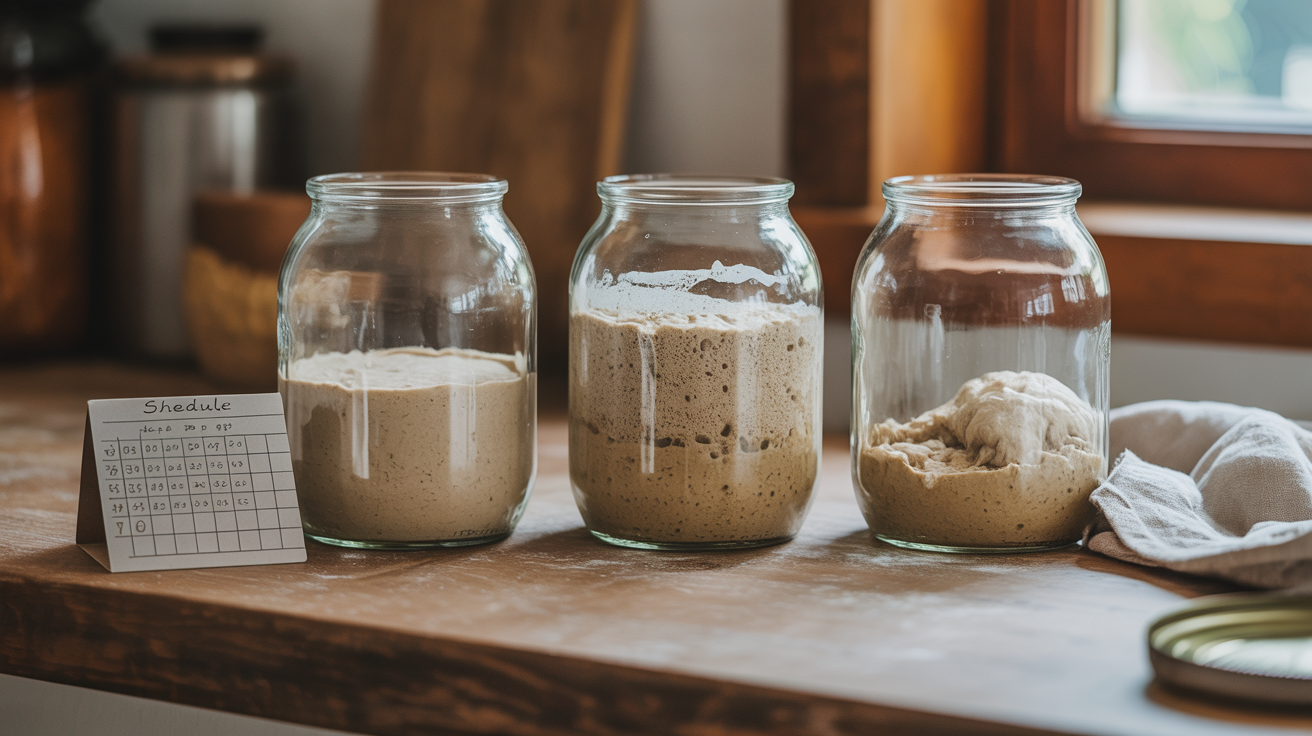
Three glass jars of sourdough starter showing just-fed, peaked, and collapsed stages on a rustic wooden counter
Starter Care

How Often Should You Feed Your Sourdough Starter?

The right feeding frequency depends on where your starter lives and how often you bake. Here are the exact schedules for counter, fridge, pre-bake, and neglected starters.

April 24, 2026
7 min read
A neglected sourdough starter jar with a layer of grey hooch being rescued with fresh flour and water on a linen cloth
Starter Care

How to Revive a Neglected Sourdough Starter (Step-by-Step)

Forgot about your starter for weeks or months? Most neglected starters can be revived in 3 to 5 days with a simple feeding protocol. Here is the exact rescue plan, plus what to do if it has mould.

April 24, 2026
8 min read
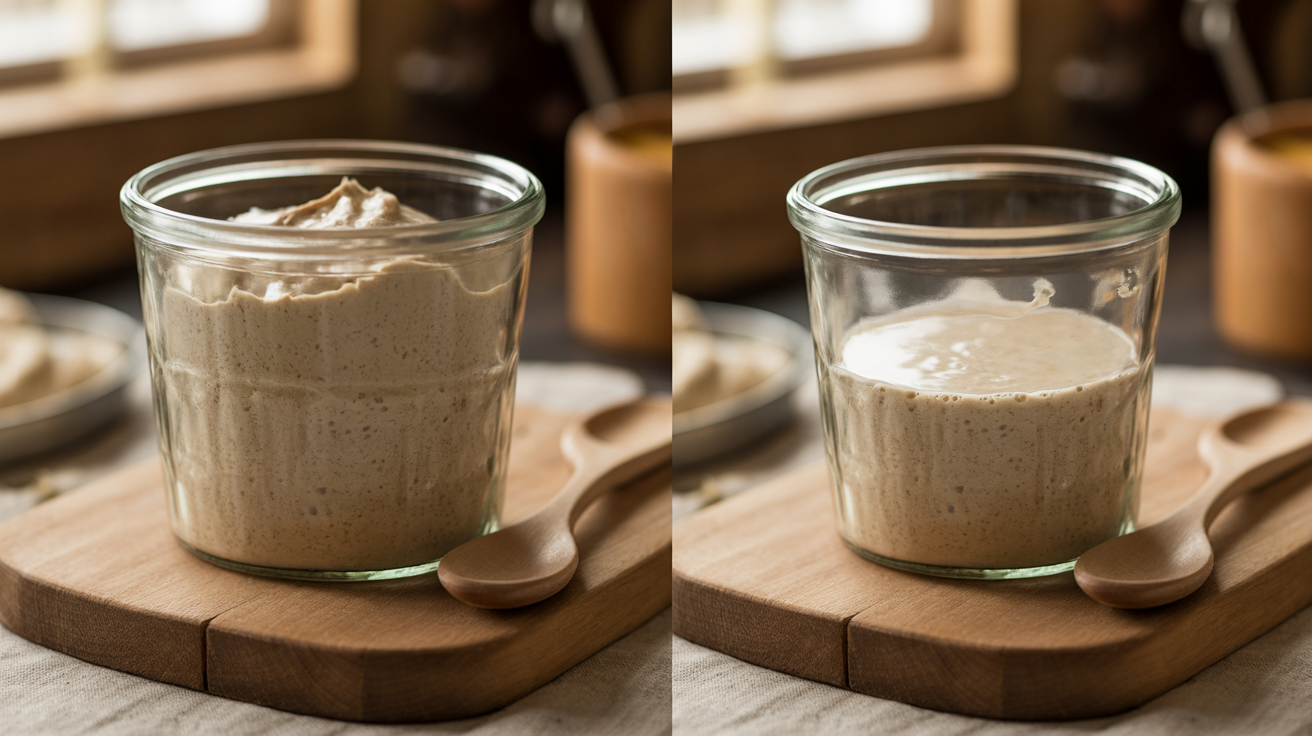
Two glass jars side by side, left containing thick paste-like stiff sourdough starter and right containing pourable liquid starter
Starter Care

Stiff Starter vs Liquid Starter: Which Should You Use?

Stiff starters (50–60% hydration) and liquid starters (100% hydration) produce noticeably different breads. Here is when to use each, how to convert between them, and why Italian bakeries prefer stiff.

April 24, 2026
7 min read
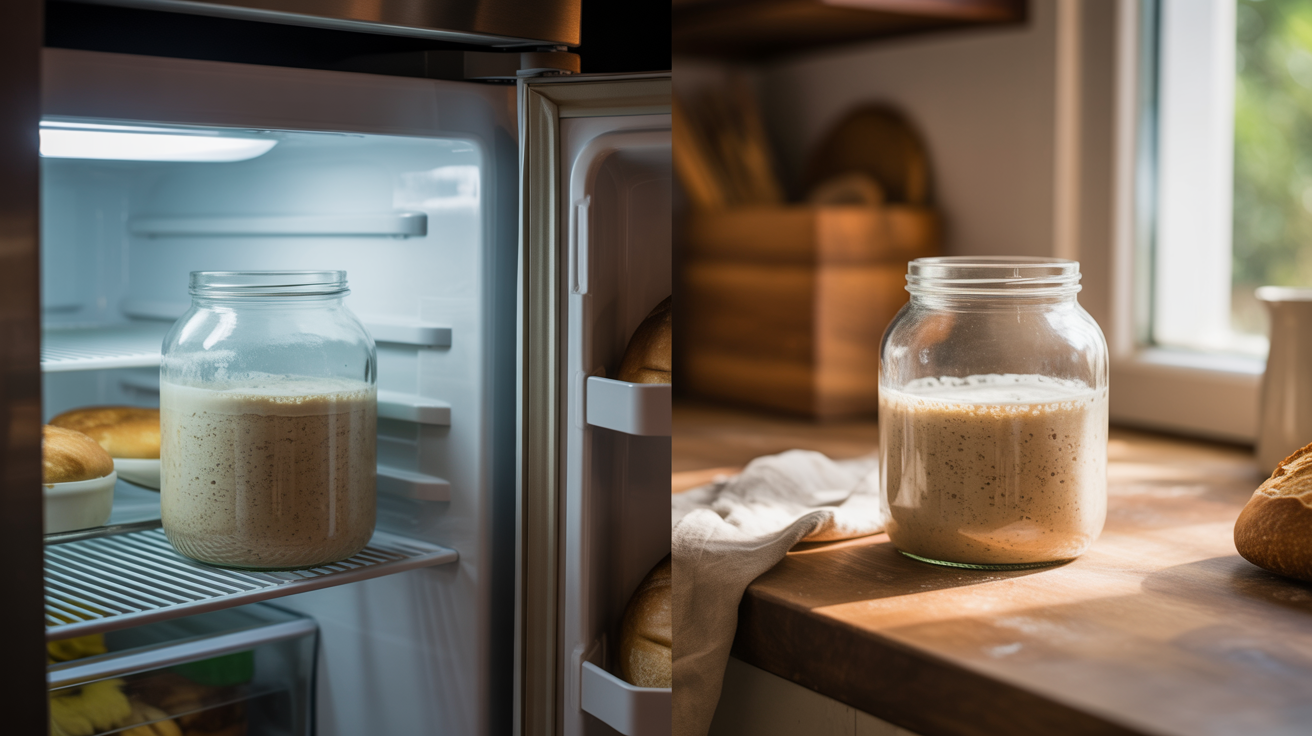
Two glass jars of sourdough starter compared side-by-side — one inside a refrigerator, one on a warm kitchen counter
Starter Care

Fridge vs Counter Sourdough Starter: Which Is Right for You?

Cold storage saves flour and time; counter storage gives you a bake-ready starter every morning. Here are the tradeoffs, the transition protocols, and the exact schedule for each.

April 28, 2026
8 min read
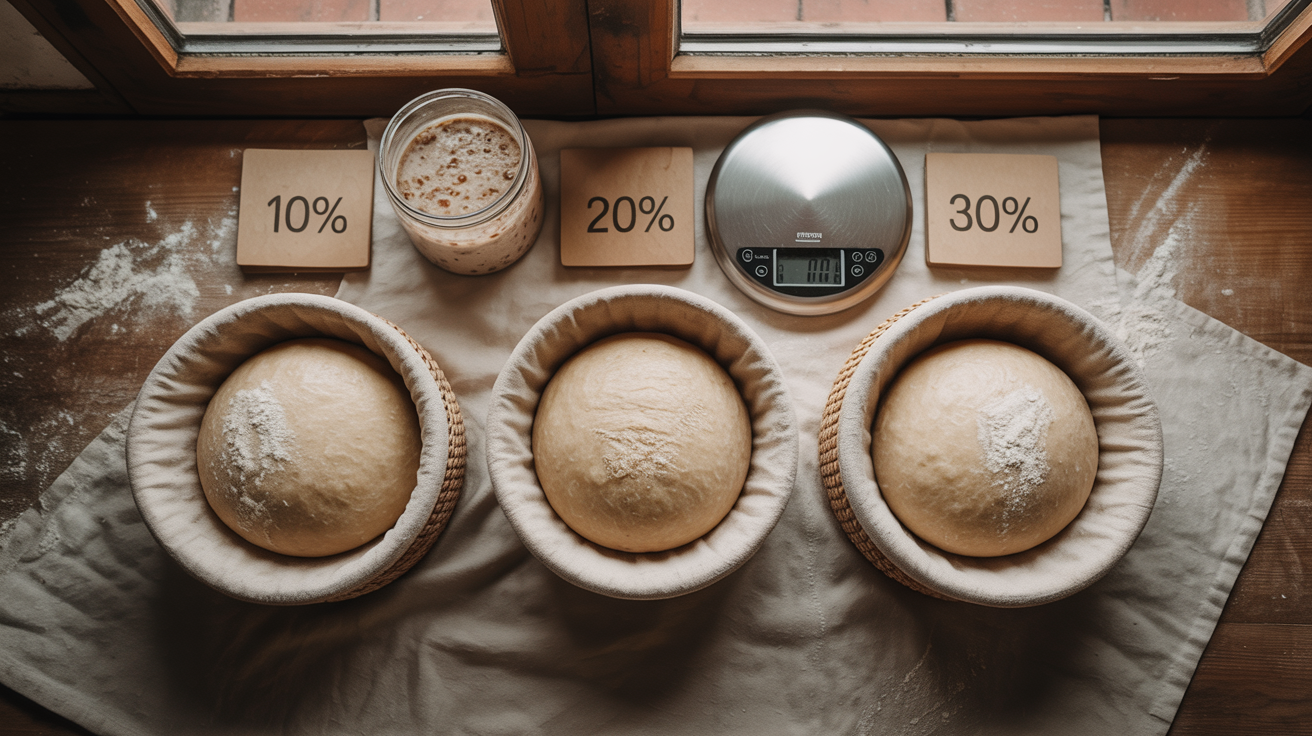
Three dough balls in linen-lined bannetons labeled 10%, 20%, and 30% starter, with a scale and jar of bubbly starter
Baker’s Math

How Much Sourdough Starter Do I Need Per Loaf? (10% / 20% / 30%)

The amount of starter you need depends on bulk time, temperature, and flavour preference. Use 10% for a long overnight bulk, 20% for a standard same-day bake, or 30% when you want a fast, mild loaf.

April 28, 2026
7 min read
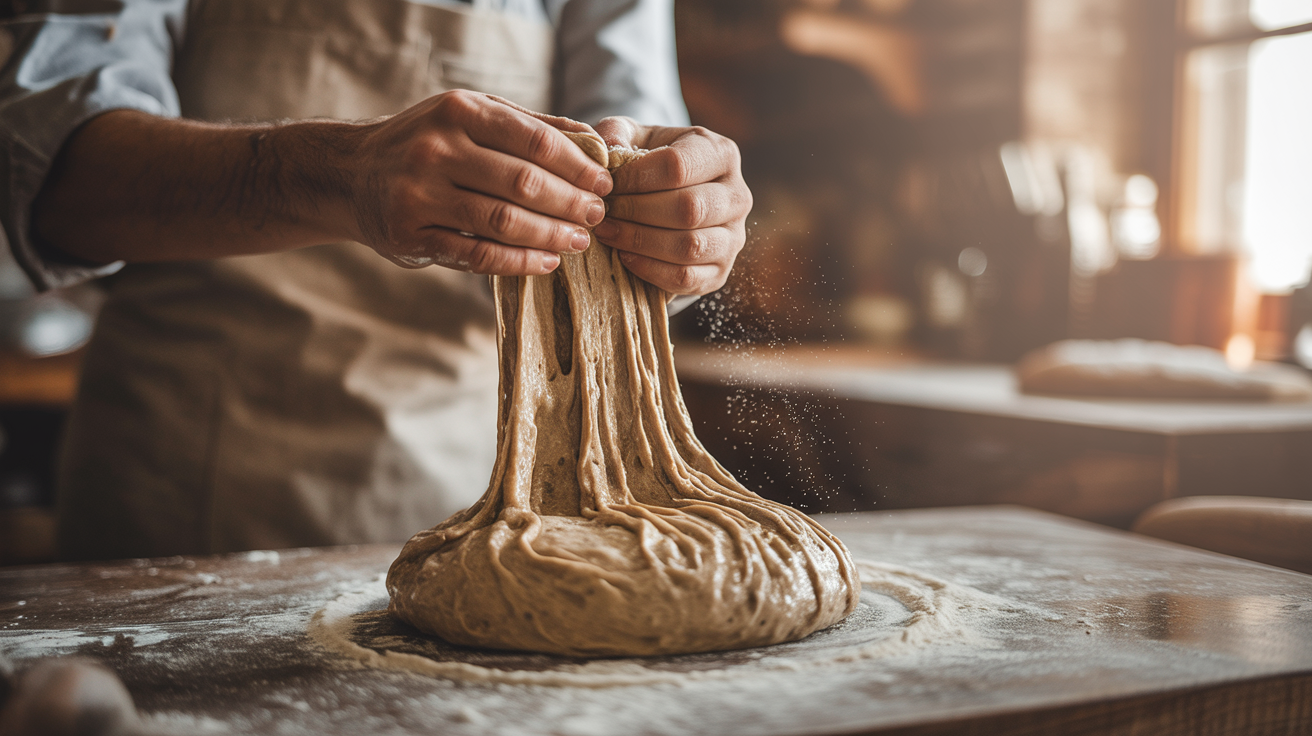
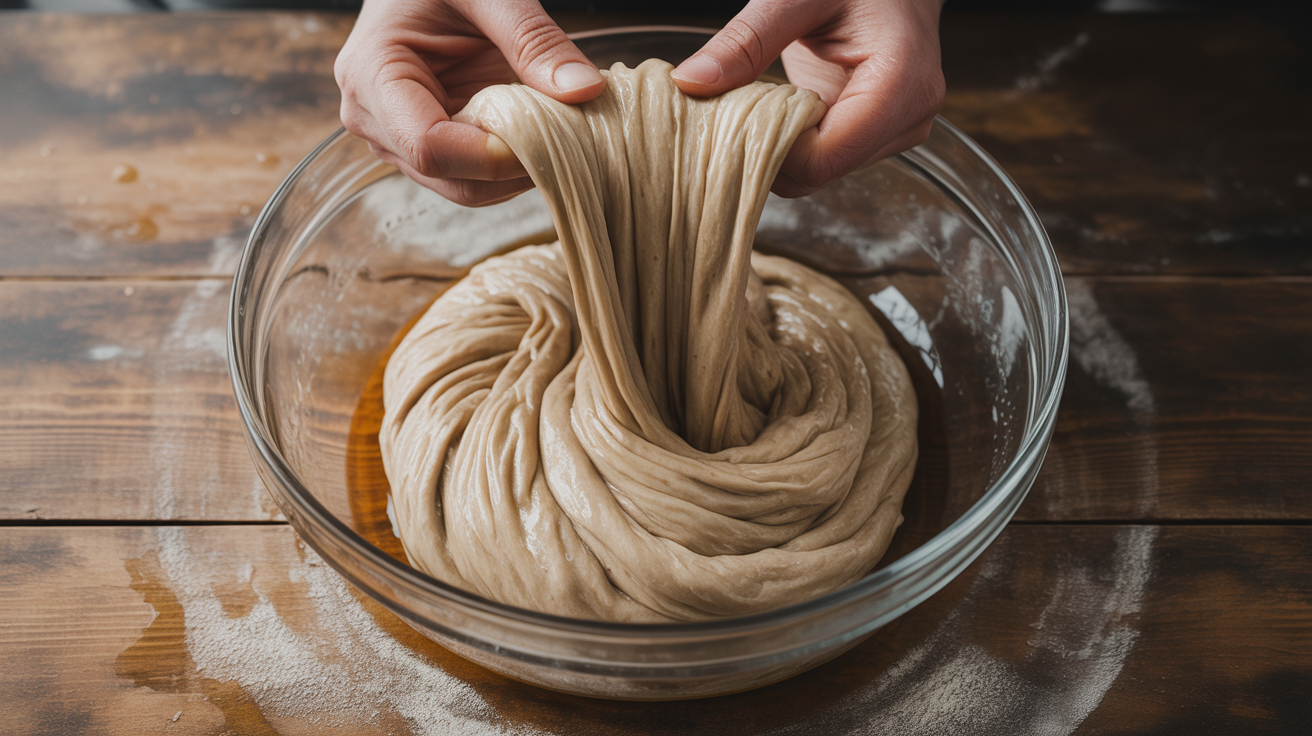
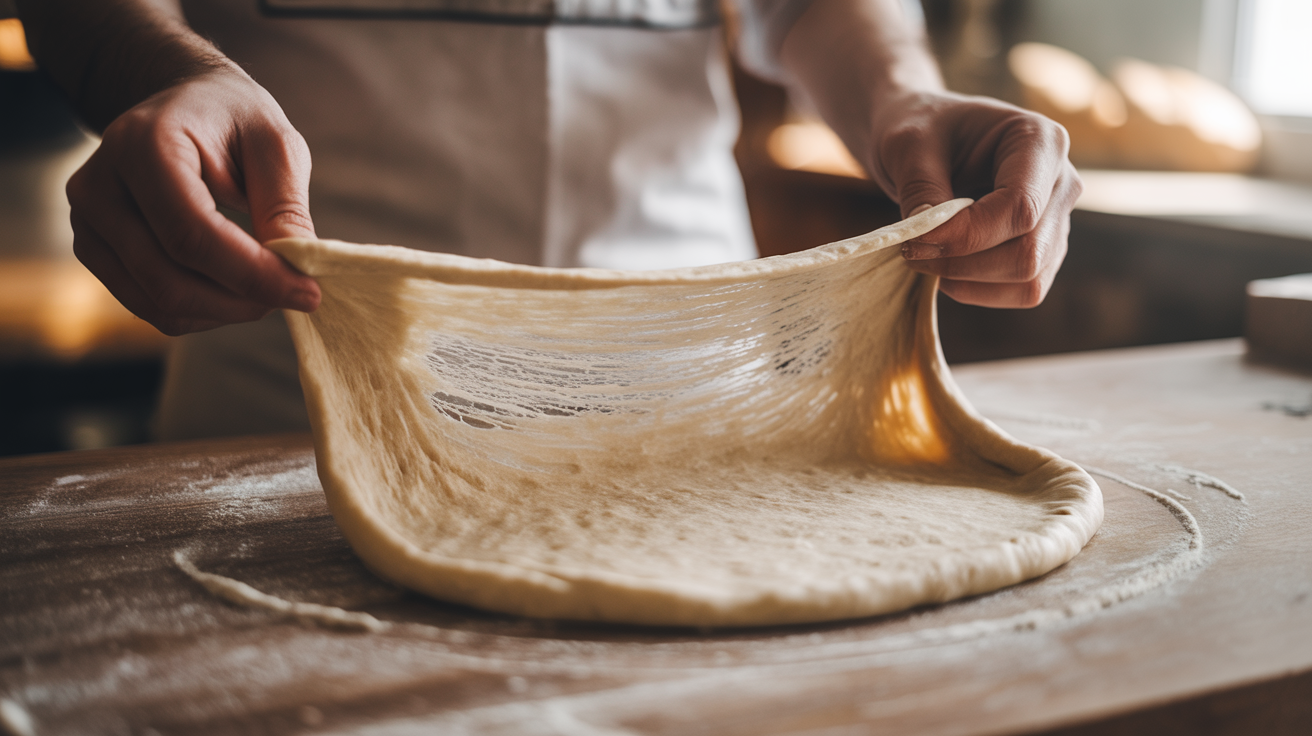
Close-up of baker’s hands stretching sticky, high-hydration sourdough dough with glossy strands between fingers on a flour-dusted wooden surface, warm window light
Hydration

Why Is My Sourdough Dough So Sticky? (And How to Fix It Without Ruining Hydration)

Sticky sourdough dough is usually under-developed gluten, not too much water. Here’s how to diagnose the real cause and fix it without changing your recipe.

May 1, 2026
8 min read
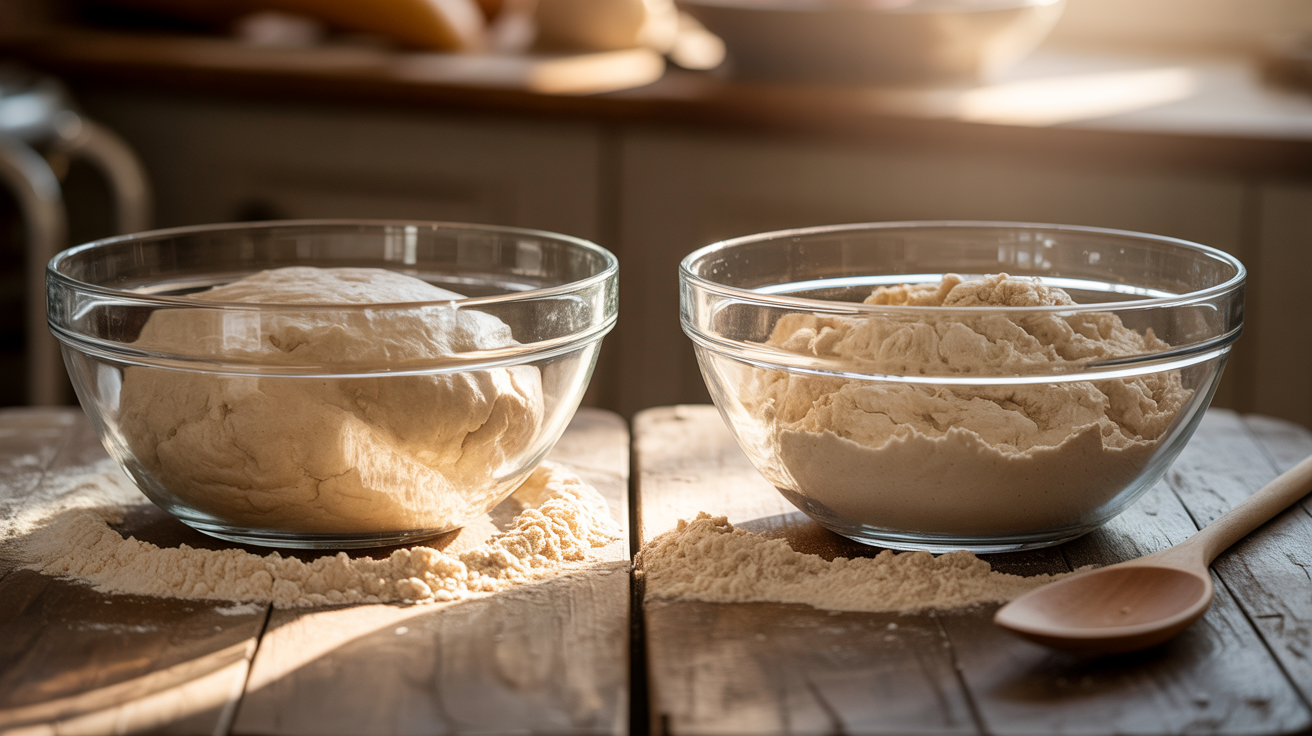
Two glass mixing bowls side by side on a rustic wooden table showing thick bread flour dough and slacker all-purpose flour dough with scattered flour and a wooden spoon
Hydration

Sourdough Hydration: Bread Flour vs All-Purpose Flour (The 3–5% Rule)

Bread flour absorbs 3–5% more water than all-purpose at the same hydration percentage. Here’s why, plus how to convert recipes safely.

May 1, 2026
7 min read
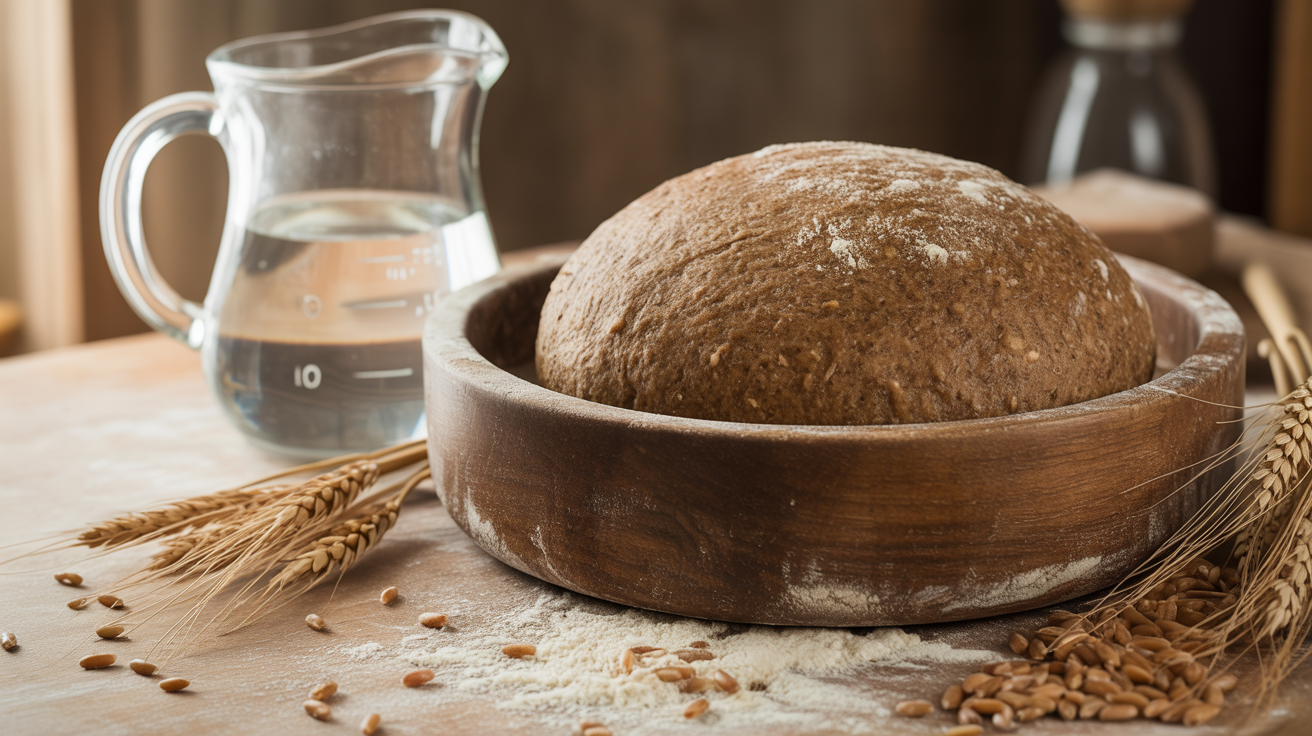
Dark whole wheat sourdough dough resting in a flour-dusted rustic wooden bowl with scattered whole wheat flour, wheat berries, and a glass measuring jug of water nearby
Hydration

Whole Wheat Sourdough Hydration: How Much Extra Water to Add

Whole wheat flour drinks more water than white flour — but not as much as you’d think. Here’s the exact adjustment formula for 10%, 25%, 50%, and 100% whole wheat blends.

May 1, 2026
8 min read
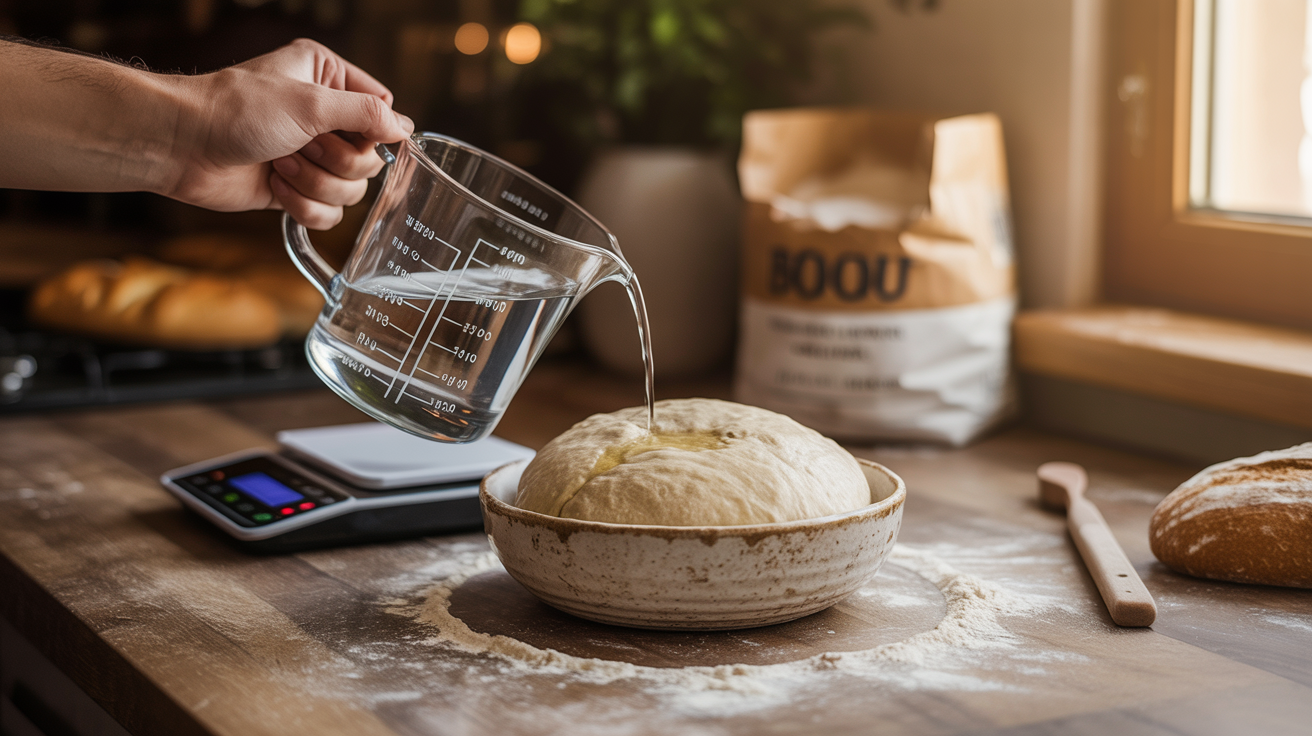
Hand holding a digital kitchen scale with a glass measuring jug pouring water into a bowl of sourdough dough on a rustic wooden countertop with scattered flour
Hydration

How to Convert a 65% Hydration Recipe to 75% (Without Ruining the Loaf)

Stepping your sourdough hydration from 65% to 75% unlocks more open crumb — but jumping all at once usually flops. Here’s the gradual method that actually works.

May 5, 2026
7 min read
Overhead view of extremely wet, glossy 85% hydration sourdough dough being coil-folded in a clear glass bowl, with stretchy strands pulling upward and wet hands
Hydration

85% Hydration Sourdough: The Wet-Dough Technique That Actually Works

High-hydration sourdough (80%+) demands different technique — slap-folds, coil-folds, and wet hands. Here’s the step-by-step method for 85% dough that doesn’t turn into soup.

May 5, 2026
9 min read
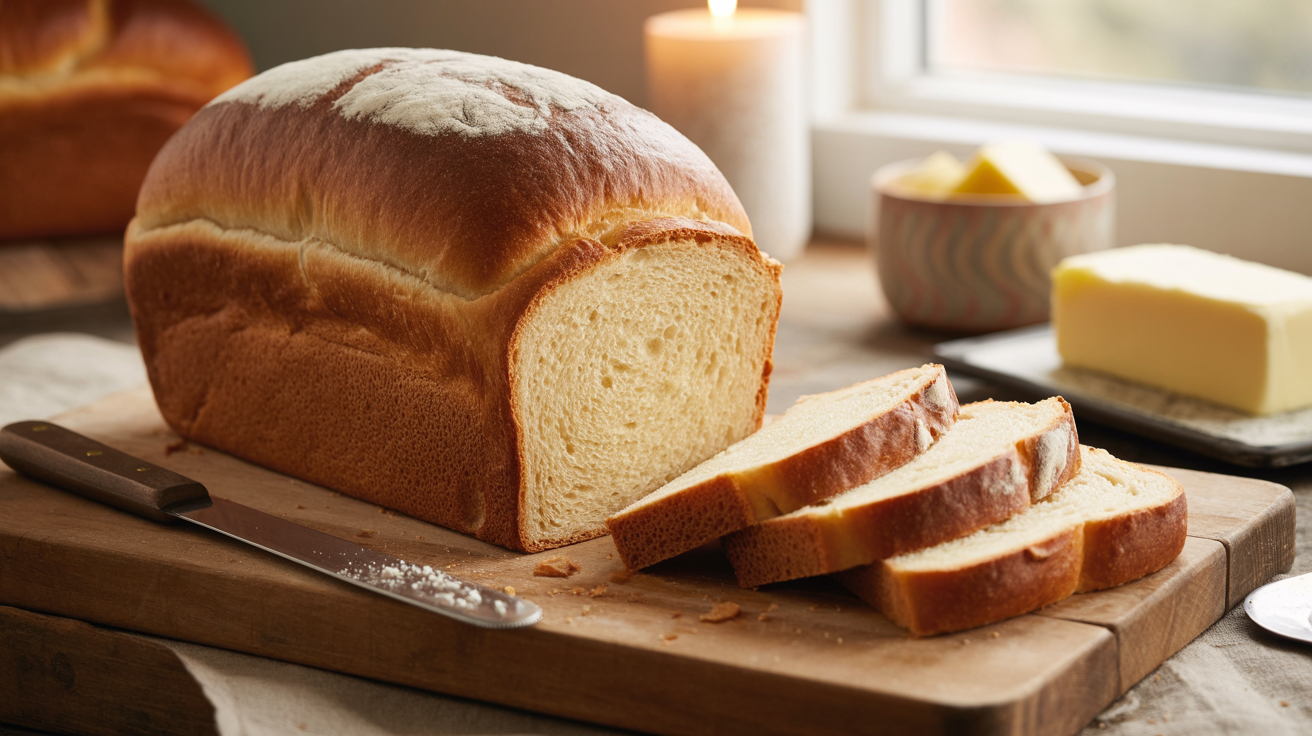
Golden-brown Pullman-style sandwich sourdough loaf on a rustic wooden cutting board with tender even crumb visible in sliced sections, butter dish nearby in soft morning light
Hydration

Low-Hydration Sandwich Sourdough (65–70%): The Tender-Crumb Method

Not every sourdough should be open-crumb. For soft, sliceable sandwich bread that lasts a week, run 65–70% hydration and add fat. Here’s the complete method.

May 5, 2026
7 min read
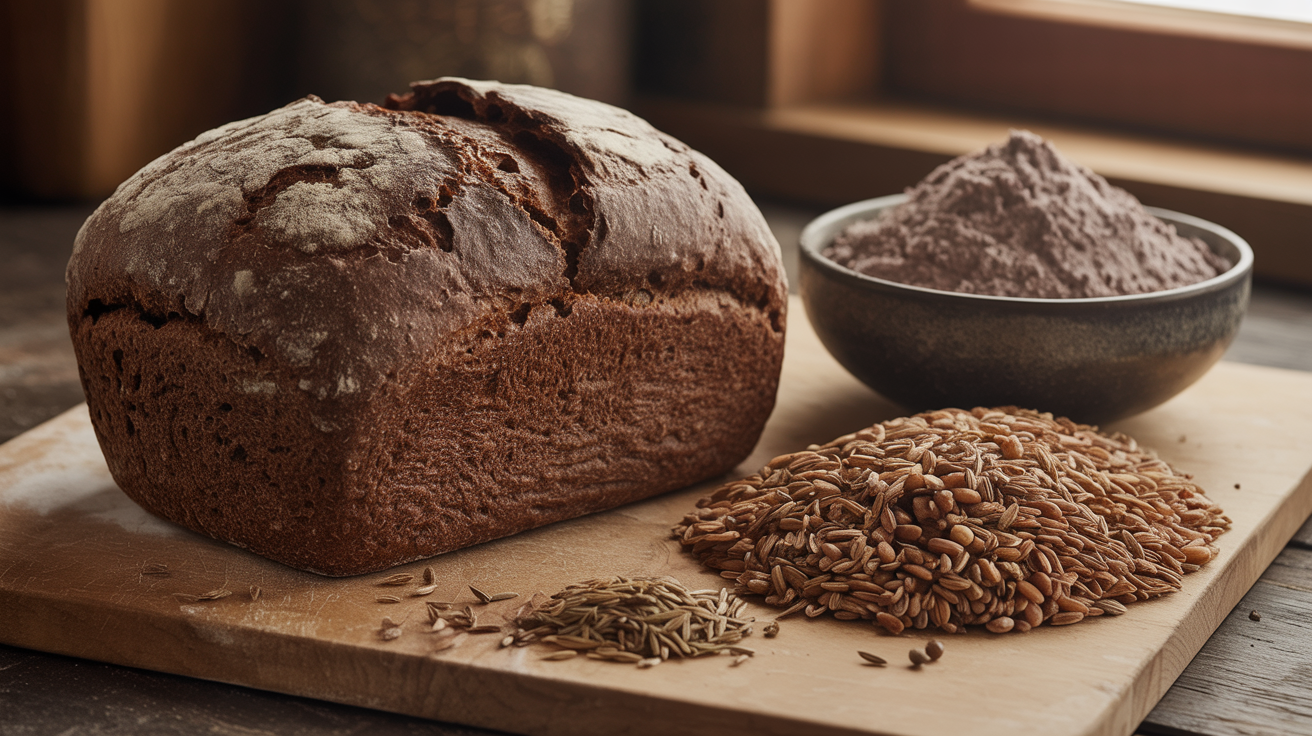
Dark, dense rye sourdough loaf with a cracked rustic top crust on a wooden cutting board, surrounded by whole rye grains, a small bowl of speckled dark rye flour, and scattered caraway seeds
Hydration

Rye Sourdough Hydration: The Complete Guide to Pentosans, Water, and Timing

Rye has almost no gluten — it’s held together by pentosans, which absorb 8× their weight in water. Here’s how to work with rye’s unique chemistry at different blend percentages.

May 8, 2026
9 min read
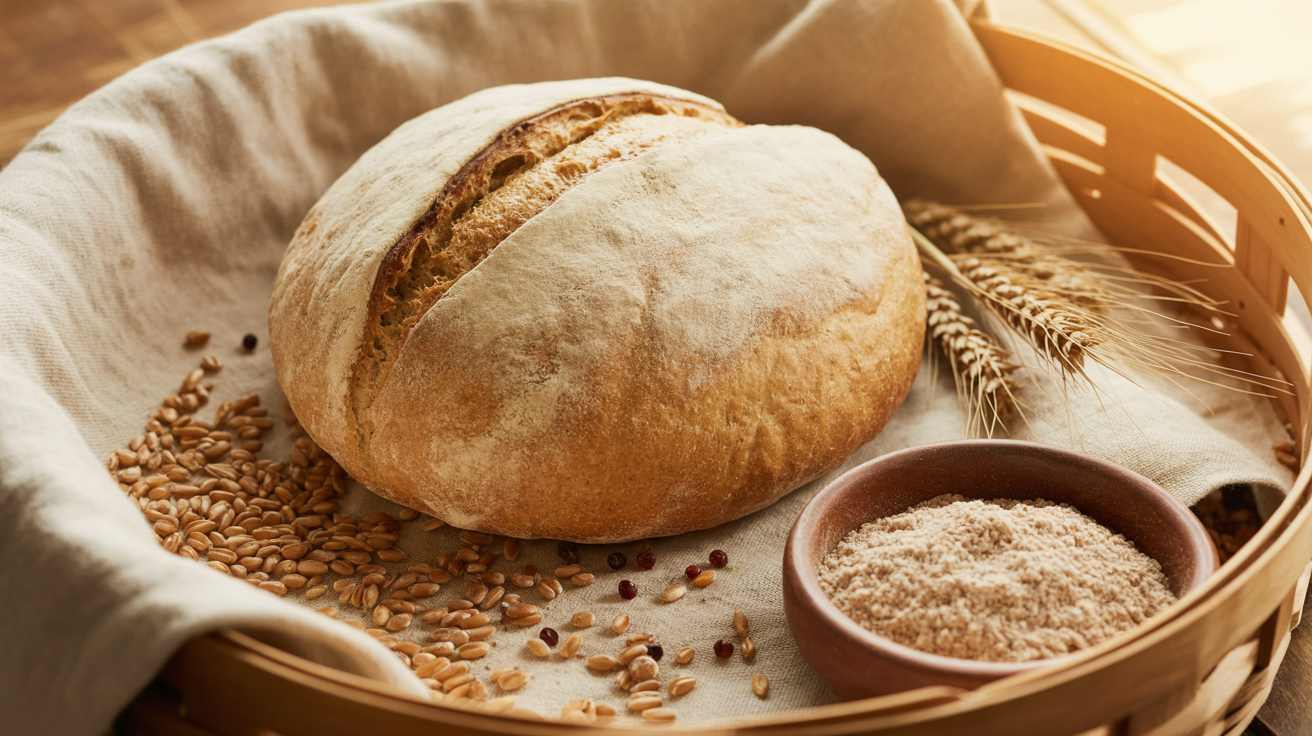
Golden-crusted spelt sourdough boule with a visible ear resting on a linen-lined wooden banneton basket with scattered spelt grains, a bowl of light tan spelt flour, and wheat stalks nearby
Hydration

Spelt Sourdough Hydration: The Gentle Ancient Grain (And Why It Tears)

Spelt has fragile gluten that breaks down fast — treat it like wheat and your loaf will collapse. Here’s the gentler technique and correct hydration for 25%, 50%, and 100% spelt sourdough.

May 8, 2026
8 min read
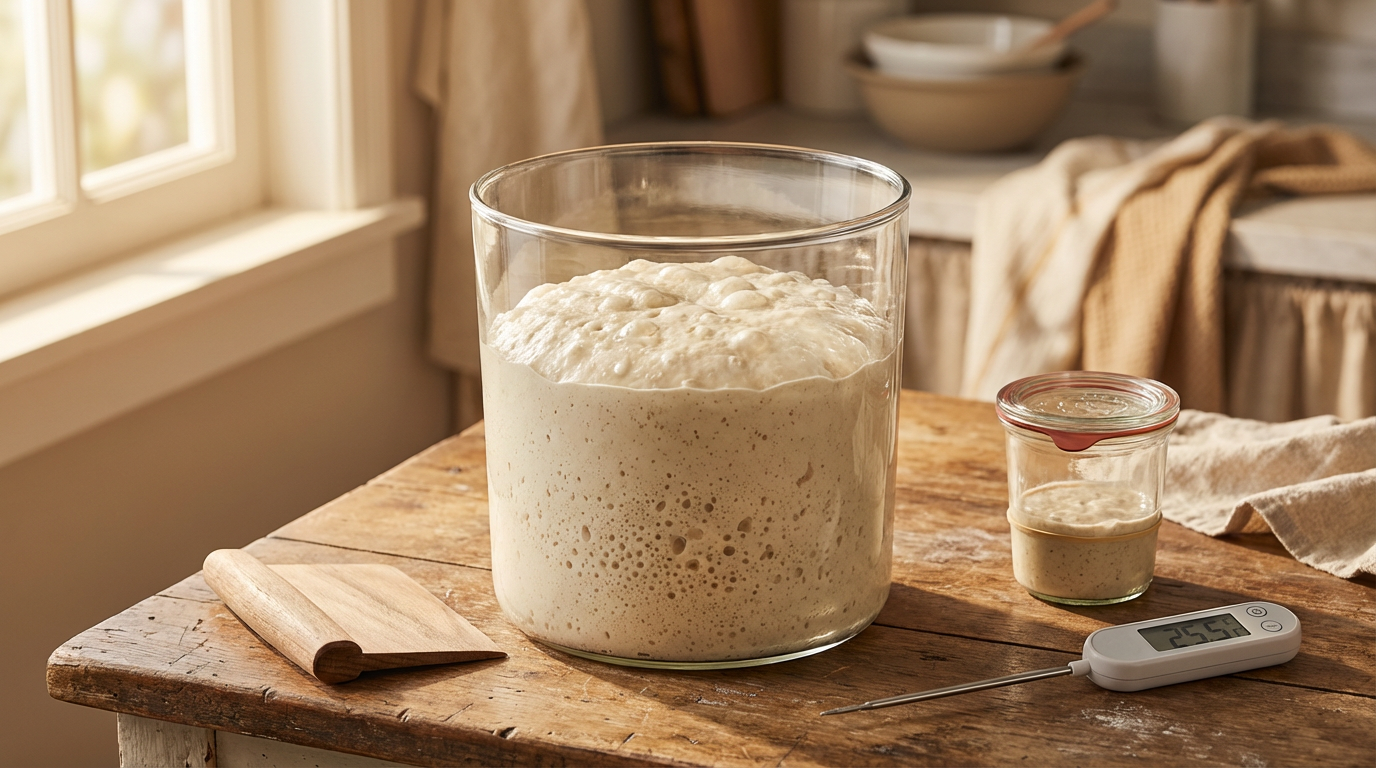
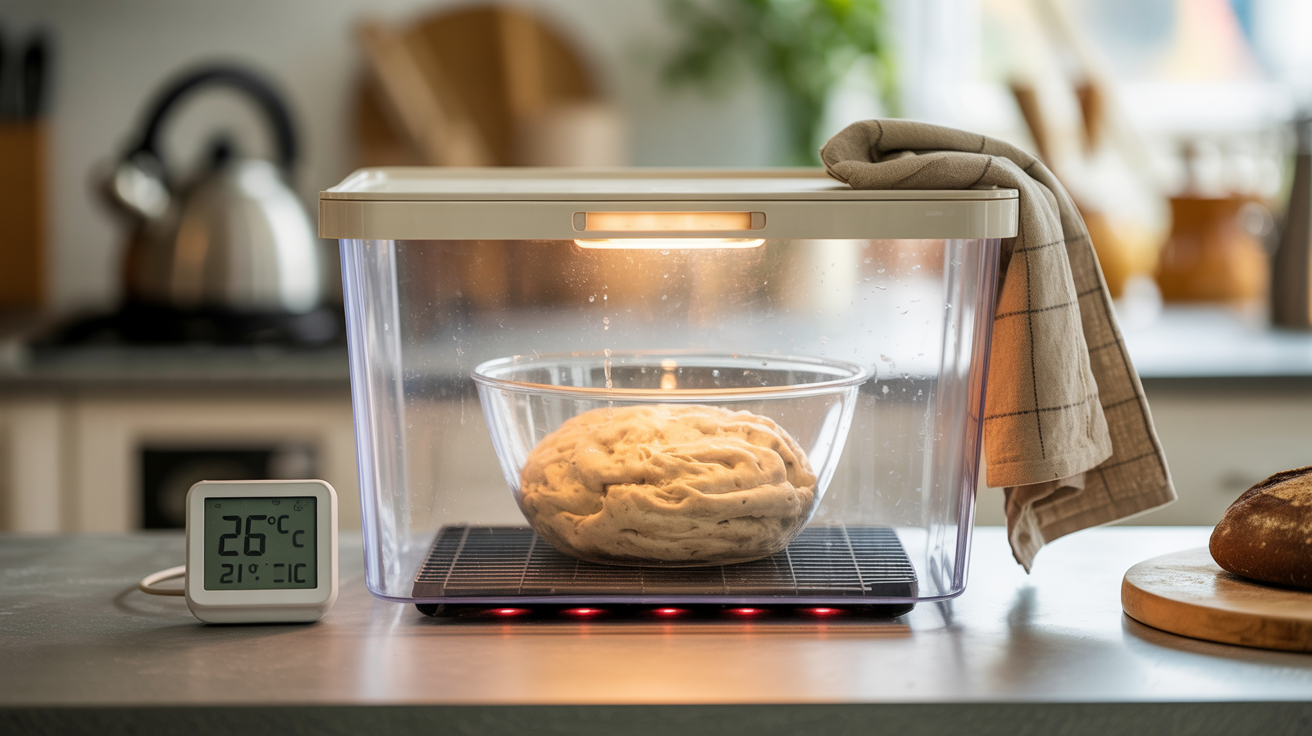
Clear glass fermentation container with domed sourdough dough risen about 75% showing surface bubbles, alongside a wooden bench scraper, rubber-banded starter jar, and digital thermometer on a rustic wooden countertop
Fermentation

Signs Bulk Fermentation Is Done: The 7-Point Visual Checklist

Stop watching the clock. Bulk fermentation is done when the dough <em>looks</em> right — 75% rise, jiggly surface, tension, aerated edges. Here’s the 7-point checklist professional bakers use.

May 12, 2026
9 min read
Cozy nighttime kitchen scene with a covered glass bowl of sourdough bulking on the counter, a baker’s notebook with handwritten schedule, a mug of herbal tea, and an analogue clock showing 10pm with warm amber kitchen light against cool blue window light
Fermentation

Overnight Bulk Fermentation: Cold-Slow vs Warm-Fast — Which Works?

Can you bulk ferment overnight on the counter? Yes — if you do the math on temperature and inoculation. Here’s how to schedule an 8–12 hour bulk without over-fermenting.

May 12, 2026
9 min read
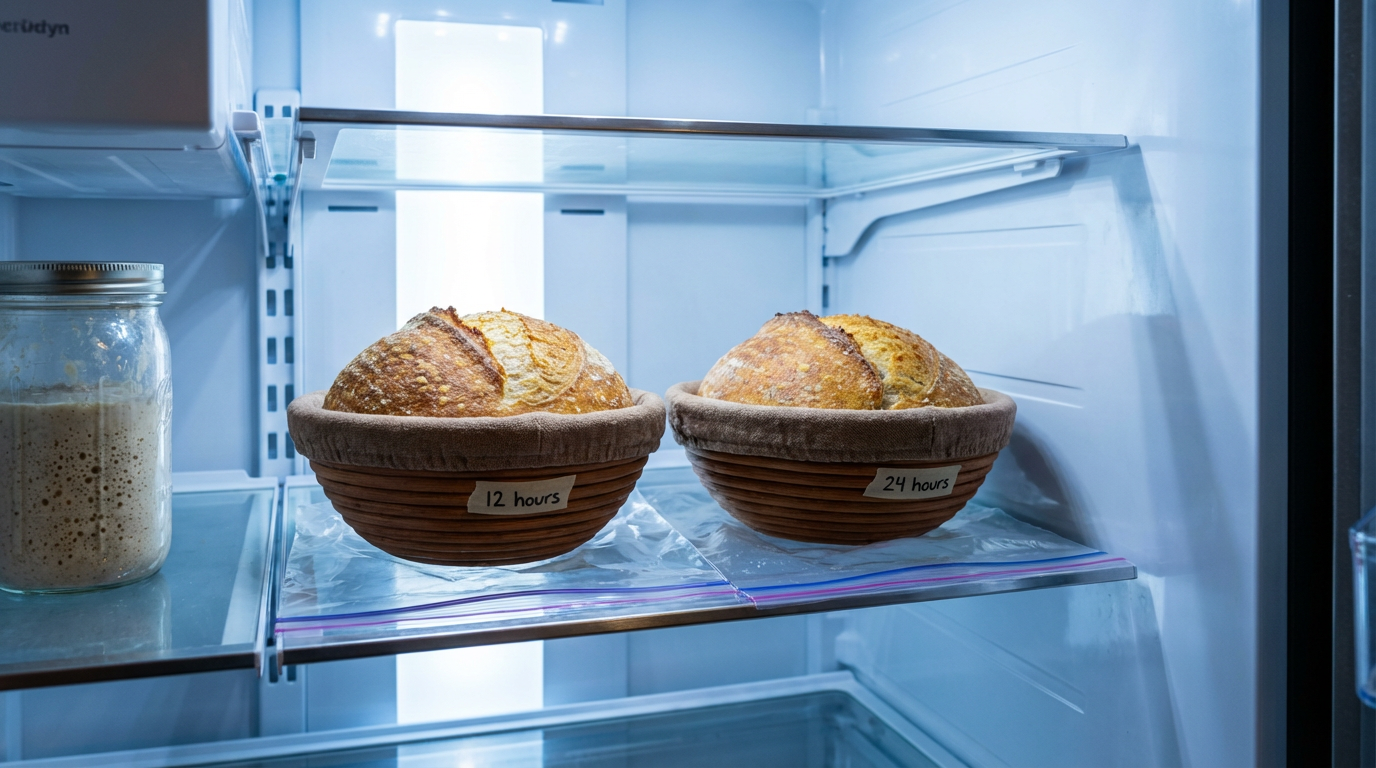
Interior of a refrigerator with two identical shaped sourdough boules in brown woven bannetons covered with clear plastic bags, one labelled 12 hours and the other 24 hours, alongside a jar of ripe starter on a neighbouring shelf
Fermentation

Cold Retard: 12 Hours vs 24 Hours — Flavour, Crumb, and Timing Compared

Twelve hours in the fridge gives clean, mildly tangy bread. Twenty-four gives complex, deeply sour character — but only if you adjust bulk to match. Here’s the comparison and the schedule for each.
May 12, 2026
8 min read
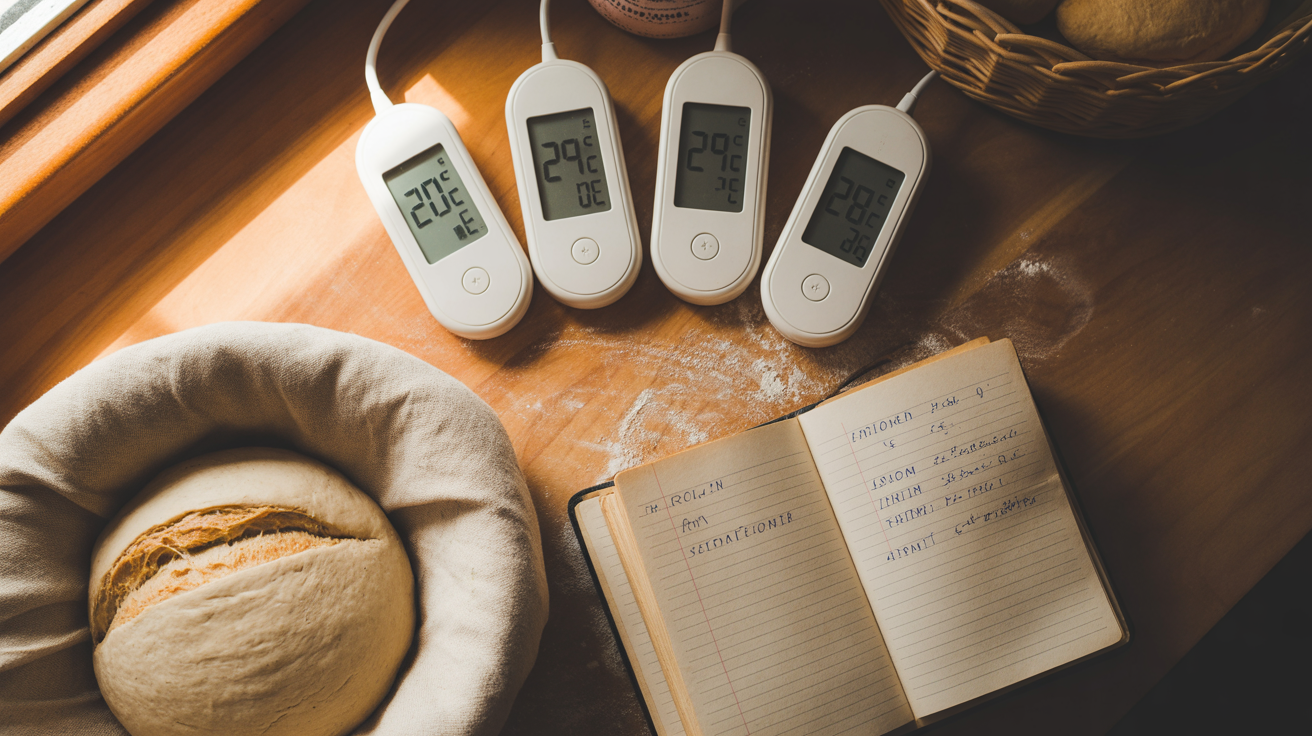
Overhead view of digital probe thermometers showing different dough temperatures arranged on a wooden countertop next to a shaped sourdough boule in a floured linen banneton and an open baker’s log book with handwritten entries
Fermentation

Sourdough Proofing Time by Temperature: The Complete Reference Chart

Every 5°C change roughly doubles or halves proofing time. Bookmark this chart: exact proofing and bulk times for 18–30°C, with adjustments for inoculation and flour type.

May 15, 2026
8 min read
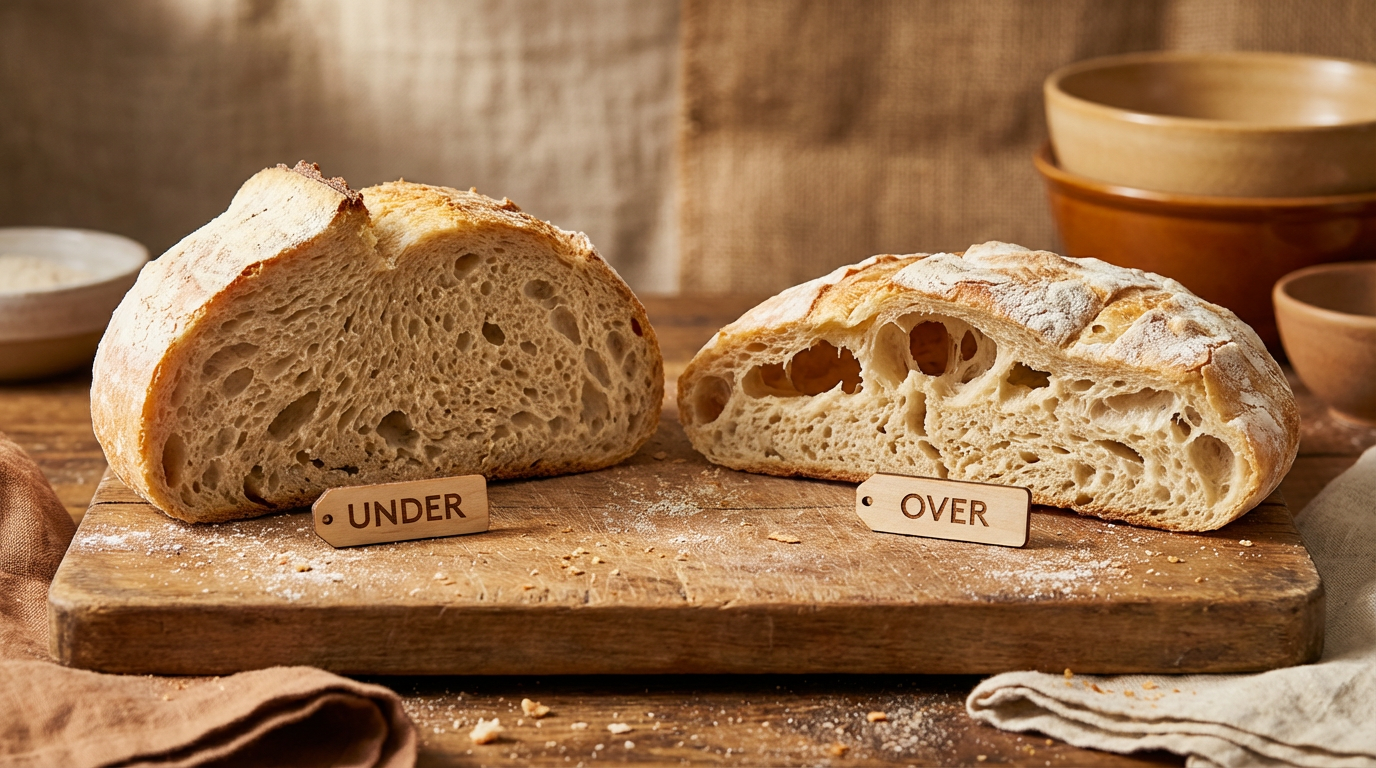
Side-by-side comparison of two halved sourdough loaves on a wooden cutting board showing dramatically different interior crumb structures with small wooden tags labelled UNDER and OVER, revealing dense tight crumb versus collapsed torn crumb
Fermentation

Underproofed vs Overproofed Sourdough: The Diagnostic Guide

Dense, gummy crumb? Flat, collapsed crust? One of these is underproofing, the other overproofing — but both are fixable. Here’s the diagnostic guide with crumb clues.

May 15, 2026
9 min read
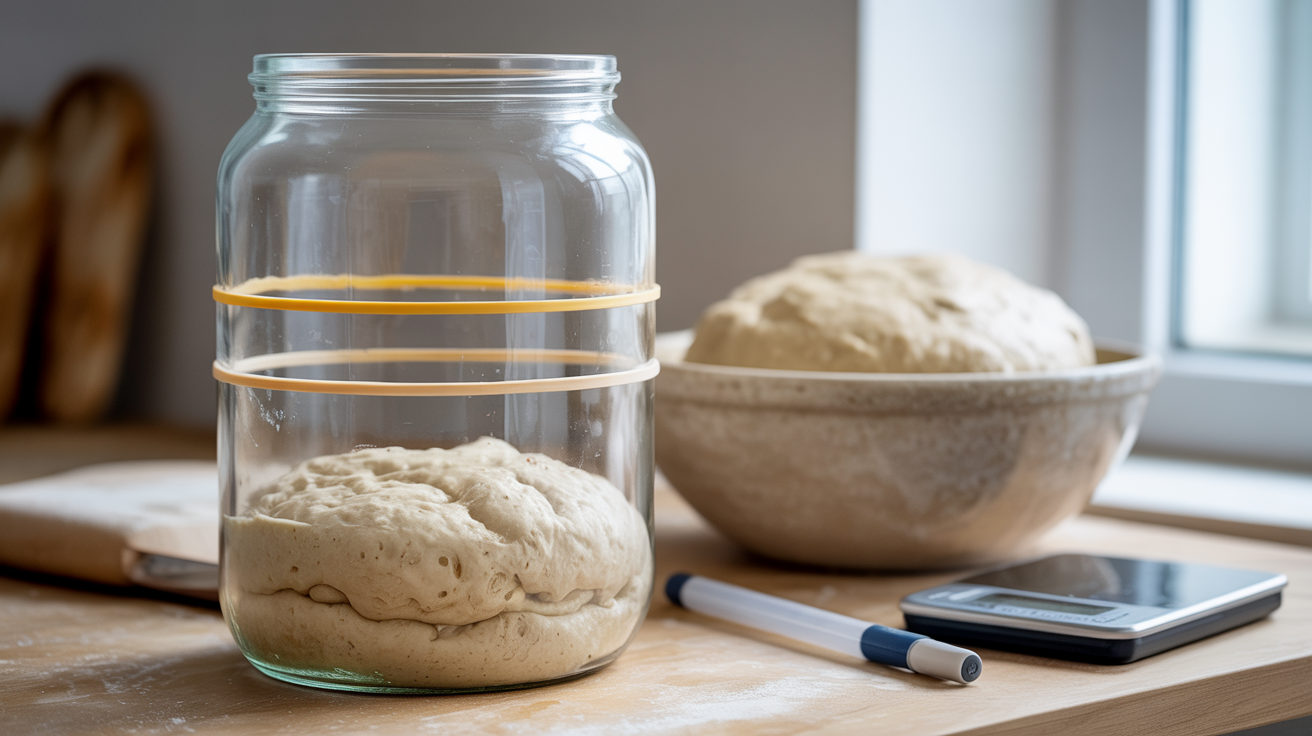
Clear glass jar containing sourdough dough with two rubber bands marking start and 75% rise target positions, alongside a ceramic bulk fermentation bowl, a digital scale, and a baker’s marker pen in bright natural window light
Fermentation

The Aliquot Jar Method: How Pros Measure Bulk Fermentation to the Minute

Clock watching fails. Poke tests are subjective. The aliquot jar method gives you an objective, foolproof rise percentage — and it takes 60 seconds to set up.

May 15, 2026
8 min read
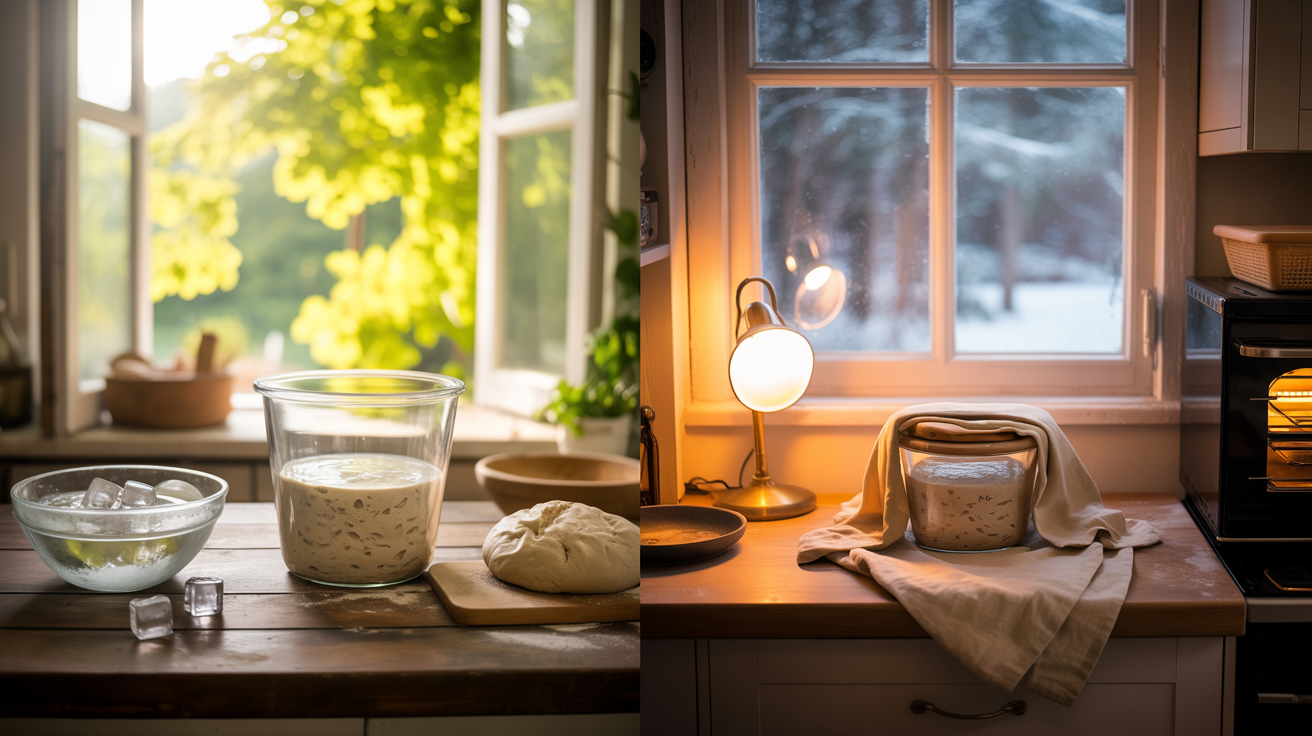
Split composition contrasting a bright sunlit summer kitchen with cold water and ice next to a bulk dough container, against a cosy winter kitchen with the same dough wrapped in a warm towel on top of an oven and frost on the window
Fermentation

Sourdough in Summer vs Winter: How to Adjust Bulk Fermentation by Season

Your summer loaf looks like a puddle, your winter loaf never rises. It’s not the recipe — it’s the 10°C swing between seasons. Here’s how professionals adapt bulk fermentation year-round.

May 19, 2026
9 min read
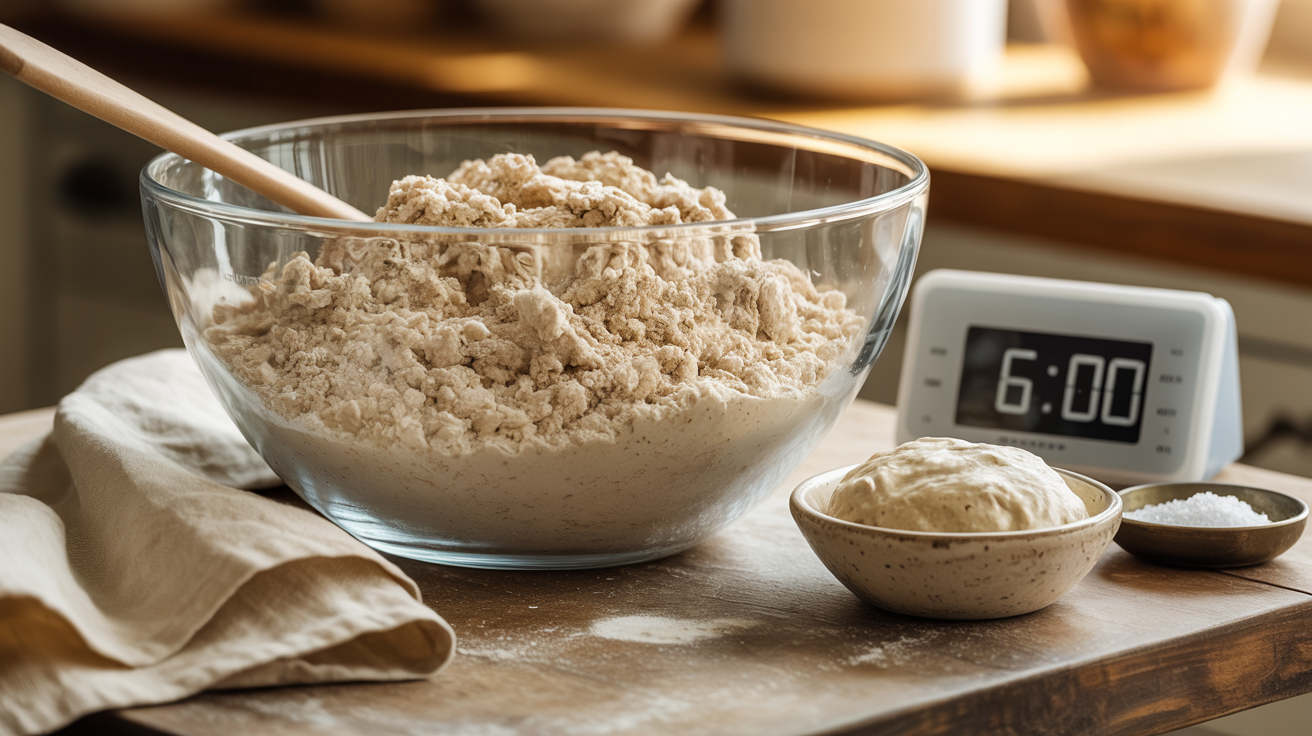
Glass mixing bowl with a shaggy unmixed flour and water mixture resting during autolyse, alongside a kitchen timer at 60 minutes, a small bowl of bubbly ripe sourdough starter, a folded linen cover, and a small dish of coarse salt on a rustic wooden surface
Technique

Sourdough Autolyse: How Long, When to Skip, and What It Actually Does

20 minutes or 4 hours? With salt or without? Autolyse is widely misunderstood. Here’s what the science says and the best timing for your flour and hydration.

May 19, 2026
8 min read
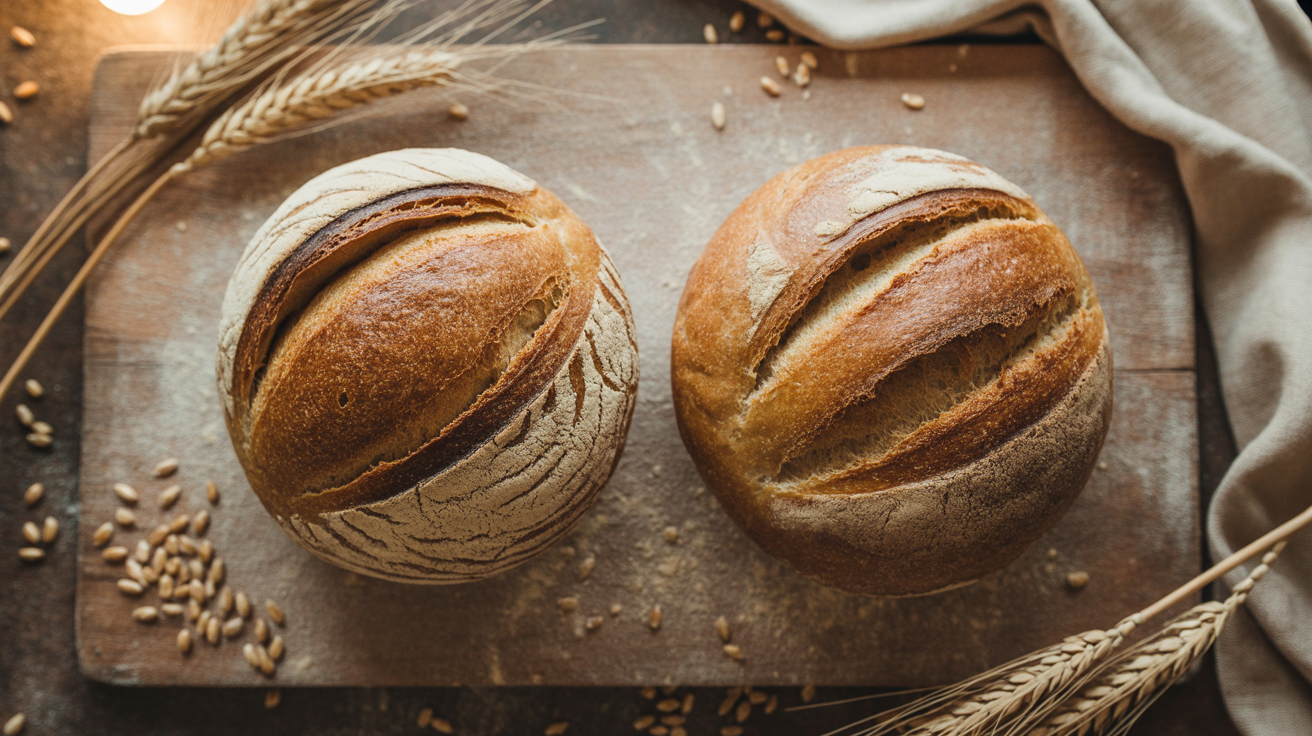
Two identical golden crusty sourdough boules on a floured wooden board showing successful doubling
Scaling

How to Double a Sourdough Recipe Without Disaster

Doubling a sourdough recipe isn’t just multiplying by two. Learn the four things that don’t scale linearly and the fermentation adjustments pros actually make.

May 22, 2026
11 min read
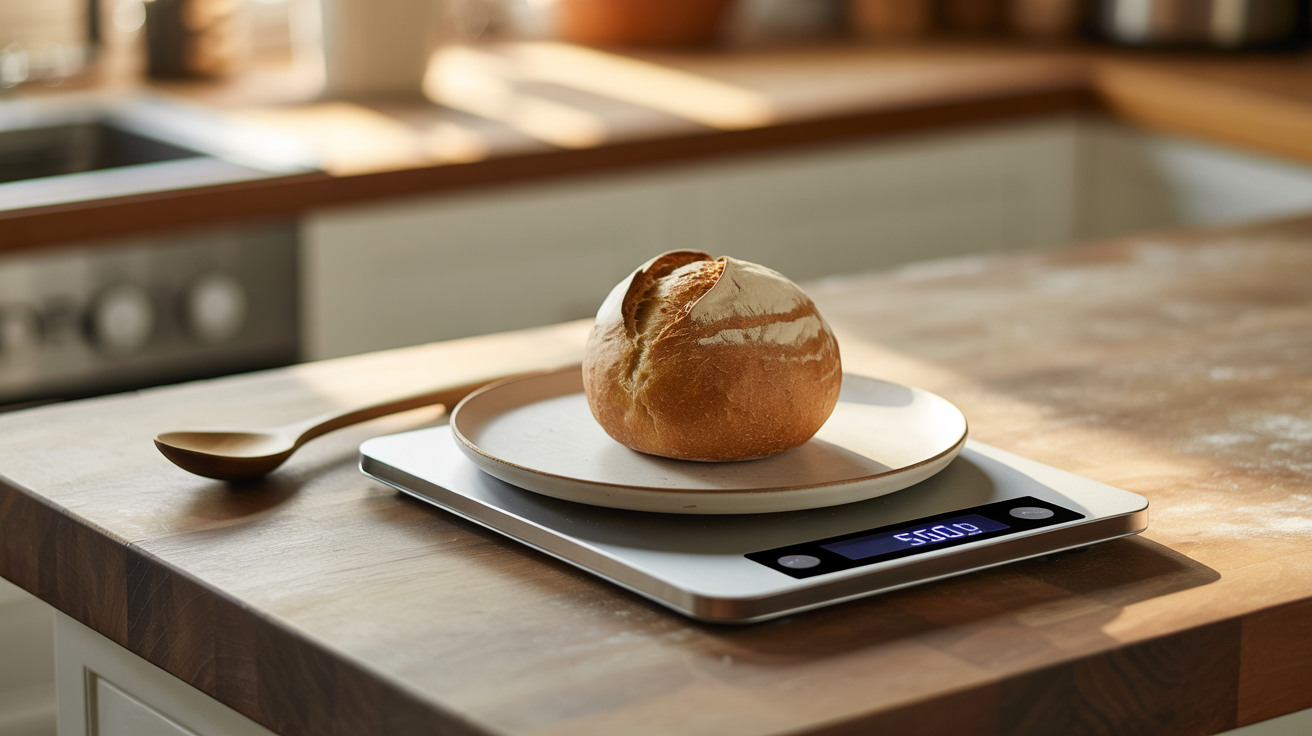
Single small sourdough boule on white ceramic plate next to digital kitchen scale showing precise measurement
Scaling

How to Halve a Sourdough Recipe (Without the Math Trap)

Halving a recipe looks easier than doubling — but small batches hide three math traps that ruin the crumb. Here’s what actually changes when you cut a sourdough recipe in half.

May 22, 2026
10 min read
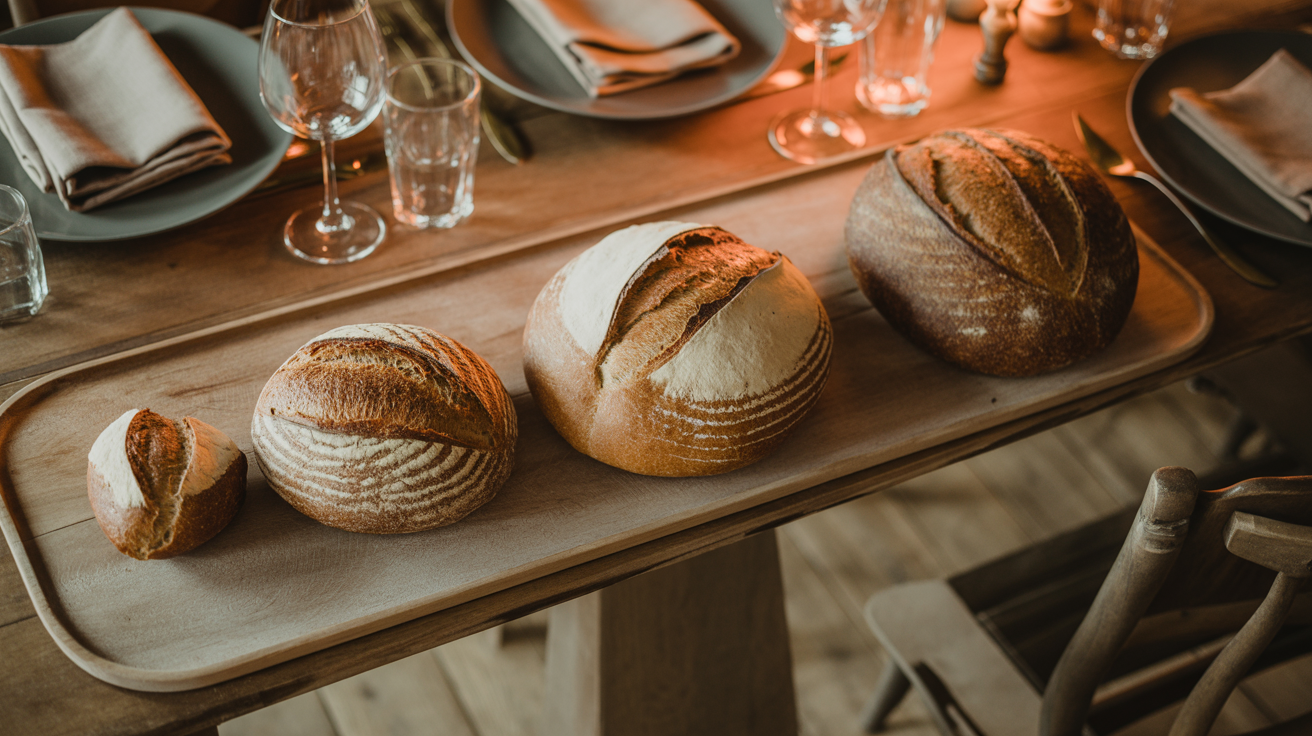
Three sourdough loaves of different sizes on rustic wooden board with wine glasses and napkins in warm dinner lighting
Scaling

Sourdough for Dinner Parties: Scaling Math for 8, 12, and 20 People

Hosting 12? You need more than one loaf. Here’s the exact math on portions per person, batch sizes, and the timeline that gets multiple loaves to the table still warm.

May 22, 2026
11 min read
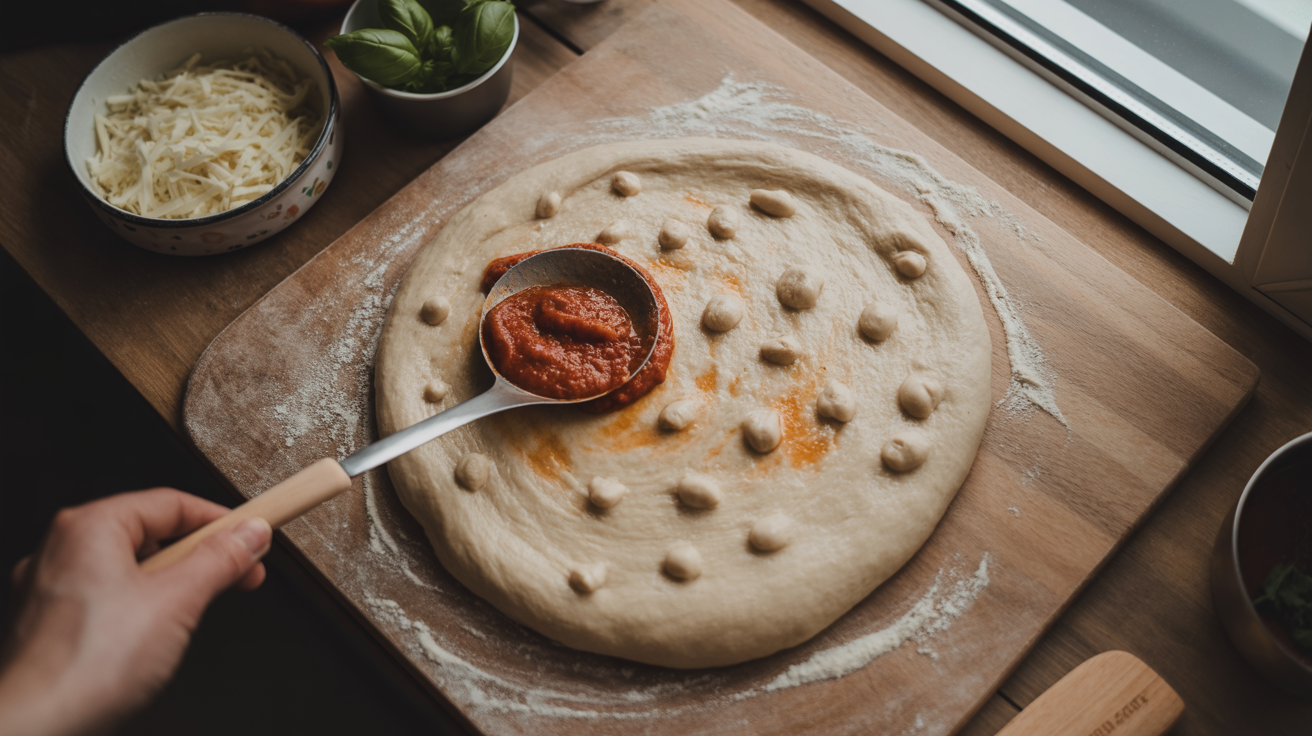
Hand-stretched sourdough pizza dough on flour-dusted wooden peel with tomato sauce and fresh basil
Pizza & Flatbreads

Sourdough Pizza Dough Hydration: 65%, 70%, or 75%?

Neapolitan pizza, New York style, or Roman al taglio — each has a different ideal hydration. Here’s the exact ratio for your oven, your flour, and your pizza style.

May 26, 2026
12 min read
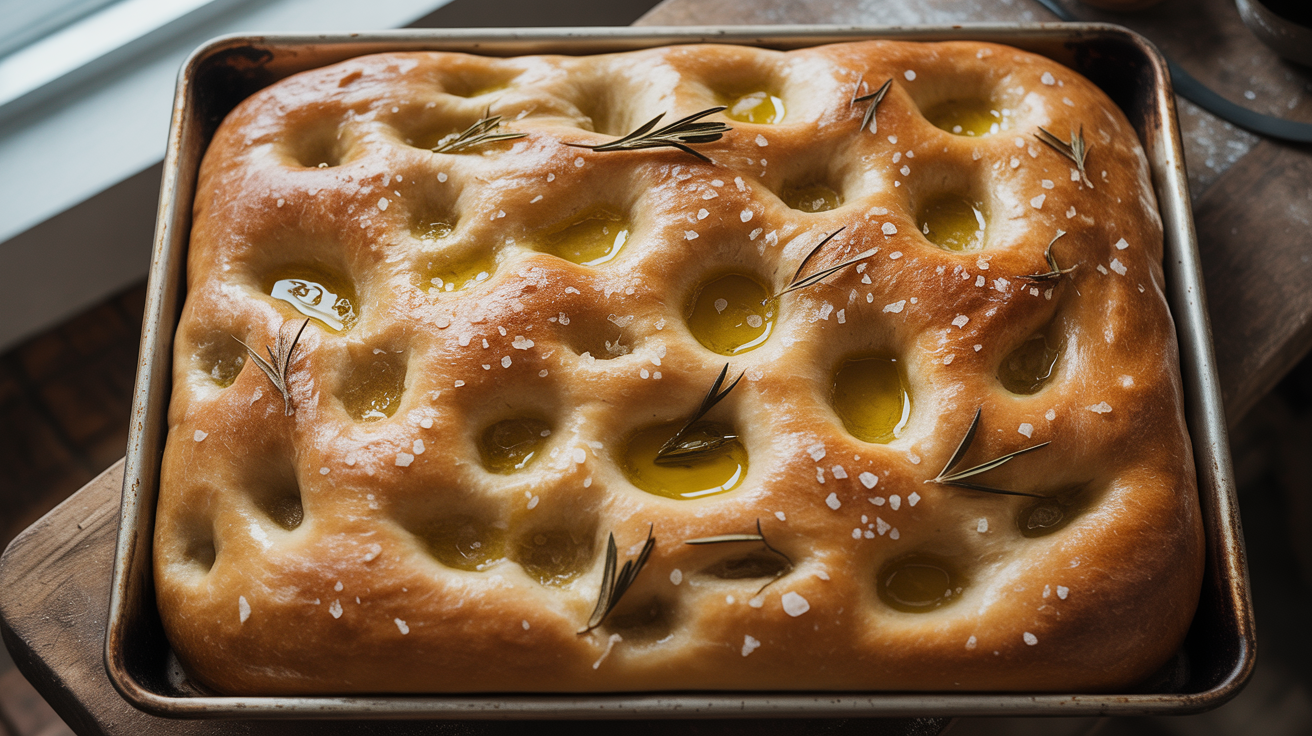
Freshly baked sourdough focaccia with olive oil dimples, flaky salt, and rosemary in rectangular pan
Pizza & Flatbreads

Sourdough Focaccia Ratios: Why Great Focaccia Runs 80%+ Hydration

Focaccia lives at the edge of what dough can handle — and that’s the point. Here’s the exact ratio, the two oils, and the pan trick that gets you bakery-quality focaccia at home.

May 26, 2026
11 min read
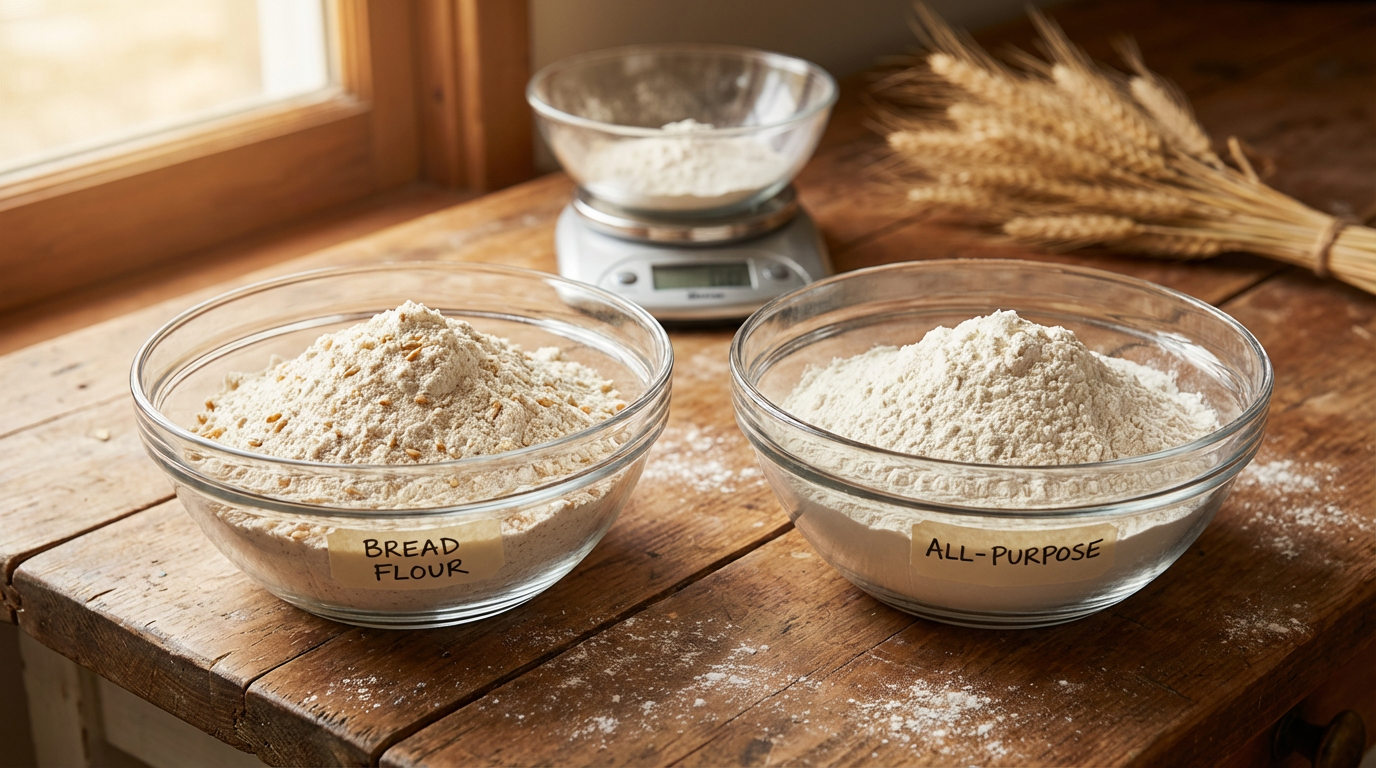
Two glass bowls labeled bread flour and all-purpose side by side on a wooden counter
Flour Types

Bread Flour vs All-Purpose for Sourdough: Which Should You Use?

Protein content, water absorption, and crumb structure differ between bread and all-purpose flour. Here’s when each wins — and how to adjust hydration when you swap.

May 29, 2026
9 min read
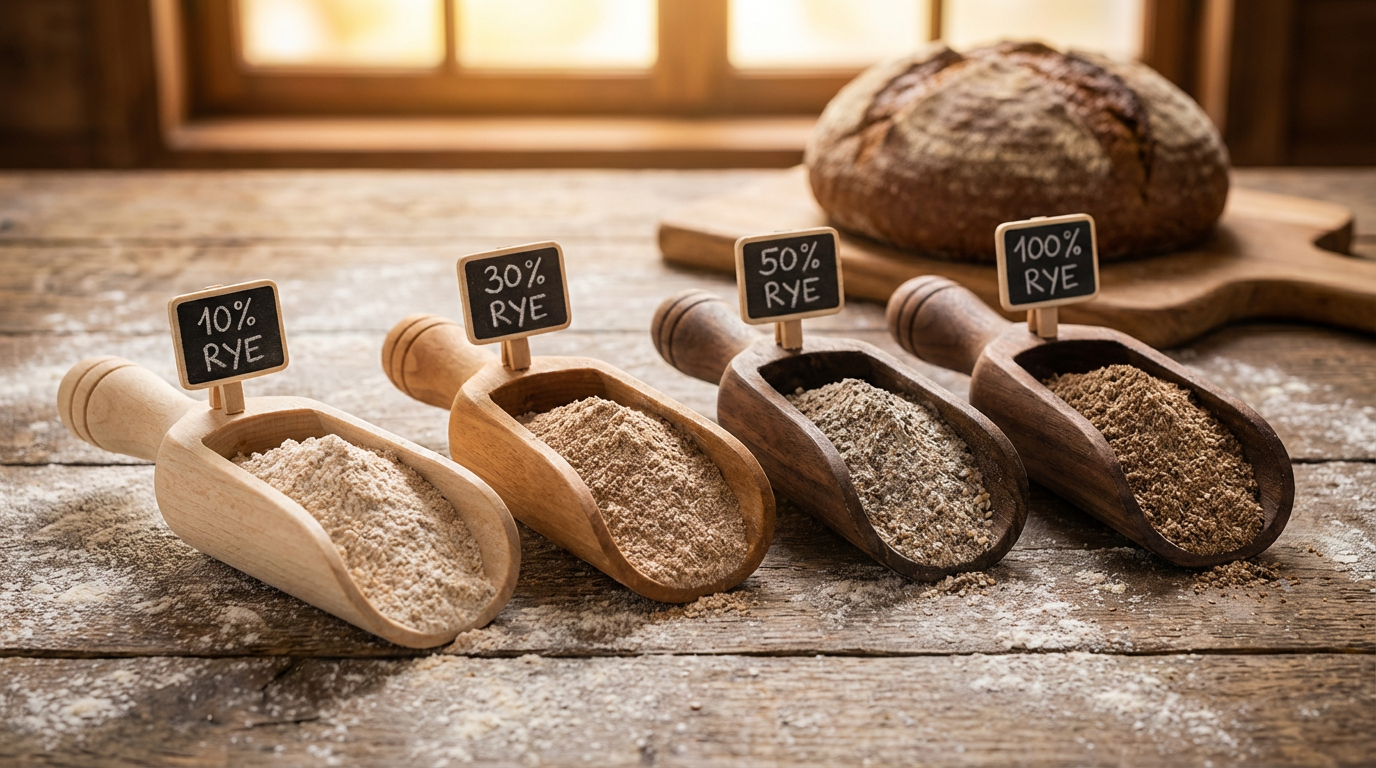
Four wooden scoops showing rye flour gradients from 10% to 100% on a rustic bakery counter
Flour Types

Rye Percentages in Sourdough: 10%, 30%, 50%, 100% Explained

Rye flour transforms sourdough — but how much is right? A precise guide to what each rye percentage actually tastes, looks, and bakes like.

May 29, 2026
10 min read
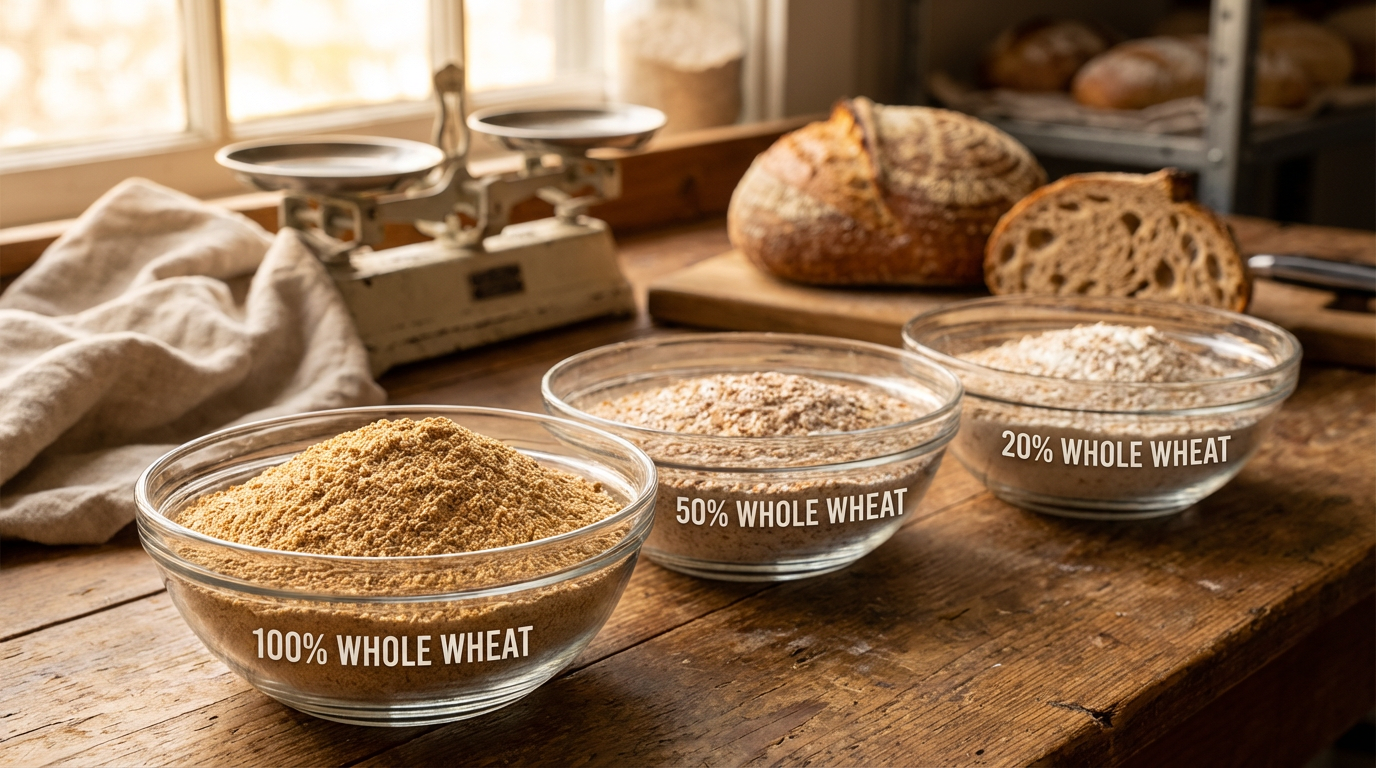
Three glass bowls showing different whole wheat flour ratios on a rustic wooden workbench
Flour Types

Whole Wheat Sourdough Ratios: The Right Blend for Every Purpose

From 10% whole wheat for flavor to 100% for nutrition — a practical map of what each ratio delivers, and how to adjust hydration and fermentation.

May 29, 2026
10 min read
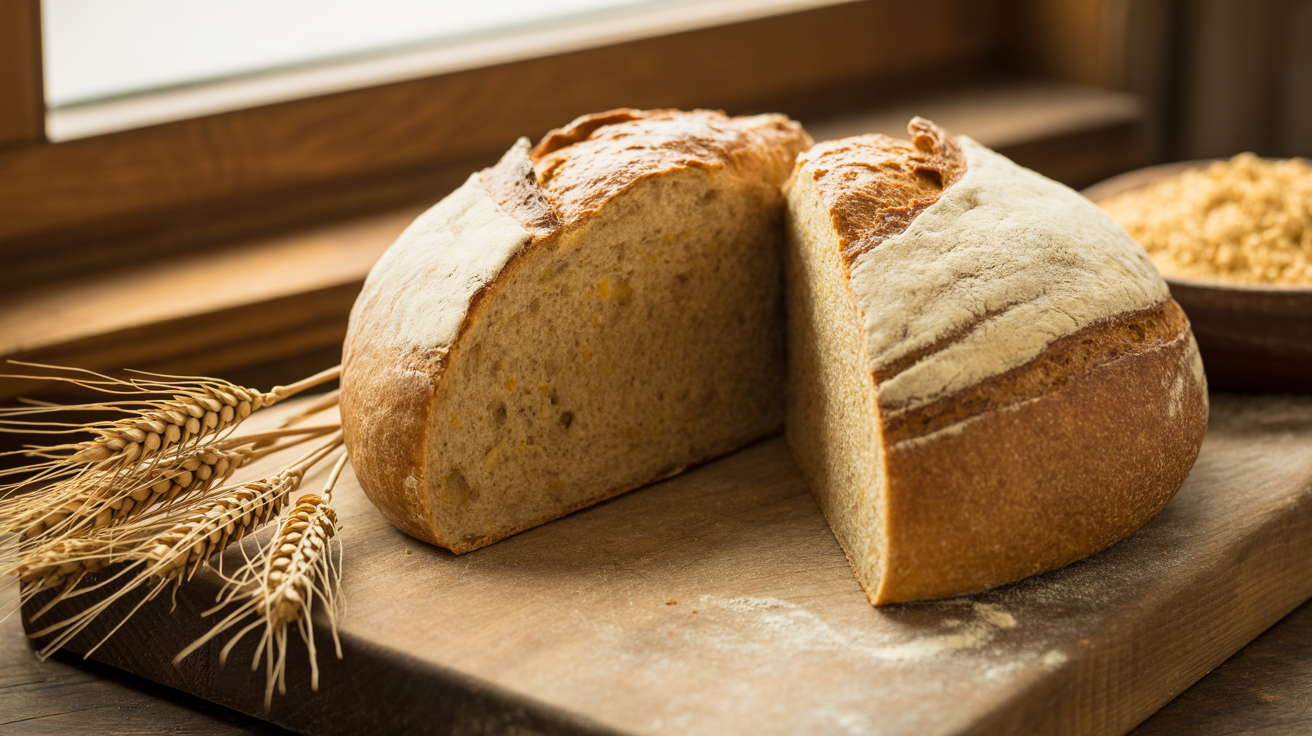
Round einkorn sourdough loaf cut open showing denser yellow crumb on a rustic wooden board
Alternative Grains

Einkorn Sourdough: The Ancient Grain That Plays By Different Rules

Einkorn makes extraordinary sourdough — but it behaves nothing like modern wheat. Here’s what actually works for hydration, fermentation, and handling.

June 2, 2026
10 min read
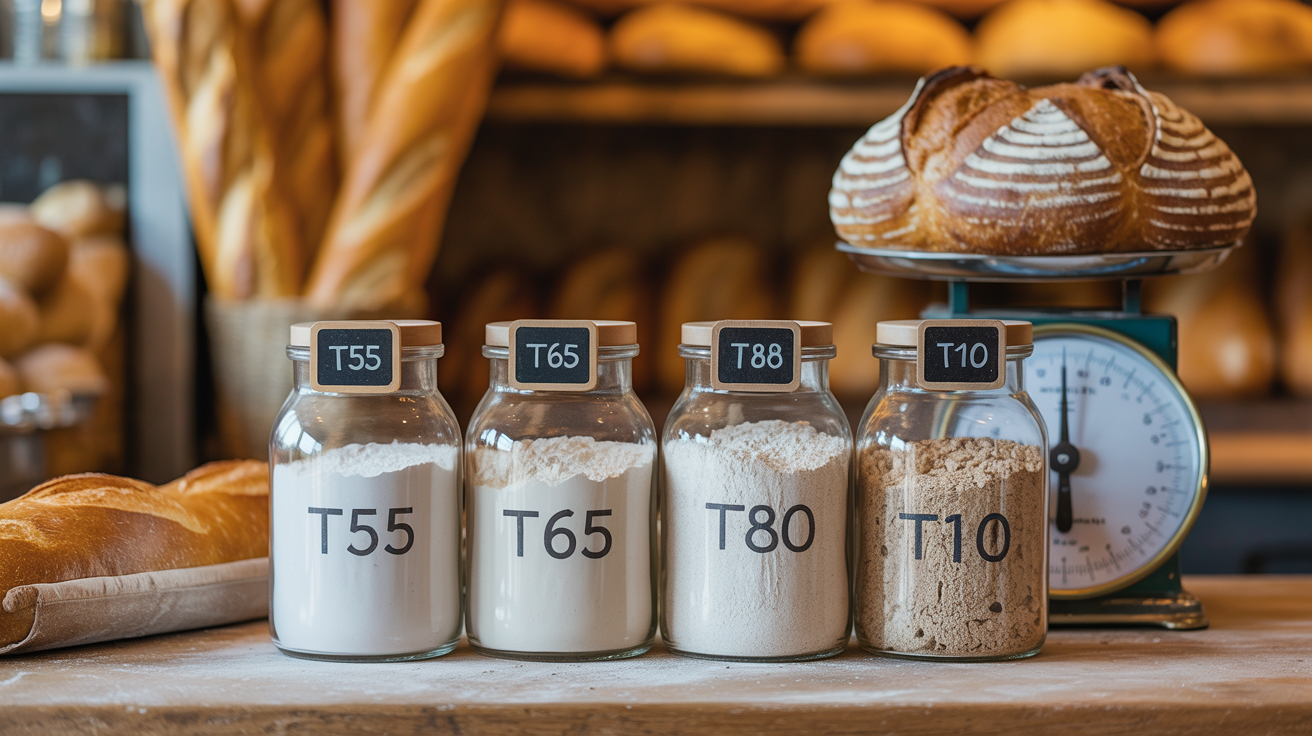
Four glass jars labeled T55 T65 T80 T110 showing different French flour shades on a wooden counter
Alternative Grains

French Flour Types Explained: T45, T55, T65, T80, T110, T150 for Sourdough

T55 is not bread flour. T65 is not whole wheat. Here’s what each French flour type actually contains — and which to use for your sourdough.

June 2, 2026
9 min read
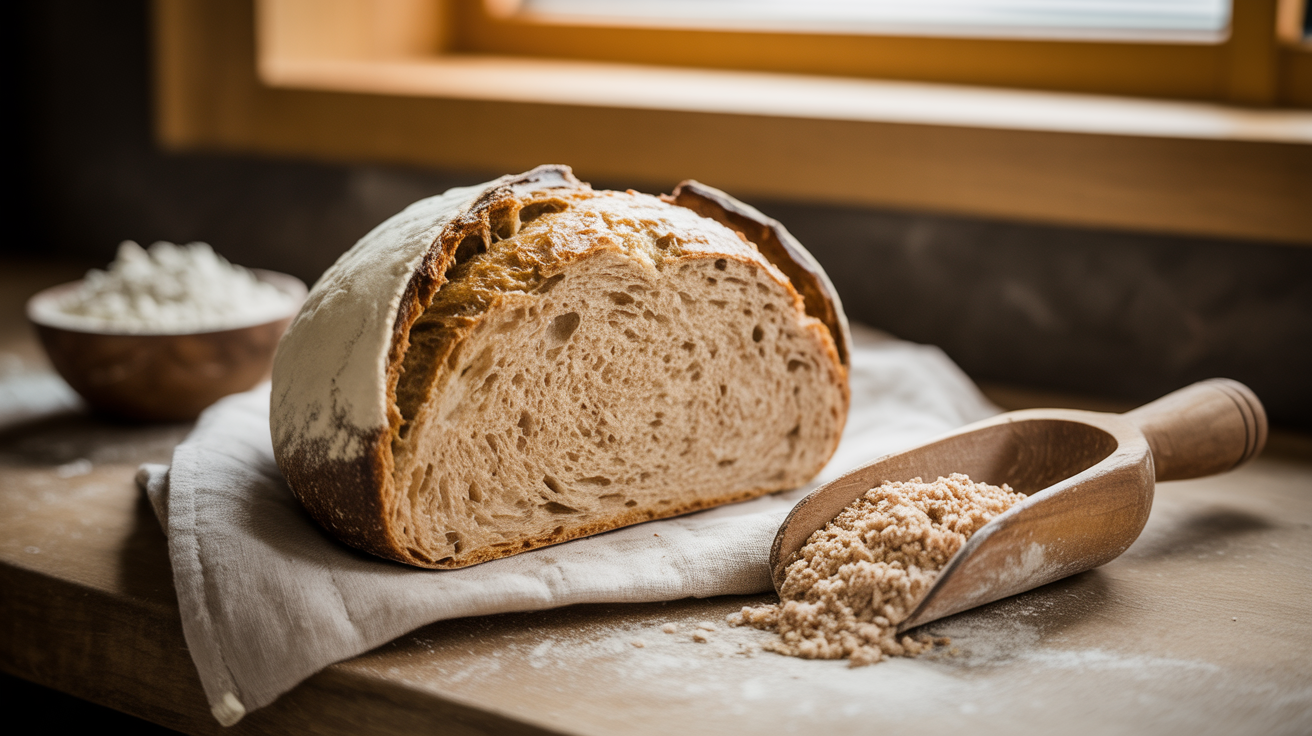
High-extraction sourdough boule cut in half showing warm-toned open crumb on linen cloth
Alternative Grains

High-Extraction Flour Sourdough: The Sweet Spot Between White and Whole Wheat

High-extraction flour (80–90%) gives you the open crumb of white bread with the flavor and nutrition of whole wheat. Here’s how to bake with it.

June 2, 2026
9 min read
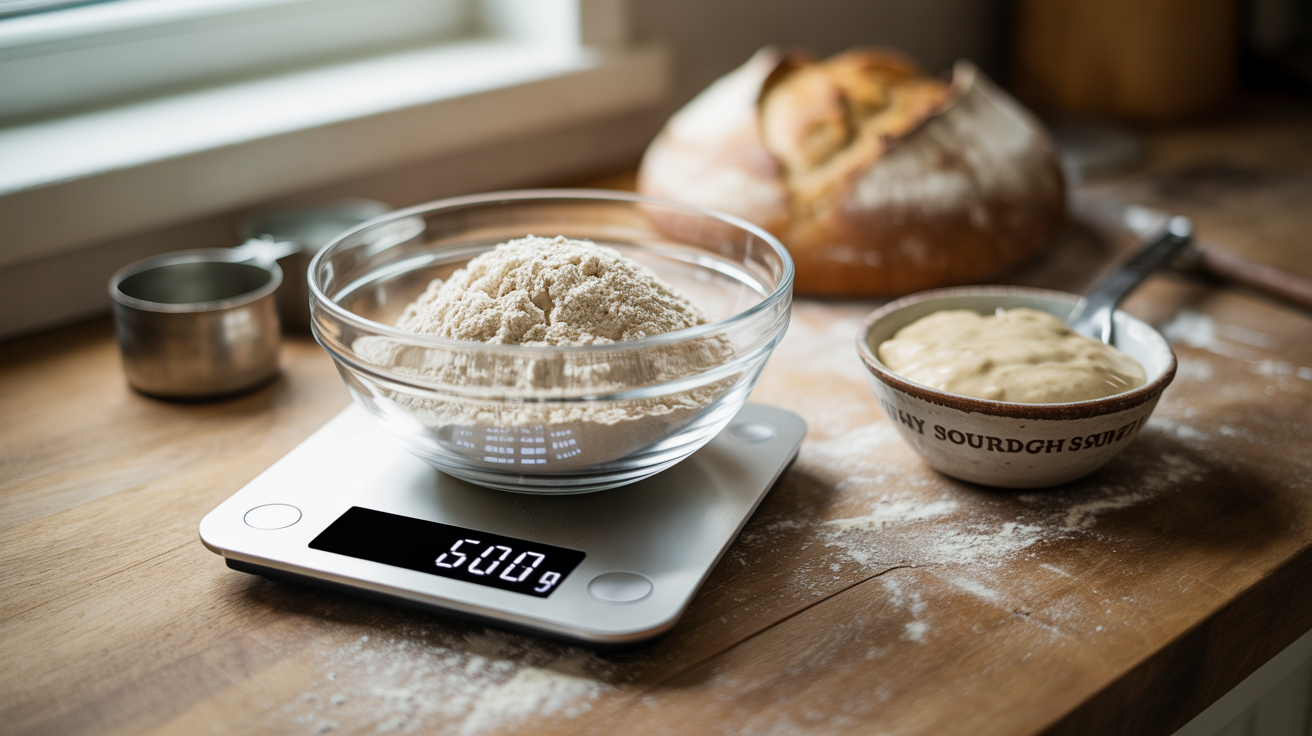
Digital kitchen scale showing 500g with glass bowl of flour and sourdough starter on a wooden counter
Equipment

Best Kitchen Scale for Sourdough: What Actually Matters (2026 Guide)

Not all kitchen scales are created equal. Here’s what precision, capacity, and features actually matter for sourdough — and which scales deliver.

June 5, 2026
9 min read
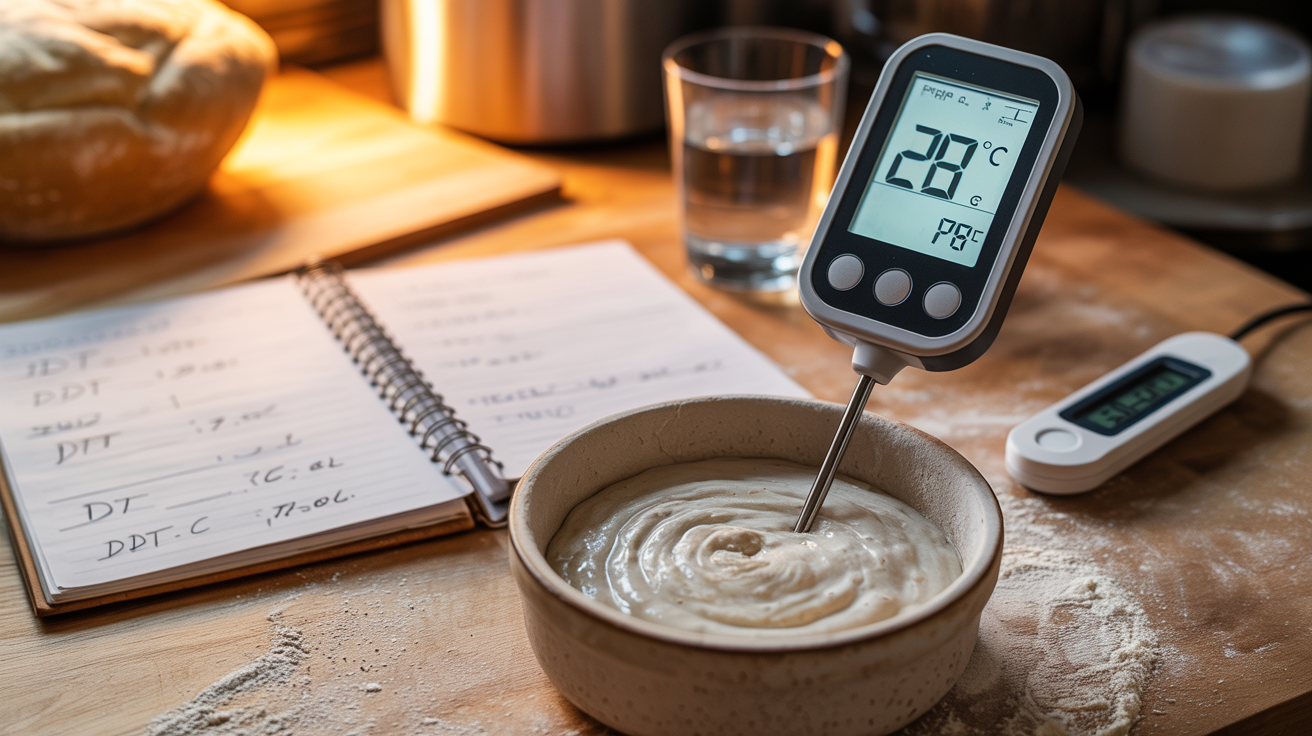
Instant-read thermometer in sourdough bowl with DDT calculations notebook and glass of water
Equipment

Desired Dough Temperature (DDT) Explained: The Math Pros Actually Use

DDT is how professional bakers control fermentation precisely — hitting their target dough temperature every time. Here’s the math, tools, and why it matters.

June 5, 2026
10 min read
Home baker's countertop with an inactive sourdough starter jar, kitchen scale, handwritten notes, and flour bag in warm morning light
Starter Care

What Ratio Should I Feed My Sourdough Starter? (Beginner Guide)

If you're new to sourdough and confused about feeding ratios, the short answer is 1:1:1 by weight. But the real answer depends on your kitchen temperature and when you want to bake.

April 22, 2026
7 min read
Three jars of actively bubbling sourdough starter at peak rise with a digital thermometer, timer, and measured flour and water
Starter Care

Best Ratio for Feeding Sourdough Starter (Optimization Guide)

There is no single best feeding ratio for every baker. The optimal ratio is the one that matches your kitchen temperature and baking schedule. Here's how to find yours.

April 22, 2026
8 min read

Ready to Apply What You've Learned?