Low-Hydration Sandwich Sourdough (65–70%): The Tender-Crumb Method
Why Sandwich Sourdough Is Different
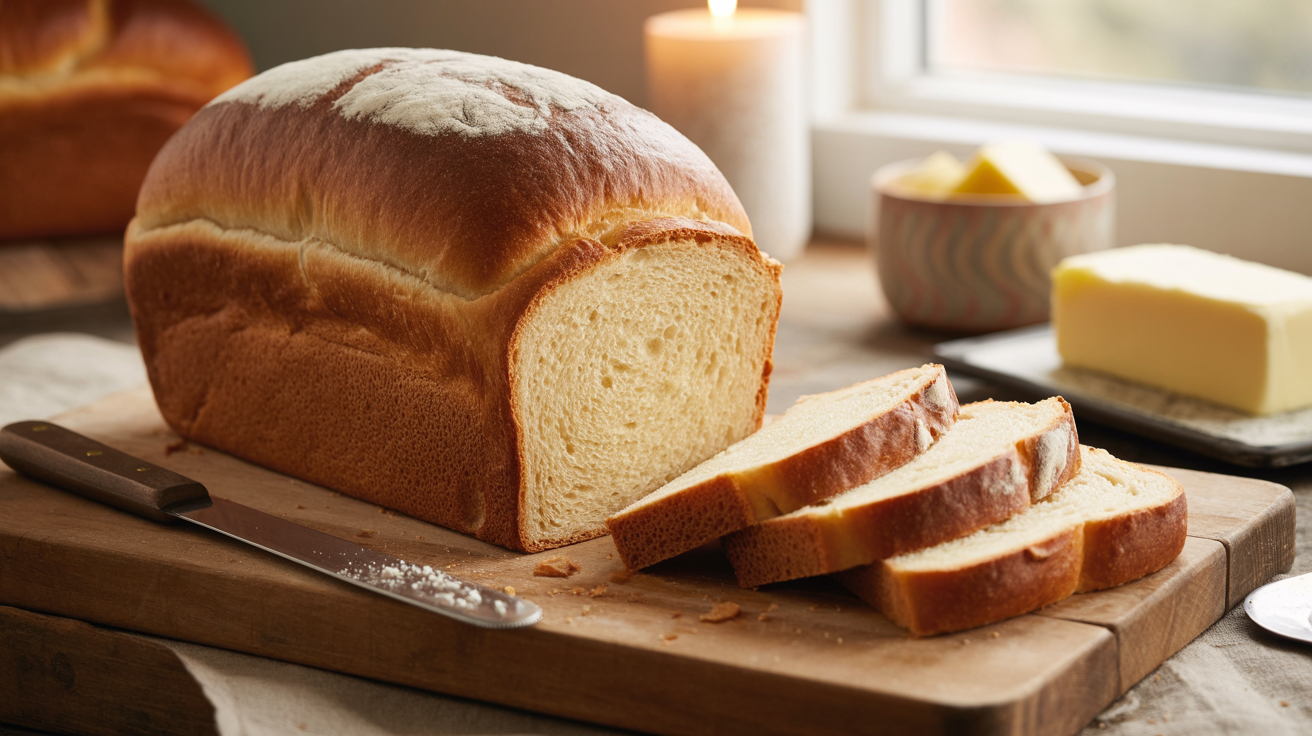
Artisan sourdough aims for an open, irregular crumb with big holes and a chewy, crackling crust. Sandwich sourdough is the exact opposite: tight, even crumb you can slice thin, soft tender crust that doesn’t shred your mouth, and structure that holds a sandwich without tearing.
You don’t get there by running high hydration. The holes that make artisan bread beautiful are a bug, not a feature, in a sandwich loaf — peanut butter leaks through them. For sandwich bread, we want the opposite approach.
Target Hydration: 65–70%
- 65%: firm, dense, holds everything — best for heavy toppings.
- 68%: the sandwich sweet spot — soft but structured.
- 70%: softer, more open, good for grilled cheese.
- 75%+: too soft, breaks under fillings, too irregular crumb.
Start at 68% and adjust by 2–3% if you want firmer or softer.
The Role of Fat
Fat is where sandwich sourdough pulls away from artisan. Butter, oil, or milk does three things:
- Coats gluten strands — weakens structure slightly, creating tenderness.
- Locks in moisture — loaf stays soft for 5–7 days instead of 2–3.
- Browning in the Maillard reaction adds richer crust flavour at lower bake temps.
Add 5–10% fat as baker’s percentage:
- 5%: lightly enriched — structure still bread-like.
- 8%: rich, brioche-like without being sweet.
- 10%: maximum before structure is compromised.
Complete Recipe: 68% Hydration Sandwich Sourdough
- 500g bread flour (100%)
- 340g milk or water (68%)
- 40g softened butter (8%)
- 10g salt (2%)
- 15g sugar (3%) — optional, for slight sweetness and better browning
- 100g ripe starter (20%)
Total dough weight: ~1005g — perfect for a standard Pullman or 9×5″ loaf pan.
Method (Full Timeline)
Evening (7 pm): Mix
- Combine milk, starter, sugar in a large bowl.
- Add flour and salt. Mix to shaggy dough.
- Rest 30 minutes (short autolyse).
- Work in softened butter with hands or stand mixer until fully incorporated — 5–7 minutes.
Evening (8 pm – 11 pm): Bulk ferment
- 3–4 hours at 24°C (75°F).
- 3 sets of gentle stretch-and-folds at 45-min intervals.
- Look for 50% rise — don’t over-ferment.
Night (11 pm): Shape and proof
- Turn dough onto lightly floured bench.
- Shape into a tight batard — roll tightly into a log.
- Place seam-down in buttered loaf pan.
- Cover with oiled plastic and refrigerate overnight (12 hours).
Morning (11 am next day): Bake
- Remove loaf from fridge, let warm 60 min while oven pre-heats.
- Pre-heat oven to 190°C (375°F) — lower than artisan bakes.
- Brush top with egg wash or milk for golden crust.
- Bake 40–45 minutes until internal temp hits 93°C (200°F).
- Remove from pan immediately, cool fully on a rack (minimum 90 min).
Why Bulk Is Shorter
Lower hydration = tighter gluten network = less gas tolerance before structure fails. A 68% dough with 8% butter reaches its bulk-fermentation sweet spot at about 50% rise, not 75–80% like an artisan dough. If you push further, the crumb turns gummy and the crust wrinkles.
See bulk fermentation timing for how to read the signs.
Why Full Proof Not 75%
Artisan sourdough proofs to about 75% to save rise for the oven. Sandwich sourdough wants a fully-proofed loaf — you’re going for soft, tender, not oven-spring drama. Proof until the dough crowns the pan by about 1cm before baking.
Bake Temperature Matters
Artisan loaves go into 240–260°C (465–500°F) ovens for dramatic spring and crust. Sandwich loaves go into 190–200°C (375–400°F) ovens. Why?
- Enriched doughs brown faster — high heat burns the crust before the inside cooks.
- Slower bake means softer crust — perfect for sandwich bread.
- Fat + sugar need gentler heat for Maillard without bitterness.
Variations
- Whole wheat sandwich: swap 25–40% of flour for whole wheat. Increase hydration to 72% to account for bran absorption. See whole wheat hydration guide.
- Honey oat sandwich: swap 10% flour for rolled oats, replace sugar with honey.
- Seeded sandwich: add 10% mixed seeds after final mix — sunflower, flax, sesame, poppy.
- Egg-enriched: replace 20% of water with whole eggs for richer crumb.
Storage & Shelf Life
- Cool fully before slicing (90+ minutes) or crumb will gum up.
- Room temperature in bread box: 5–7 days.
- Sliced, bagged, frozen: 3 months — toast from frozen.
- Avoid fridge — stales bread faster than counter.
FAQ
Can I make this without a Pullman pan?
Yes — any standard 9×5″ loaf pan works. Pullman just gives you the characteristic flat top for clean sandwich slices.
Why is my sandwich loaf dense inside?
Usually under-proofed — remember, sandwich loaves want full proof. Also check that you added fat, not skipped it by accident.
Can I go higher than 70% for sandwich bread?
You can, but you’ll lose sliceability and the crumb will have inconsistent holes. 72–74% is the absolute ceiling for sandwich use.
How much starter for a sandwich loaf?
20% works for overnight fermentation. For shorter days (6–7 hours total), use 25–30%. See starter amount guide.
Next Steps
Bake once at 68% hydration with 8% butter using the recipe above. That’s your baseline. Then tune up or down based on how soft or structured you want the final loaf. Use the sourdough ratio calculator to scale to larger pans, and pair with the 1:1:1 feeding guide to ensure your starter is at full strength.