High-Extraction Flour Sourdough: The Sweet Spot Between White and Whole Wheat
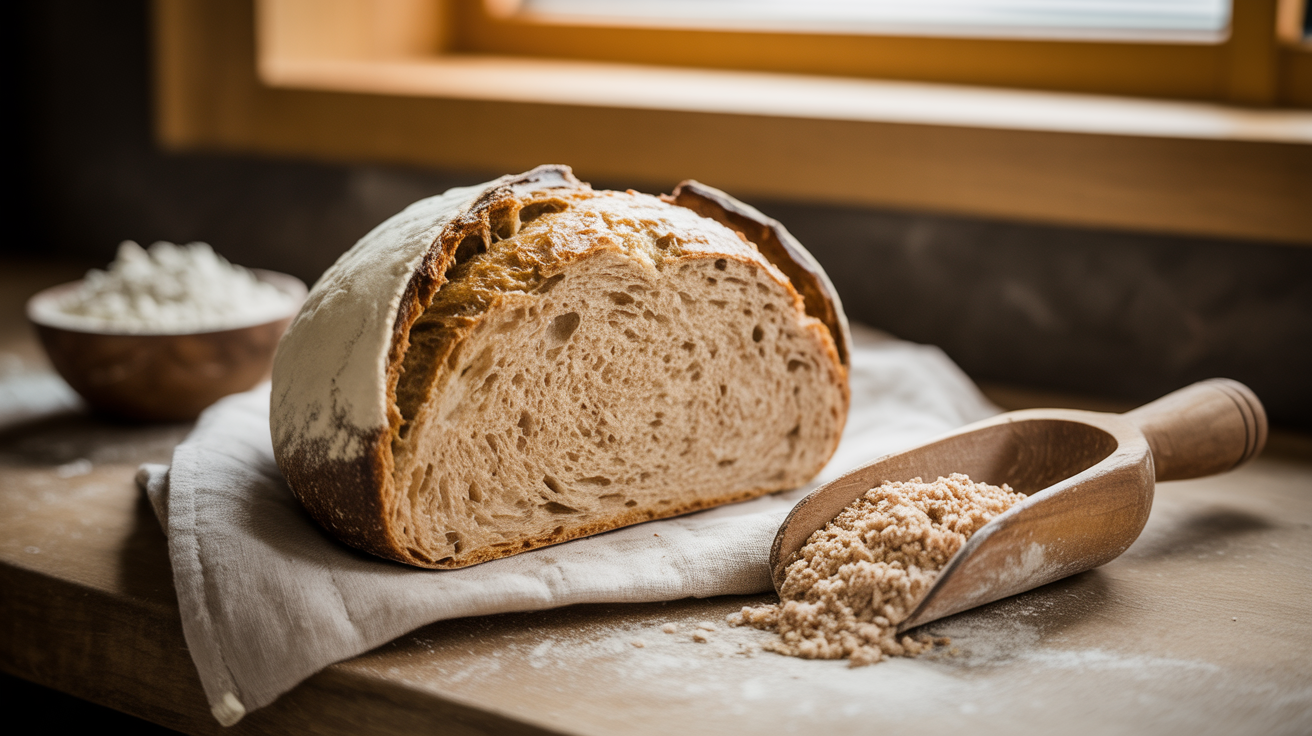
High-extraction flour is the most underrated flour in home sourdough baking. Most bakers know white and whole wheat — far fewer have discovered the middle ground that delivers the best of both. Also called “bolted” or “artisan” flour, high-extraction flour keeps 80–90% of the whole grain, removing only the coarsest bran. The result: astonishing flavor, great structure, open crumb, and a warm tan color that photographs beautifully.
This guide explains what high-extraction flour actually is, how to bake with it, and where to buy it. Use our sourdough ratio calculator to dial in the adjusted hydration and weights.
What “Extraction” Actually Means
Extraction rate = the percentage of the whole wheat berry retained in the final flour.
- White flour: ~72–76% extraction (just the endosperm, no bran/germ)
- High-extraction: 80–90% extraction (most bran/germ retained, only coarse bran sifted out)
- Whole wheat: 100% extraction (entire berry, nothing removed)
The difference is which parts of the wheat berry make it into your bag. White flour is pure endosperm — the starchy center. Whole wheat includes bran and germ. High-extraction sits in between, keeping most of the flavor-dense outer layers but removing the sharpest, gluten-cutting bran particles.
Why High-Extraction Flour Wins
High-extraction flour outperforms both white and whole wheat for most home sourdough because:
- Flavor depth: You keep the germ (which holds the oils, minerals, and flavor precursors) — roughly 90% of whole wheat’s flavor intensity.
- Structural strength: Without the coarsest bran cutting gluten strands, structure holds up for open crumb.
- Nutritional bump: More fiber, B vitamins, minerals, and antioxidants than white — not as much as whole wheat, but substantial.
- Fermentation performance: Germ provides natural yeasts and enzymes that accelerate and enhance fermentation.
- Visual appeal: Warm tan crumb rather than chalk-white — more artisan, more photogenic.
Hydration for High-Extraction Flour
High-extraction flour absorbs more water than white but less than whole wheat:
| Flour type | Typical hydration | Dough feel |
|---|---|---|
| White bread flour | 72–75% | Strong, manageable |
| High-extraction (80–85%) | 78–80% | Slightly sticky, supple |
| High-extraction (85–90%) | 80–82% | Noticeably sticky, needs confident hands |
| Whole wheat (100%) | 82–88% | Very sticky, less elastic |
If you’re swapping from white bread flour to high-extraction, plan to add 2–5% more water. Start at 78% if you’re used to 74%.
Fermentation Timing
The retained germ brings natural yeasts and enzymes that jump-start fermentation. Expect bulk times 15–20% shorter than pure white bread flour.
At 24°C / 75°F, 100% high-extraction bulk ferments in about 4–4.5 hours (compared to 5 hours for bread flour). Watch the dough rise — target 75% volume increase, domed surface, bubble pattern on top and sides.
For help reading fermentation signs, see our bulk fermentation signs guide.
Handling and Technique
High-extraction flour handles similarly to bread flour with a few tweaks:
- Autolyse: 45–60 minutes is beneficial (vs 30 for pure white). Gives the bran time to soften. See autolyse timing guide.
- Stretch-and-folds: 3–4 sets at 30-minute intervals work well.
- Shaping: Standard technique, but don’t push the dough too hard — some bran can weaken it.
- Cold retard: 12–16 hours is ideal, similar to bread flour.
The 100% High-Extraction Recipe
For a classic artisan high-extraction boule:
- 500g high-extraction flour (85% extraction)
- 400g water (80% hydration)
- 100g starter (20% inoculation)
- 10g salt (2%)
Process:
- Mix flour and water, autolyse 45 minutes.
- Add starter, mix gently 2 minutes.
- Rest 30 minutes, add salt, mix in.
- 3 sets of stretch-and-folds at 30-minute intervals.
- Bulk ferment until 75% risen (about 4 hours at 24°C / 75°F).
- Pre-shape, rest 20 minutes.
- Final shape into banneton.
- Cold retard 14 hours.
- Bake in Dutch oven at 250°C / 485°F: 20 min covered, 22 min uncovered.
High-Extraction Blends
You can also use high-extraction as part of a blend:
- 50% white bread flour + 50% high-extraction: More open crumb, still exceptional flavor. Hydration 76–78%.
- 70% high-extraction + 30% whole wheat: Dense rustic loaf, hydration 82–84%.
- 60% high-extraction + 30% white + 10% rye: Classic modern artisan blend. Hydration 78%.
Where to Buy High-Extraction Flour
In North America:
- Central Milling: “Type 70 Malted” and “Artisan Bakers Craft” are both high-extraction
- Janie’s Mill: “Bolted flour” at 85% extraction, exceptional flavor
- King Arthur: “High Extraction White Flour” (sometimes available seasonally)
- Cairnspring Mills: “Trailblazer” is 85% extraction
- Community Grains: Various high-extraction options
- Farmer Direct: Local stone-grinding mills often make high-extraction flour to order
Read the label carefully. “Artisan” on its own doesn’t mean anything specific; look for actual extraction percentages or “bolted.” Stone-ground white flour is usually 80–85% extraction by default.
DIY: Home-Milling Your Own
If you have a home mill (or food processor with strong blades), you can make high-extraction flour yourself. Mill whole wheat berries, then sift through a fine mesh sieve (#40 or finer). Approximately 15% of the coarsest bran will be removed. The result is ~85% extraction flour with exceptional flavor.
Key tip: sift carefully. The goal is to remove the sharpest, most flavor-dulling bran while keeping everything else. Over-sifting drops you back toward white flour.
Common Mistakes
1. Using bread-flour hydration. 75% hydration high-extraction gives dense crumb. Start at 78%.
2. Skipping autolyse. The retained bran benefits from pre-hydration.
3. Confusing high-extraction with whole wheat. Hydration and timing differ; don’t use whole wheat numbers.
4. Buying generic “artisan” flour. Many “artisan” labels are just regular bread flour. Look for extraction percentages.
Final Word
High-extraction flour is the answer for bakers who want whole-grain flavor and nutrition without giving up open crumb and manageable dough. It’s what most professional artisan bakers actually use — and once you try it, it becomes hard to go back to pure white bread flour.
For a comparison of how flour type affects water needs, see whole wheat hydration adjustment.