Sourdough Pizza Dough Hydration: 65%, 70%, or 75%?
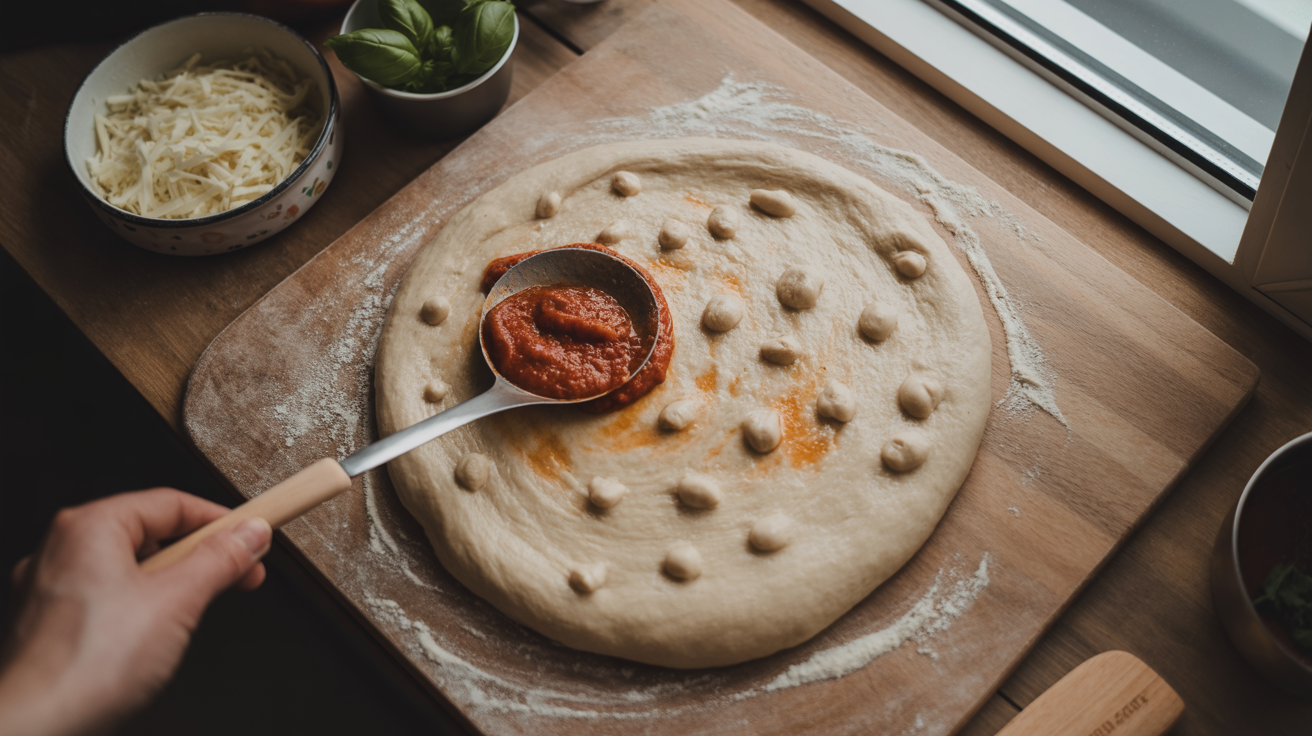
Why pizza hydration isn’t one number
Ask 10 pizza makers for the “right” hydration and you’ll get 10 answers — all correct, for different setups. Neapolitan masters bake at 450 °C+ and use 60% dough. Home bakers copy them at 250 °C and end up with dense, leathery crusts. Roman focaccia-style pizza runs 80%+ and barely holds together without a pan.
The rule is deceptively simple: the hotter your oven, the lower the hydration. Ultra-high heat sets a crust in seconds and evaporates water fast — too much water and the dough never cooks through. Low-heat ovens give water time to evaporate at a manageable rate — too little water and the crust dries and toughens.
Here’s the full map of pizza styles, their hydration sweet spots, and why.
Neapolitan: 60–65% hydration (450 °C+ oven)
Traditional Naples-style pizza bakes 60–90 seconds in a wood-fired or purpose-built pizza oven at 450―00 °C (850–930 °F). The crust must be firm enough to hold its shape during the violent stretch and the rapid bake.
Classic Neapolitan sourdough ratios:
- 00 flour: 100%
- Water: 60–65%
- Starter (100% hydration): 15–20%
- Salt: 2.8–3.0% (higher than bread — fast bake needs more flavor)
For 4 pizzas (250 g dough balls), use 600 g flour and 390 g water. Bulk ferment 4 hours at room temp, then cold retard 24 hours. Stretch by hand, not rolling pin — rolling deflates gas bubbles and produces a “cracker” crust.
At this heat, anything above 65% hydration produces a wet, pale center and a burned rim.
New York style: 62–68% hydration (260–290 °C)
NY-style pizza bakes 6–8 minutes at 260–290 °C (500–550 °F). The crust must survive the classic fold-in-half eating technique without cracking.
NY-style sourdough ratios:
- High-protein bread flour (12–13%): 100%
- Water: 62–66%
- Starter: 10–15%
- Olive oil: 2–3% (adds tenderness without steaming)
- Sugar: 1% (aids browning at lower heat)
- Salt: 2.2%
Oil changes the rules. It tenderizes gluten and slows browning, so you can push bake time a bit further before the crust hardens. Most NY-style sourdough ends up around 64–65% hydration — enough for chew, not so much that fold-eating breaks the slice.
Cold ferment 48–72 hours for maximum flavor. Shorter ferments produce bland crust no matter what sourdough nostalgia says.
Home oven: 68–72% hydration (230–260 °C)
Most home ovens max at 250–260 °C (480–500 °F). Bake time stretches to 10–12 minutes. This is where home pizza often goes wrong — people copy Neapolitan recipes, can’t hit the heat, and end up with cardboard.
Home-oven sourdough pizza ratios:
- Bread flour + 10–20% 00 flour (or T65 / French Type 65): 100%
- Water: 68–70% (climb to 72% only with 13%+ protein flour)
- Starter: 15–20%
- Olive oil: 2–4%
- Salt: 2.2–2.4%
Higher hydration compensates for lower heat — more water means more steam during bake, keeping the center tender even with 12-minute cook times. A steel pizza stone (not ceramic) retains and transfers heat dramatically better than a baking sheet. It’s the single biggest home-pizza upgrade.
For the full hydration logic at higher percentages, see our 85% hydration technique guide.
Roman al taglio / pan pizza: 75–80% hydration
Pan pizza (Sicilian, Detroit, Roman al taglio) bakes IN a pan with abundant oil at 220–240 °C for 15–20 minutes. The pan traps moisture, so you can push hydration dramatically higher for an airy, open crumb that’s almost focaccia-adjacent.
Pan pizza sourdough ratios:
- Bread flour: 100%
- Water: 75–80%
- Starter: 20%
- Olive oil: 4–6% (in dough) plus generous oil in the pan
- Salt: 2.2%
This hydration is wet enough that you cannot knead it traditionally. Use stretch-and-folds every 30 min for 2 hours, then a 24–48 h cold retard. Press into a well-oiled pan, dimple just before baking.
How to choose YOUR hydration
Answer three questions:
- What’s my max oven temp? Lower temp = higher hydration (add 3–5% for every 50 °C below 450).
- What flour do I have? 00 flour handles lower hydration best. Bread flour can climb. AP flour struggles above 68%.
- What’s my baking surface? Baking steel > pizza stone > inverted sheet pan. Better thermal mass = you can push hydration higher and shorten bake.
Starting point for a home baker with bread flour, pizza stone, and a 250 °C oven: 70% hydration, 15% starter, 2.2% salt, 24 h cold ferment. Use the sourdough ratio calculator. That’s the highest success-rate entry point.
The 72-hour flavor peak
Sourdough pizza’s flavor advantage over commercial yeast comes from long cold ferments. Under 24 hours: bland. 24–48 hours: clearly sourdough-tangy. 48–72 hours: peak flavor complexity, subtle sweetness, deep caramel undertones. Past 72 hours: starts to taste overly sour and the crust weakens.
Schedule: Mix Thursday evening, cold ferment Fri/Sat, bake Saturday night — that’s 48 hours, which hits 90% of the available flavor development.
Dough ball sizes by style
| Style | Dough ball weight | Final diameter |
|---|---|---|
| Neapolitan (12”) | 260 g | 30 cm |
| NY style (14”) | 360 g | 36 cm |
| NY style (18”) | 520 g | 46 cm |
| Home oven (12”) | 250 g | 30 cm |
| Pan pizza (9×13) | 450 g | sheet pan |
| Roman al taglio (16”×12”) | 700 g | sheet pan |
Common mistakes and fixes
- Dense, bready crust: Over-proofed or over-kneaded. Sourdough pizza does NOT need 20 min of kneading — stretch-and-folds suffice.
- Tough, leathery crust: Hydration too low for your oven temp. Add 3–4%.
- Soggy, wet center: Hydration too high for your oven temp. Reduce 3–4%, or preheat stone longer (45 min minimum).
- Weak, sour taste: Starter was past peak when mixed, or cold ferment went past 72 h.
- Won’t stretch (snaps back): Dough too cold. Warm the ball 30–60 min before stretching.
The night-before workflow
- Evening -1: Mix dough. Autolyse 30 min. Add starter, salt, oil. 4 stretch-and-folds over 2 hours.
- Late evening -1: Divide, ball up, place in oiled containers. Fridge.
- Day of: Remove balls from fridge 1.5–2 hours before baking. Preheat oven + stone 45 min at max temp.
- Stretch: Hand-stretch gently. Never rolling pin.
- Bake: Launch onto stone. Close oven immediately. Wait the style-appropriate time — do NOT open door early.
Pizza is sourdough’s fastest feedback loop — mix Saturday, eat Saturday. Once you lock in the right hydration for your oven, the rest becomes routine. The calculator handles the math; your oven decides the hydration.