Sourdough Pizza Dough Calculator: Neapolitan, NY, and Sicilian from One Ratio
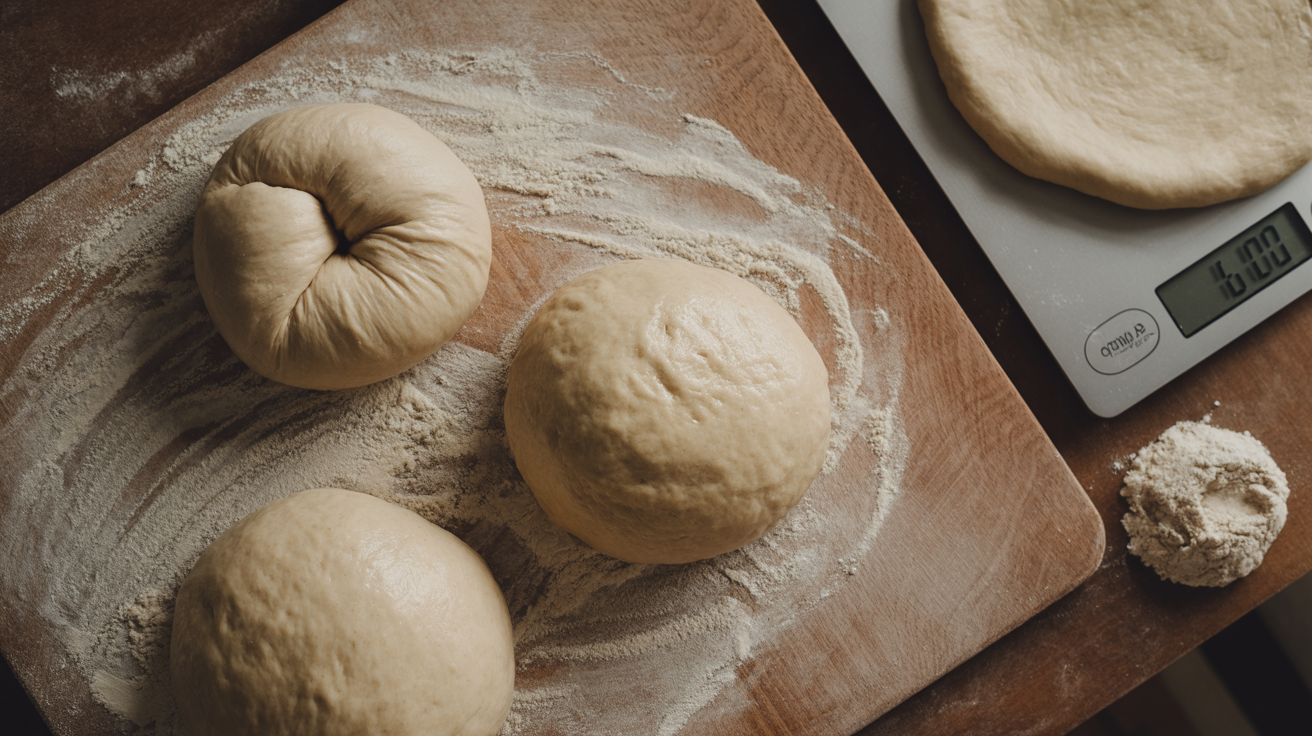
A common myth: the three famous sourdough pizza styles — Neapolitan, New York, Sicilian — are fundamentally different doughs requiring three separate formulas. They’re not. They’re the same base recipe with three different hydration levels, ball weights, and retard times.
Once you see the pattern, you can produce any of them from our sourdough calculator just by changing two or three inputs. This guide lays out the exact parameters for each style and how to use the calculator for each.
The universal sourdough pizza base
Every pizza dough on this page starts from:
- Flour (100%)
- Water (varies by style)
- Sourdough starter or levain (15–20% by flour weight, 100% hydration)
- Salt (2.0%)
- Olive oil (0–3%, style dependent)
Change the water percentage and you change the style. Change the ball weight and you change the size. Change the retard time and you change the flavor. That’s the whole system.
Neapolitan: the original
Target parameters
- Hydration: 62–65%
- Starter: 15–18%
- Salt: 2.0%
- Olive oil: 0% (purist) or up to 1% (home oven compromise)
- Ball weight: 220–260 g
- Finished pizza size: 28–30 cm / 11–12 inches
- Flour: Caputo “00” Pizzeria or similar high-extensibility Italian flour (see our European flour types guide)
- Cold retard: 24–48 hours
- Oven: Ideally 450°C+ (wood oven, Ooni, Gozney). Home oven at 290°C with stone or steel works but produces slightly different texture.
How to calculate for 6 Neapolitan pizzas
6 balls × 250 g = 1,500 g total dough. Open our calculator, enter total weight 1,500 g, hydration 63%, starter 17%, salt 2%. You get:
- Flour: ~882 g
- Water: ~556 g
- Starter: ~150 g
- Salt: ~18 g
Mix, bulk 4–5 hours at 24°C, divide into 6 balls, cold retard 24–48 hours, bake from cold (or give 1–2 hours counter time if your kitchen is cool).
New York style: the slice specialist
Target parameters
- Hydration: 58–62%
- Starter: 15–18%
- Salt: 2.0%
- Olive oil: 2–3% (the defining fat; gives NY its stretch and slight chew)
- Sugar (optional): 1–2% to accelerate browning in a lower-temperature oven
- Ball weight: 250–270 g for a 12-inch pie; 360–420 g for a 16-inch
- Flour: High-protein bread flour (12–14% protein) — King Arthur Bread Flour, Central Milling Beehive. See our bread flour vs. all-purpose guide.
- Cold retard: 48–72 hours (the longer, the more classic the flavor)
- Oven: 290°C (max home oven) with steel or stone preheated at least 45 minutes
How to calculate for 4 NY pies
4 balls × 260 g = 1,040 g dough. In the calculator: 1,040 g, 60% hydration, 17% starter, 2% salt. You get:
- Flour: ~623 g
- Water: ~374 g
- Starter: ~106 g
- Salt: ~12 g
Plus 2% oil = 12 g olive oil added at mix. Bulk 3–4 hours at 24°C, ball up, cold retard 48–72 hours. Bake 7–9 minutes at max home oven temperature on a preheated stone or steel.
Sicilian / pan pizza: the sheet hero
Target parameters
- Hydration: 72–75%
- Starter: 15–18%
- Salt: 2.0%
- Olive oil: 3–5% in dough, plus generous coat in pan
- Dough weight: ~900 g for a half sheet pan (33 × 23 cm / 13 × 9 inches); ~1,300 g for a full 13 × 18 inch pan
- Flour: Bread flour or a 50/50 bread/00 blend. Whole-grain addition (10–20% whole wheat) works beautifully here.
- Cold retard: 18–24 hours (much shorter than NY — the high hydration extracts flavor faster)
- Oven: 260–290°C, bake directly in the oiled pan
How to calculate for one half-sheet Sicilian
1 piece × 900 g = 900 g dough. Calculator: 900 g, 73% hydration, 17% starter, 2% salt:
- Flour: ~499 g
- Water: ~364 g
- Starter: ~85 g
- Salt: ~10 g
Plus 4% oil = 20 g olive oil. Mix, bulk 3 hours at 24°C, pour into well-oiled pan, spread out as much as will stretch without tearing, cold retard 18–24 hours in the pan. Before baking, give it 1–2 hours at room temp to finish the stretch and develop bubbles.
Universal cold retard rules
All three styles benefit from cold retard in the fridge:
- Minimum: 18–24 hours. Less and you’re leaving flavor on the table.
- Sweet spot: 48 hours for NY, 24–36 for Neapolitan, 24 for Sicilian.
- Ceiling: 72 hours for NY, 48 for Neapolitan and Sicilian. Past that, acid dominates and gluten starts breaking down.
Cold retard is what separates great sourdough pizza from decent sourdough pizza. See our cold retard guide for the flavor chemistry.
Starter health matters more than for loaves
Pizza dough has less flour and a shorter bulk than bread, so a sluggish starter shows up faster. Make sure your starter is peaking within 4–6 hours of feeding before you mix pizza dough. Our starter feeding guide covers this.
For pizza nights, a dedicated levain built 8–12 hours before mixing (see our levain guide) gives you cleaner flavor and more predictable fermentation than using mother directly.
The one-page formula summary
| Style | Hydration | Starter | Oil | Ball wt | Retard |
|---|---|---|---|---|---|
| Neapolitan | 62–65% | 15–18% | 0–1% | 220–260 g | 24–48 h |
| New York | 58–62% | 15–18% | 2–3% | 250–270 g | 48–72 h |
| Sicilian | 72–75% | 15–18% | 3–5% | ~900 g | 18–24 h |
Pick your style, plug the hydration and total weight into our calculator, add your oil by flour-weight percentage at mix time, and follow the retard. That’s the whole system.
The shortcut
If you’re bouncing between styles on different nights: keep the starter, salt, and mixing technique identical across all three. Change only hydration, oil, and ball weight. Your muscle memory transfers, your schedule stays predictable, and you don’t have to relearn the dough for each style.
For more on scaling any of these recipes up or down, see our scaling for dinner parties guide. The math for pizza is identical to bread — the calculator handles it either way.