Bread Flour vs All-Purpose for Sourdough: Which Should You Use?
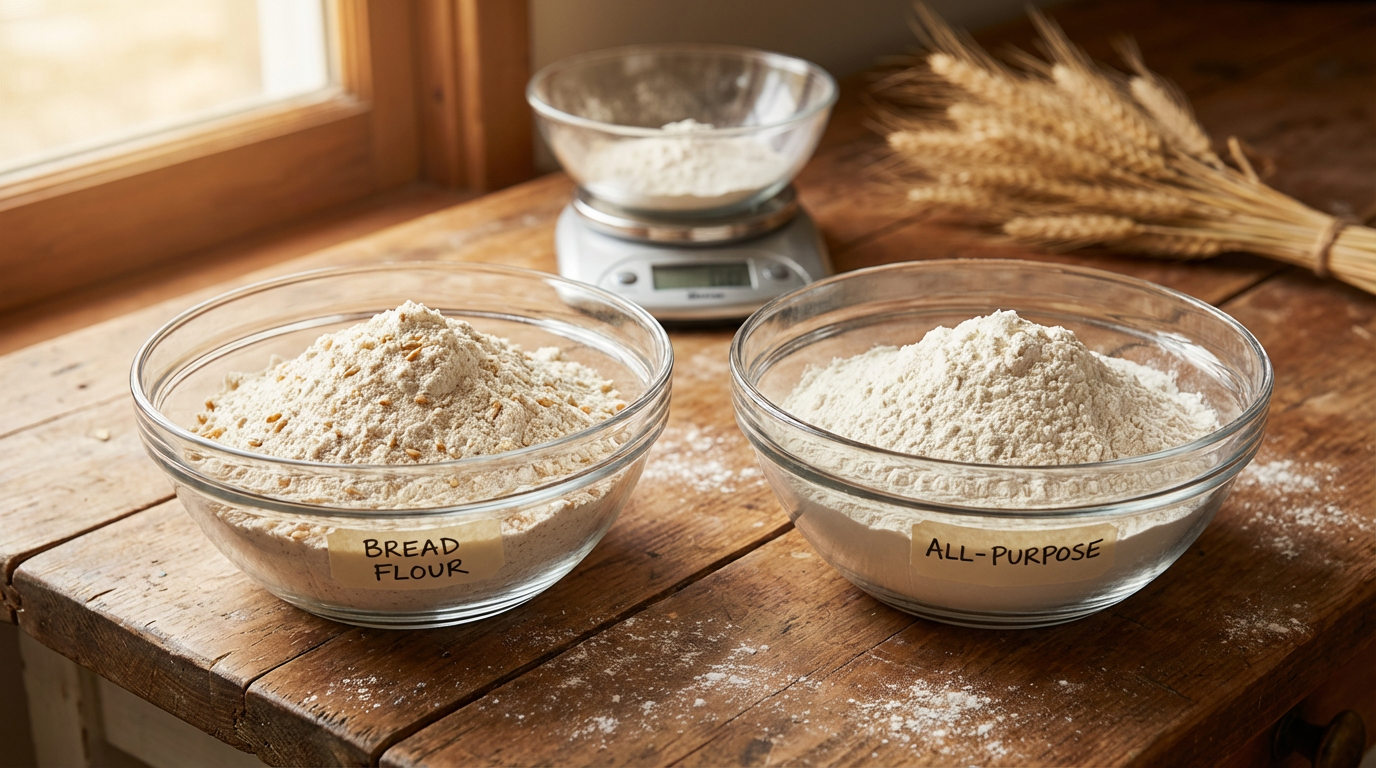
The flour you choose is the single biggest variable in your sourdough after hydration and fermentation. Two bakers using the same recipe can produce radically different loaves simply because one used bread flour and the other used all-purpose. The difference comes down to protein — and protein changes everything from water absorption to how the dough handles to the final crumb.
This guide walks you through exactly what changes when you swap flours, how to adjust your recipe, and which flour wins in which situation. Use our sourdough ratio calculator to dial in the exact flour/water math after you pick your bag.
The Key Difference: Protein Content
Every wheat flour has a protein percentage printed on the bag (or accessible online). That protein is what forms gluten when you hydrate the flour. More protein means more gluten, which means a stronger, stretchier dough that traps more gas.
- Bread flour: 12–14% protein (King Arthur bread flour sits at 12.7%)
- All-purpose flour: 10–11.5% protein (most US brands; King Arthur AP is an outlier at 11.7%)
- Italian tipo 00: 11–12.5% protein, but a different, softer gluten
- European tipo 0: 11–13% protein, similar to US bread flour
- High-gluten flour: 14–15% protein (pizzerias and bagel shops)
Here’s the kicker: not all protein is created equal. Hard red wheat (most bread flour) builds more extensible and elastic gluten than soft wheat (AP blends). That’s why a 12% protein AP flour behaves differently from a 12% protein bread flour — the wheat variety matters.
Water Absorption: Why It’s the Biggest Practical Difference
Bread flour absorbs about 2–3% more water than all-purpose at the same weight. This is because higher-protein flour has more damaged starch and more gluten-forming proteins that soak up water during mixing.
What this means in practice:
- A 75% hydration sourdough with bread flour feels manageable and strong
- The same recipe with AP flour feels sloppy, wet, and slack because AP can’t hold that much water structurally
- A dough that should handle like pizza feels like pancake batter
The fix: when swapping AP for bread flour, reduce hydration by 2–3 percentage points. So a 75% bread flour recipe becomes a 72–73% AP recipe. Our calculator makes this swap effortless — just adjust the hydration field and it recomputes your water.
Crumb Structure: Open vs Tight
Protein content directly controls crumb structure in sourdough because stronger gluten traps bigger, more irregular bubbles.
Bread flour crumb characteristics
- Open, airy, irregular holes (classic bakery crumb)
- Chewy texture with noticeable pull
- Better oven spring and height
- Excellent crust — crackly and thick
All-purpose flour crumb characteristics
- Tighter, more uniform crumb with smaller holes
- Softer, more tender bite
- Less dramatic oven spring
- Thinner, softer crust
If you’re chasing the Instagram-perfect open crumb with wild irregular holes, bread flour is non-negotiable. If you’re making a pullman loaf or a soft sandwich sourdough where uniformity matters, AP is actually the better choice.
When to Use Bread Flour
- Classic artisan boules and batards — open crumb, crackly crust
- High-hydration doughs (75%+) — AP can’t structurally handle this
- Long cold retards — stronger gluten holds up to 24+ hours
- Bagels, pretzels, and chewy rolls — need muscular gluten
- Beginner sourdough — the extra strength forgives mixing errors
When to Use All-Purpose Flour
- Sandwich loaves — soft crumb is the goal. See low-hydration sandwich sourdough.
- Focaccia — especially lower-hydration versions
- Pizza dough (Neapolitan-style) — tipo 00 or AP gives tender crust. See pizza dough hydration.
- Enriched doughs (brioche, milk bread) — fats weaken gluten, so softer flour prevents over-tightening
- Cookies, muffins, pancakes with starter discard — tender, not chewy
The Brand Trap: Why Labels Lie
Flour labels in the US are genuinely misleading. King Arthur all-purpose is 11.7% protein — higher than some brands’ bread flour. Meanwhile, Gold Medal AP is around 10.5%, and Pillsbury sits similarly.
Always check the actual protein percentage on the bag or the company’s website:
- King Arthur AP: 11.7%
- King Arthur Bread: 12.7%
- Bob’s Red Mill Artisan Bread: 12.5%
- Gold Medal AP: 10.5%
- Gold Medal Bread: 12.3%
- Caputo Tipo 00 Pizzeria: 12.5%
- Central Milling Organic AP: 11.5%
Practical takeaway: King Arthur AP performs like many brands’ bread flour. If that’s all you have, you can make excellent sourdough without swapping. But Gold Medal AP? That’s truly a lower-protein flour and needs the hydration adjustment discussed above.
The Swap Rule Cheat Sheet
| Original recipe calls for… | You have… | Adjustment |
|---|---|---|
| Bread flour at 75% hydration | All-purpose (10–11%) | Reduce water to 72–73% |
| All-purpose at 70% hydration | Bread flour | Increase water to 72–73% |
| Bread flour, 500g total | Mix 75% bread / 25% AP | Small reduction: –1% hydration |
| King Arthur bread flour | Generic bread flour | Usually no change needed |
Can You Mix Them?
Absolutely — and this is what many professional bakers actually do. Common blends:
- 80% bread + 20% AP: Good structure with a slightly more tender crumb
- 50/50 blend: Balanced everyday loaf, works for sandwiches and open crumb alike
- 70% bread + 20% whole wheat + 10% rye: Classic country loaf profile
When blending, average the protein contents and adjust hydration accordingly. A 50/50 of 12.7% bread + 10.5% AP averages to 11.6% protein — behave accordingly with hydration.
Whole Wheat and Bread Flour Combinations
If your recipe calls for bread flour and you want to add whole wheat, bread flour is the better base. Whole wheat brings extra absorption (see whole wheat hydration adjustment) and weaker gluten, so the stronger bread flour compensates.
A 20% whole wheat / 80% bread flour blend is the most popular “country loaf” ratio for good reason: great flavor, structure, open crumb.
European Flour Equivalents
If you’re in Europe, the labeling system differs:
- T55 (France) / tipo 0 (Italy) / Type 550 (Germany): Roughly equivalent to US bread flour
- T65: A stronger, slightly more extracted flour — also bread flour territory
- Tipo 00: Finely milled, around 11–12.5% protein, but gives tender pizza-style crumb
- T150 / Type 1050: Whole wheat or near-whole wheat
For traditional French country sourdough, T65 is ideal. For Italian-style pizzas and tender loaves, tipo 00. For tartine-style open-crumb loaves, a blend of T65 and a touch of T110 (semi-whole wheat) is the classic move.
Quick Decision Framework
Still not sure? Ask yourself:
- Do I want open, wild crumb? → Bread flour
- Am I baking at 75%+ hydration? → Bread flour
- Am I making a soft sandwich loaf? → All-purpose
- Am I new to sourdough? → Bread flour (more forgiving)
- Is this for pizza or focaccia? → All-purpose or tipo 00
Final Word
Bread flour is the default for anyone serious about artisan sourdough, but AP has its place — especially for softer bakes. The crucial skill is knowing how to adjust hydration when you swap, and our ratio calculator handles the math instantly. For a deeper dive into how flour type affects water needs, see hydration: bread flour vs AP.