Cold Retard: 12 Hours vs 24 Hours — Flavour, Crumb, and Timing Compared
Why Cold Retard Makes Better Bread
Cold retard — letting a shaped dough proof slowly in the fridge — is one of the biggest quality levers in home sourdough. It does four things:
- Develops complex flavour through slow enzymatic activity.
- Firms up the dough surface, making scoring cleaner.
- Creates schedule flexibility — bake when you want, not when dough forces you.
- Produces golden, deeply caramelised crusts from the accumulated sugars.
You can retard for 8 hours, 12, 24, 36, or even 48. Each duration makes subtly different bread. The two sweet spots are 12 and 24 hours — and they need different bulk timing to hit their best.
12-Hour Cold Retard
Schedule
- Mix dough: 8am.
- Bulk ferment: 8am–2pm (75% rise).
- Shape: 2pm.
- Cold retard: 3pm–3am (next morning).
- Bake: 3:30am.
Or an evening-start variant:
- Mix dough: 2pm.
- Bulk: 2pm–7pm (warmer kitchen = 5 hours).
- Shape: 7pm.
- Cold retard: 8pm–8am.
- Bake: 8:30am.
Bulk ferment target
- Aim for 75% rise — standard bulk endpoint.
- Side-wall bubbles, domed jiggle, classic signs.
- The dough has most of its fermentation done before it enters the fridge.
Result
- Mildly tangy, clean flavour.
- Open, irregular crumb with larger bubbles.
- Good oven spring.
- Crust: golden brown, crackly.
24-Hour Cold Retard
Schedule
- Mix dough: 2pm (Day 1).
- Bulk ferment: 2pm–6pm (60–65% rise — stopped early).
- Shape: 6pm.
- Cold retard: 7pm Day 1 → 7pm Day 2.
- Bake: 7:30pm Day 2.
Bulk ferment target
- Aim for 60–65% rise — shorter than standard.
- Why? The extra 12 hours in the fridge continues fermentation at reduced rate (about 15% of room temperature pace). If you start at 75% rise, the dough hits 90%+ by the end of 24 hours — over-proofed.
Result
- Pronounced tang with complex acetic/lactic balance.
- Crumb slightly tighter, more uniform.
- Strong oven spring (skin has firmed up).
- Crust: deep amber, beautifully blistered, thick.
Direct Comparison: Same Dough, Different Retard
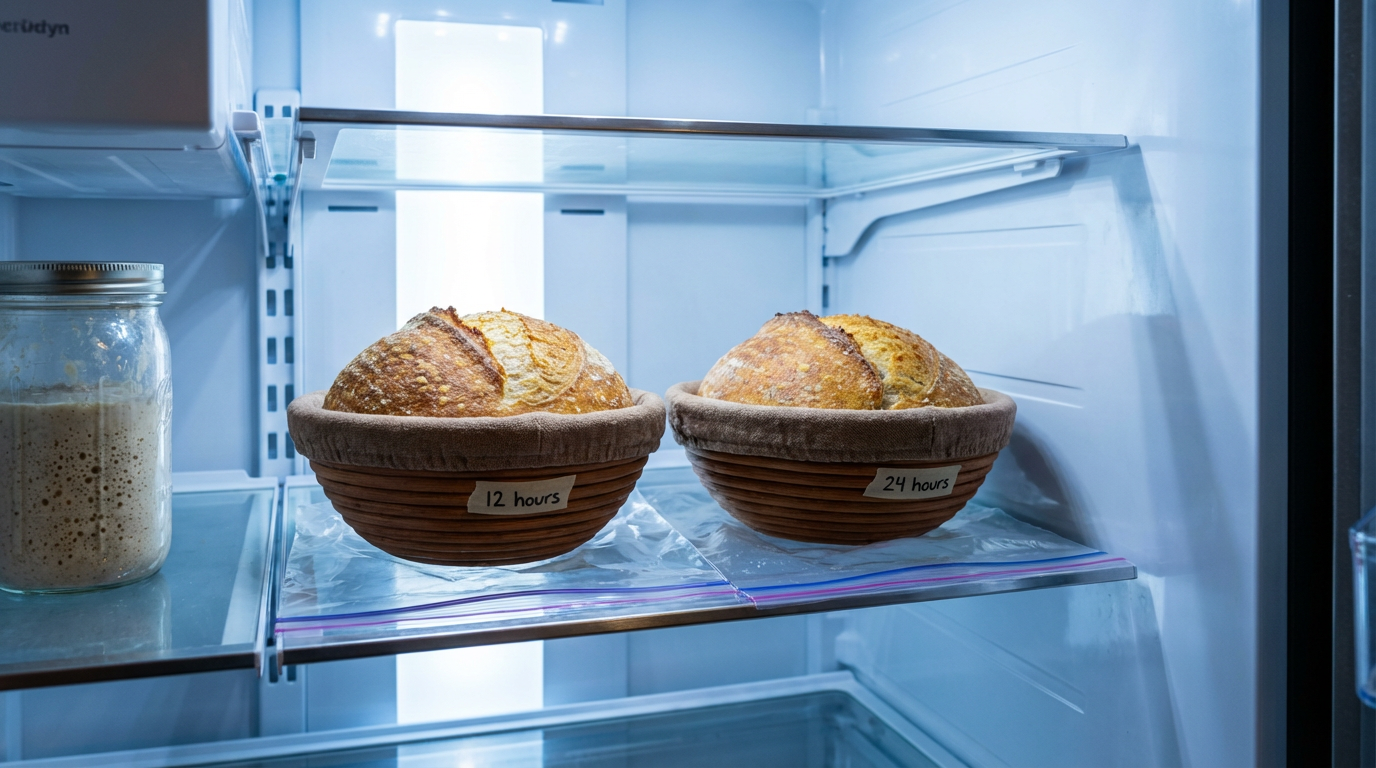
I bake the same recipe twice, identical until shaping, then split bake — half retards 12 hours, half 24.
Flavour
- 12-hour: mild tang, wheat-forward, easy to like.
- 24-hour: distinctly sour, more complex, for the sourdough enthusiast.
Crumb
- 12-hour: classic open crumb, irregular holes.
- 24-hour: slightly tighter, more uniform honeycomb.
Crust
- 12-hour: golden, normal blisters.
- 24-hour: darker, bigger blisters from deeper caramelisation.
Scoring
- 12-hour: good, slightly tacky skin.
- 24-hour: excellent — firm cold skin makes razor-sharp scoring trivial.
Oven Spring
- 12-hour: strong.
- 24-hour: strong to very strong — the cold firm dough behaves better under scoring stress.
Fridge Temperature Matters
The ideal retard temperature is 3–5°C (38–41°F). Most home fridges run between 2°C and 5°C.
- Below 2°C: fermentation almost stops. Longer retards feel flat-flavoured.
- 5–7°C: fermentation still occurs at noticeable rate. 12h retard acts more like 18h; 24h acts like 30h+. Adjust bulk 5% shorter.
- Above 8°C: your fridge is not a “cold” retard — it’s a slow proofer. Set bulk 10% shorter.
Measure with a cheap fridge thermometer — most home fridges aren’t where you think.
Beyond 24 Hours
36 hours
- Bulk target: 55–60% rise.
- Flavour: deeply complex, borderline-sharp tang.
- Crumb: noticeably tighter.
- Use for: rye blends, whole wheat breads, flavour-forward sourdough.
48 hours
- Bulk target: 50–55% rise.
- Flavour: aggressive tang, can tip into vinegary.
- Crumb: tight, dense.
- Use sparingly — most bakers find 24–30 hours the ceiling for pleasant flavour.
72 hours+
Not recommended. Dough surface develops black spots, flavour turns alcoholic/acidic, and gluten structure starts to degrade.
Bannetons & Covers
- Use a floured banneton (rice flour prevents sticking).
- Cover with a fitted plastic bag or shower cap to prevent skin drying.
- Too tight = skin sticks; too loose = dough dries and cracks.
FAQ
Can I move from 12-hour to 24-hour retard without changing bulk?
No — expect over-proofing. Shorten bulk by 15–20% when extending retard to 24 hours.
Is cold retard necessary?
No, but it’s the biggest flavour and scheduling gain for minimal effort. Most home bakers retard every bake.
Can I bake directly from the fridge?
Yes — in fact, scoring is easier when the dough is cold. Preheat Dutch oven fully, tip dough straight from banneton into hot vessel, score, bake.
What if my fridge is already full?
Shape and retard in a bread pan or rigid container to save space. The banneton isn’t required for the retard itself.
Next Steps
Start with a 12-hour retard on your standard recipe — zero bulk adjustment needed. Once you love it, try a 24-hour bake by shortening bulk to 60–65% rise. Combine with our bulk fermentation signs guide to read the rise precisely. Use the sourdough ratio calculator to plan the bake’s ingredient amounts.