Spelt Sourdough Hydration: The Gentle Ancient Grain (And Why It Tears)
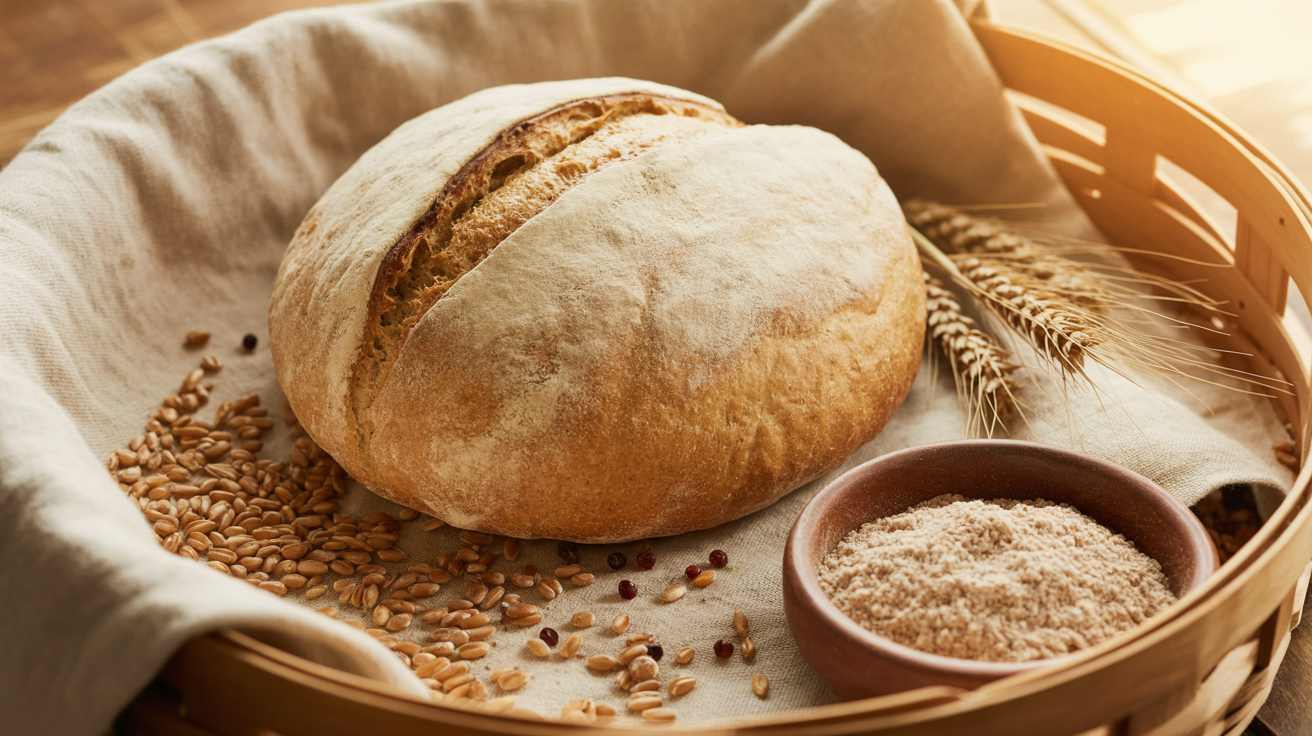
Spelt: Ancient Grain, Modern Challenge
Spelt is one of the oldest cultivated grains — dating back 8,000 years — and it’s seeing a sourdough revival. It has a deeply nutty, slightly sweet flavour, excellent nutritional profile, and ages beautifully in starter cultures.
The catch: spelt’s gluten is structurally different from modern wheat’s. It has plenty of protein, but the gluten strands are softer and more extensible, less elastic. Treat spelt like bread flour and you’ll over-work it, breaking the gluten network entirely and ending up with a slack, dense loaf.
Work gently, run lower hydration, and ferment shorter — and spelt rewards you with tender crumb and complex flavour unlike anything you’ll get from modern wheat.
Spelt vs Wheat: The Protein Comparison
- Bread flour: 12–14% protein. Strong, elastic gluten. Handles up to 80%+ hydration.
- All-purpose: 10–12% protein. Moderate gluten. Up to 75% hydration.
- Spelt: 13–15% protein. Lots of protein, but the gluten is soft and extensible. Ceilings at ~75% hydration comfortably.
- Whole spelt: 14–16% protein. Adds bran absorption — see adjustments below.
Don’t be fooled by the protein number. Spelt’s gluten type matters more than the percentage.
Hydration Guidelines by Spelt %
10–20% spelt (“flavour spelt”)
- Hydration: same as bread flour baseline (75%).
- Technique: normal stretch-and-folds; treat like wheat.
- Flavour: subtle nutty sweetness.
25–40% spelt (“spelt boule”)
- Hydration: 72–74% (reduce by 2–3%).
- Technique: use letter folds instead of stretch-and-folds. 3 sets total.
- Bulk: 15% shorter than all-wheat.
- Flavour: clearly spelt-forward, still structured.
50% spelt (“spelt blend”)
- Hydration: 70–72%.
- Technique: very gentle coil-folds, 3 sets, no stretch-and-folds.
- Bulk: 20% shorter.
- Result: soft but still sliceable crumb.
75–100% spelt (“all-spelt”)
- Hydration: 68–72%.
- Technique: mix, 2 gentle coil-folds in first hour, done.
- Bulk: 25% shorter than wheat equivalent.
- Result: tender, almost cake-like crumb. Shorter shelf life (3 days).
Worked Example: 50% Spelt Boule
- 250g bread flour (50%)
- 250g whole spelt flour (50%)
- 360g water (72%)
- 10g salt (2%)
- 100g ripe starter (20%)
Method:
- Autolyse 60 min (flour + water only).
- Add starter and salt. Mix gently 3 min by hand.
- Bulk 3–3.5 hours at 24°C (75°F).
- 3 gentle coil-folds at 30, 60, 90 minutes.
- Shape into boule (minimal tension — spelt tears under aggressive shaping).
- Cold retard 10–14 hours.
- Bake 250°C (480°F) lidded Dutch oven 18 min, 220°C (425°F) uncovered 20 min.
The “Don’t Over-Work” Rule
Spelt’s gluten develops fast and breaks down fast. Over-mixing, over-folding, or over-fermenting collapses the gluten structure. Signs you’ve gone too far:
- Dough gets looser and stickier during folds instead of tighter.
- Windowpane test fails after 4+ sets of folds.
- Bulk reaches 80%+ rise and then deflates.
- Shaped loaf spreads flat instead of holding a dome.
If any of this happens, reduce fold count and bulk time by 20% next bake.
Letter Folds vs Stretch-and-Folds
For spelt, use letter folds (also called book folds) instead of stretch-and-folds:
- Turn dough onto a lightly floured bench.
- Pat into a rough rectangle.
- Fold the left third over the centre, then the right third over that (like a letter).
- Fold the top third down, bottom third up — a compact square.
- Return seam-down to the bulk container.
Letter folds build tension without the aggressive stretching that breaks spelt’s gluten. Do 3 sets at 45-minute intervals (not 30-min like wheat).
Why Spelt Ferments Faster
Spelt’s soft gluten holds gas less tightly, and its enzyme activity is slightly higher than modern wheat. A dough that bulks 5 hours at 24°C with bread flour bulks 4 hours with 50% spelt. Always check for fermentation signs, not time — see our bulk fermentation guide.
Flavour Profile
- Nutty and sweet: spelt has natural sweetness from its starch structure.
- Less acidic: spelt sourdough tends toward milder tang than wheat sourdough.
- Brighter: with less prolonged fermentation, flavours stay fresh and clean.
- Pairs with: honey, butter, mild cheese, nuts — not strongly flavoured toppings.
Spelt Varieties
- White spelt: endosperm only, similar behaviour to all-purpose flour.
- Whole spelt: full grain, nutty flavour, higher absorption.
- Light spelt: sifted whole spelt, a compromise. Common in Europe.
Most recipes assume whole spelt. If yours specifies white spelt, reduce hydration another 2–3%.
Common Spelt Mistakes
- Running 75%+ hydration: spelt’s gluten can’t hold it. Drop to 70–72%.
- Using stretch-and-folds: breaks gluten. Use letter folds instead.
- Normal bulk timing: spelt over-ferments 20–30 minutes earlier than wheat.
- Aggressive shaping: tears spelt’s fragile skin. Shape gently with less tension.
- Skipping autolyse: whole spelt needs 60–90 min autolyse to fully hydrate bran.
FAQ
Is spelt gluten-free?
No — spelt contains gluten. It’s unsuitable for celiac disease. Some people with mild wheat sensitivities tolerate spelt better, but it’s not gluten-free.
Can I use spelt in my existing sourdough recipe?
Yes — start by replacing 20–25% of your flour with spelt. Reduce water by 2% and bulk time by 15%.
Why is my spelt loaf short?
Most likely over-proofed. Spelt’s faster fermentation catches bakers off guard. Shorten bulk by 20–30 minutes next time.
Does spelt work with my regular starter?
Yes. Any healthy wheat starter works for spelt bread. Some bakers maintain a dedicated spelt starter for deeper flavour.
Next Steps
Start at 25–30% spelt in your standard recipe with a 2% water reduction. That’s the safest introduction. Move to 50% once confident. Use the sourdough ratio calculator for exact quantities, and pair this with the whole wheat hydration guide since both are bran-affected doughs.