How to Revive a Neglected Sourdough Starter (Step-by-Step)
First: Is It Actually Dead?
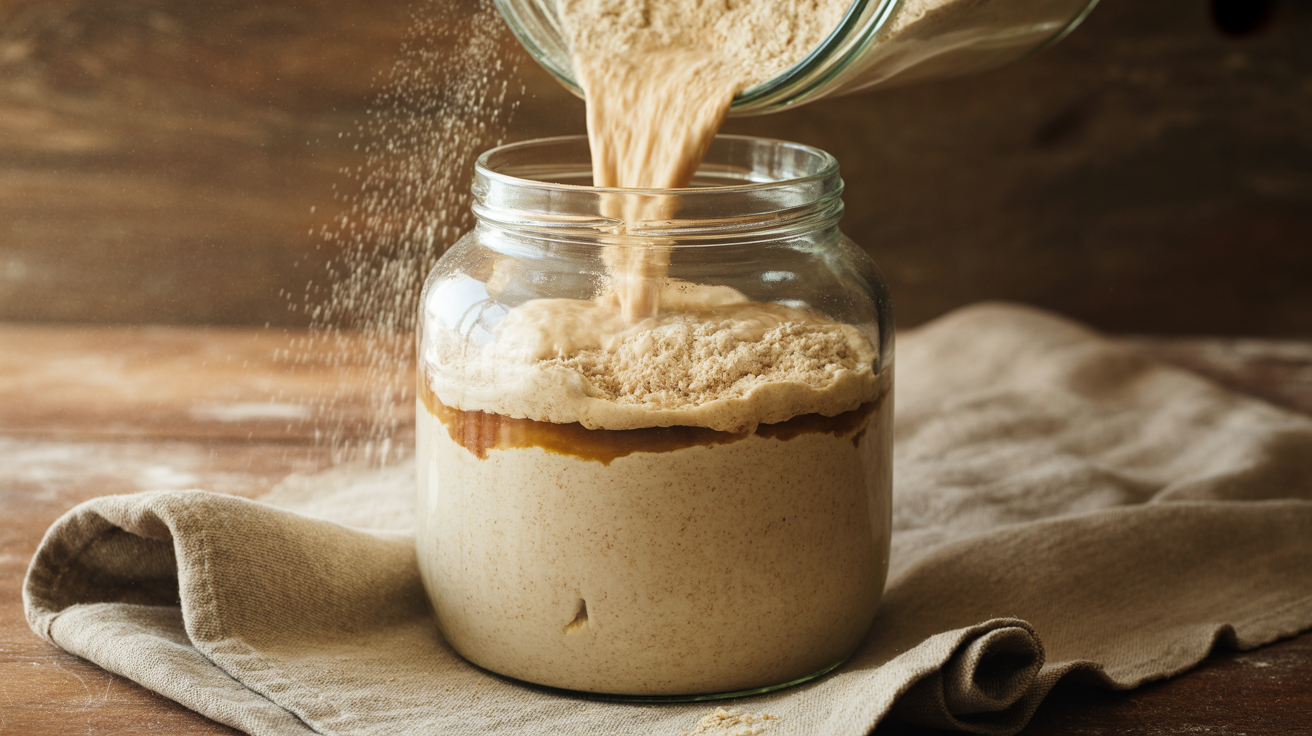
Almost certainly not. Sourdough starters are extraordinarily resilient — they have been revived after months in the fridge, years of drying, and even multi-day shipping across continents. The visible funkiness (grey liquid, strong smell, layered texture) is not death; it is a starter starving but still alive. In nearly every case, a 3–5 day feeding protocol brings it back.
The real exceptions — the ones that cannot be saved — are described at the bottom of this guide. Check those first so you know what you are looking at.
Quick Diagnosis
- Grey or brown liquid on top (hooch): Fully recoverable. The yeast ran out of food and produced alcohol.
- Strong vinegar or acetone smell: Recoverable. High acetic acid is the bacteria pushing pH down.
- Clear separation with a darker layer underneath: Recoverable. Starter has settled and compacted.
- Dry, crusted top but soft underneath: Recoverable. Scrape off the crust, the starter below is fine.
- Pink, orange, or red streaks: Discard. Bacterial contamination (often Serratia).
- Fuzzy mould (black, white, green, blue): Discard. Mould spores have penetrated the mixture.
- Foul smells like rot, rancid, cheesy, or sewage: Discard. Unwanted microbes have taken over.
The 5-Day Revival Protocol
If the diagnosis shows anything on the "recoverable" list, follow this exact schedule. It works for starters neglected up to roughly 3 months in the fridge.
Day 0 — Cleanup (5 minutes)
- Pour off all hooch into the sink. Scrape the top 5 mm of any crust or dark material off — below it is living starter.
- Stir the remaining starter until smooth. The smell will be strong; that is expected.
- Use a clean jar (wash with hot water, no soap residue). Transfer 10 g of the starter to the new jar.
- Feed 1:1:1 with warm water (around 30°C / 86°F) and fresh flour. That is 10 g starter + 10 g water + 10 g flour.
- Cover loosely. Place somewhere warm (72–78°F is ideal; see fermentation temperature guide for ways to find that in a cold kitchen).
Day 1 — Two Feeds
- Morning: the starter may show a few bubbles or no rise. Either is fine. Discard all but 10 g. Feed 1:1:1 again.
- Evening (12 hours later): you should start to see small bubbles through the glass. Same routine: discard to 10 g, 1:1:1 feed.
Day 2 — Visible Activity
By the morning of day 2, you should see a noticeable domed rise 4–8 hours after the last feed. The smell shifts from harsh-vinegary to mildly tangy. Continue 12-hour feeds. If nothing is happening, switch to 1:1:1 with 50% rye flour for one feed — rye is high in enzymes and wild yeast and often jump-starts a sluggish starter.
Day 3 — Bounce Back
The starter should now be doubling within 6–8 hours and smelling pleasantly yeasty-sour. Keep feeding every 12 hours.
Day 4 — Normal Cadence
At this point the starter behaves like a healthy, mature starter again. Two final 1:1:1 feeds to confirm consistent peaking. It should double within 4–6 hours.
Day 5 — Float Test and Bake
At peak, drop a teaspoon of starter into a glass of room-temp water. If it floats, it is ready to bake with. If not, do two more 1:1:1 feeds and test again.
Troubleshooting the Revival
It has not risen in 48 hours.
Three likely causes:
- Kitchen too cold (below 65°F / 18°C): place on top of the fridge, near a warm appliance, or in an oven with the light on (but off). Aim for 75–80°F.
- Chlorinated water: chlorine kills yeast. Leave tap water uncovered for 12 hours or use filtered/bottled water.
- Flour too processed: switch to stone-ground whole wheat or rye for a few feeds — these carry more wild yeast than bleached bread flour.
It rises but does not peak before falling.
The bacteria are ahead of the yeast. Do 3 consecutive 1:5:5 feeds over 36 hours to dilute the bacterial load and give yeast the upper hand again.
It smells like nail polish or paint thinner.
That is acetone from ethanol-producing yeast. Normal in a starving starter. The smell disappears after 2–3 good feeds.
It separates again after a feed.
You are using too dilute a ratio for the environment. Move from 1:1:1 to 1:2:2 to give the yeast more food per unit volume.
Dried Starter: Rehydration Protocol
If you dried your starter intentionally (or found flakes in an old jar), here is how to bring it back:
- Weigh 5 g of dried flakes into a clean jar.
- Add 25 g of warm water. Stir and let sit for 2 hours. The flakes will dissolve into a thin slurry.
- Add 20 g flour and stir until smooth. You now have a 1:1 starter again.
- Cover and let sit 24 hours at 75°F. You should see small bubbles.
- Follow the 5-day revival protocol above starting from Day 1.
Dried flakes can be over a year old and still revive. The yeast enter dormancy rather than dying.
Frozen Starter: Thaw and Wake
- Thaw in the fridge for 8–12 hours.
- Once thawed, transfer to the counter for 2 hours to reach room temperature.
- Discard all but 10 g. Feed 1:1:1.
- Follow Days 1–5 of the revival protocol. Frozen starters usually wake up faster than dried ones — expect normal activity by day 3.
When to Actually Give Up
Start over — do not try to save — if you see any of the following:
- Pink, orange, or red streaks or patches (Serratia marcescens, a harmful bacterium).
- Fuzzy mould of any colour on top or sides of the jar.
- A foul rotten, cheesy, or sewage-like smell that does not resemble normal sourdough tang or hooch.
- A very slimy, ropy texture when you stir (classic sign of Bacillus contamination).
Even if the contamination only looks small, mould hyphae extend invisibly through the whole jar. Throw away the jar (or sterilise with a 10-minute boil before re-using), scrub everything, and build a new starter from scratch.
Building a Fresh Starter From Scratch
If you must start over, here is the rapid method that works in 7 days:
- Day 1: 50 g whole wheat or rye flour + 50 g water. Stir, cover loosely, wait 24 hours at 75°F.
- Days 2–3: discard half, feed 50 g water + 50 g flour each day.
- Days 4–7: switch to 12-hour feeds, discard to 25 g, feed 25 g + 25 g. By day 7, the starter should pass the float test.
Once established, switch to bread flour and maintain on the schedule in how often to feed your starter.
Frequently Asked Questions
How long can a starter go without feeding in the fridge?
4–6 weeks easily. 3–4 months is still usually revivable. Past that, revival success drops off — consider drying a backup portion if you expect long breaks.
Does the jar need to be sterilised?
No — just clean. Dish soap rinsed thoroughly is fine. The new feed will restore a healthy microbe balance on its own.
Why only 10 g of old starter?
Using only 10 g dilutes the built-up acids (low pH slows yeast) and any off-flavours. The small amount still carries plenty of yeast to repopulate a fresh mixture.
Can I bake with a just-revived starter on day 3?
You can, but the loaf may be denser and less flavourful than usual. Day 5, after it passes the float test, gives better oven spring and flavour.
Next Steps
Once your starter is revived, keep it healthy with the feeding frequency guide, and plug it into the sourdough ratio calculator for your next bake.