Stiff Starter vs Liquid Starter: Which Should You Use?
The Core Difference
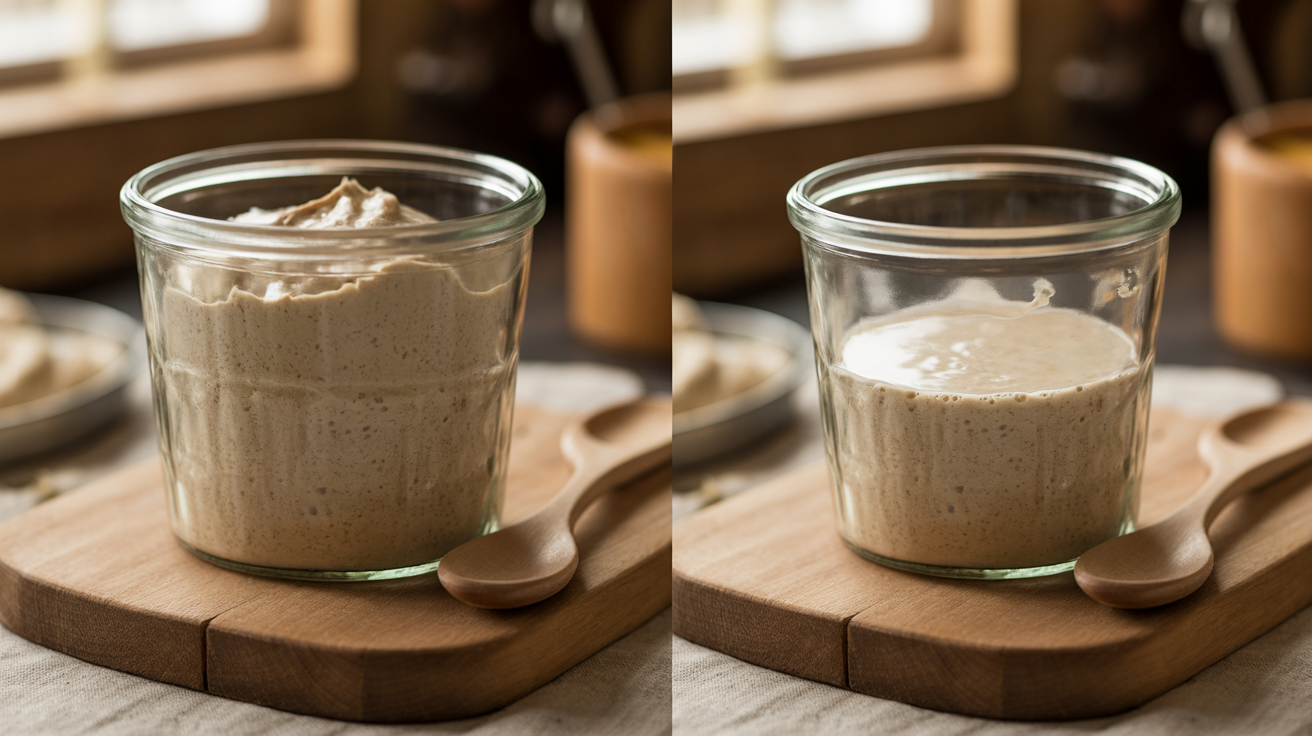
The only thing separating a stiff starter from a liquid starter is the water-to-flour ratio. A liquid starter (sometimes called a “100% hydration” starter or “levain liquide”) uses equal weights of water and flour, giving you a pourable, batter-like consistency. A stiff starter (also called a pasta madre or lievito madre in Italy, or levain dur in France) uses roughly half as much water as flour — closer to a firm dough you can knead by hand.
That single change cascades through everything: flavour, speed of fermentation, shelf life, the texture of your bread, and even which yeasts and bacteria dominate the population.
Hydration Math
Hydration is water divided by flour, expressed as a percentage. If you need a refresher, see our hydration calculation guide.
| Starter type | Flour | Water | Hydration |
|---|---|---|---|
| Classic stiff (pasta madre) | 100 g | 50 g | 50% |
| Softer stiff / French levain | 100 g | 60 g | 60% |
| Liquid / standard Western | 100 g | 100 g | 100% |
| High-hydration / rye | 100 g | 125 g | 125% |
Why the Hydration Changes the Flavour
The microbial population in a sourdough starter is dominated by two kinds of organisms: wild yeasts (Saccharomyces and Kazachstania species) and lactic acid bacteria (LAB — Lactobacillus species). Yeasts prefer lower-moisture, slightly warmer environments. LAB love water and become more active as hydration climbs.
Drop the hydration to 50% and you shift the population in favour of yeast — which produce milder, sweeter, more alcoholic flavours. Push it to 100% or higher and LAB thrive, producing the sharper, tangier, more acidic character typical of San Francisco–style or country sourdoughs.
When to Use a Stiff Starter
- Enriched and sweet breads: panettone, pandoro, brioche, colomba, and hot cross buns. The mild flavour lets butter, sugar, and fruit shine.
- Italian and French hearth breads: pane di Altamura, pain de campagne with levain dur, pane pugliese.
- Longer fridge storage: a stiff starter stays healthy for 10–14 days in the fridge without feeding — useful for bakers who are away or who bake only on weekends.
- Summer bakes: in hot kitchens, stiff starters slow down and resist over-fermenting before you have time to shape.
- Less-sour sourdough: if you want a milder tang, a stiff starter naturally produces fewer acetic and lactic acids during its lifecycle.
When to Use a Liquid Starter
- Everyday country loaves: classic boules, batards, ciabatta, and pizza dough all work beautifully with 100% hydration starters.
- Faster timeline: liquid starters peak faster because water makes nutrients and enzymes more available.
- Easier measuring: 1:1 flour and water is memorably simple. Most recipes assume a 100% starter.
- More open crumb: the extra hydration in the starter contributes a bit of liquidity and gas to the final dough.
- Tangier flavour: if you want the classic “san fran” sour, a well-fed liquid starter (especially one held just past peak) delivers.
How Long Each Type Lasts Between Feeds
Because water is the medium microbes use to move and metabolise, lower water = slower activity. At 72°F / 22°C:
| Starter | Peak time | Counter safe interval | Fridge interval |
|---|---|---|---|
| Stiff 50% | 6–10 hours | 24 hours | 10–14 days |
| Liquid 100% | 4–6 hours | 12 hours | 7 days |
| Liquid 125% | 3–5 hours | 8–10 hours | 5 days |
A stiff starter stored in olive-oil-coated cloth can actually go 3+ weeks in the fridge (the Italian pasta madre tradition) without major deterioration.
Converting a Liquid Starter to Stiff
You do not need a separate jar — just change the next feeding:
- Take 10 g of your liquid starter.
- Add 50 g flour + 25 g water (that is a 1:5:2.5 stiff feed).
- Mix by hand until smooth. It will feel like a firm playdough.
- Cover and let sit 8–10 hours at 72°F.
- Feed again the same way. After two feeds at 50% hydration the starter has fully converted.
Cleanliness tip: shape the stiff starter into a ball, cut a cross on top, and submerge in room-temp water if you are following the Italian “bagnetto” method — it washes out excess acid between feeds.
Converting a Stiff Starter to Liquid
Even easier:
- Take 10 g of your stiff starter.
- Add 50 g flour + 50 g water (classic 1:5:5 liquid feed).
- Stir until smooth. Cover and wait 4–6 hours at 72°F.
- Feed one more time the same way. Fully converted.
Using Either in a Recipe
Most recipes assume a 100% hydration starter. If you use a stiff starter (say 60% hydration), you are bringing less water to the dough than the recipe expects. Adjust like this:
- Amount of starter called for: 200 g.
- If 100% hydration: 100 g flour + 100 g water are already counted in that 200 g.
- If 60% hydration: 125 g flour + 75 g water. You now have 25 g less water in your dough.
- Fix: add 25 g extra water when you mix.
The sourdough ratio calculator handles this automatically if you tell it your starter hydration.
Flavour Differences in the Final Bread
- Stiff starter breads taste sweeter, nuttier, more wheat-forward. Crumb is typically tighter and chewier. Great for enriched and holiday breads.
- Liquid starter breads taste tangier, sourer, slightly fruity. Crumb is more open with larger irregular holes. Great for artisan country loaves.
Frequently Asked Questions
Can I keep both styles at the same time?
Yes — many serious home bakers keep a liquid starter for daily bakes and a stiff starter specifically for panettone and holiday baking. Label the jars clearly and feed on their own schedules.
Does a stiff starter pass the float test?
No. Stiff starters are too dense to float regardless of activity. Judge readiness by volume change instead: it should double in 8–10 hours at 72°F.
Why is Italian pasta madre so stiff?
Tradition, plus the milder flavour required for enriched breads like panettone. The bagnetto (water bath) step further strips acidity so enriched doughs do not taste sour.
Is a 75% starter stiff or liquid?
In-between. Some bakers call 70–80% “medium” hydration. It has some of both flavour profiles and is a common French compromise.
Next Steps
Pick the hydration that matches your next bake and feed accordingly. If you are still figuring out the basics of starter feeding, see our 1:1:1 feeding guide and feeding frequency guide.