Why Is My Sourdough Dough So Sticky? (And How to Fix It Without Ruining Hydration)
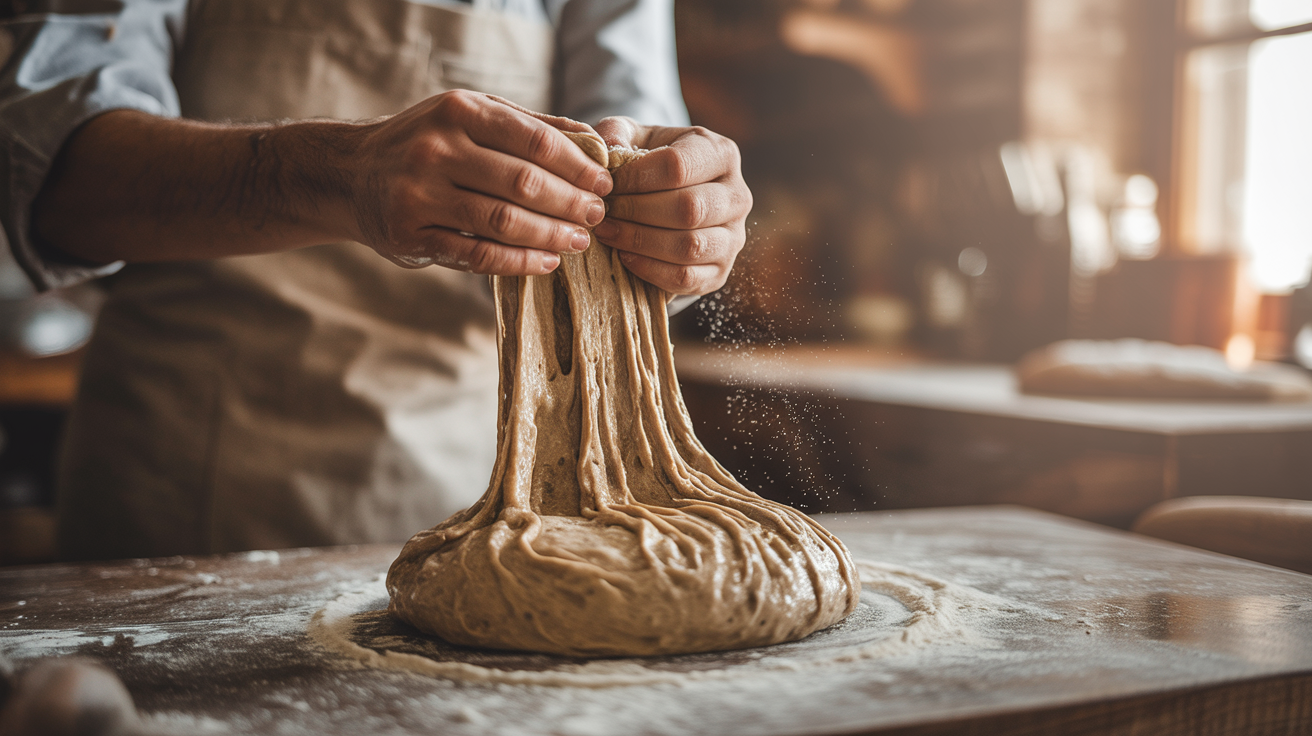
The “My Dough Is a Puddle” Problem
It’s the most common beginner complaint in sourdough: you follow a recipe exactly, mix the dough, and 30 minutes later it’s a sticky, shapeless blob that clings to your hands, the bench, and everything else. Your instinct says “too much water.” Your instinct is almost always wrong.
Dough stickiness has three main causes — and only one of them is actually hydration. Before you start reducing water and throwing off your recipe ratios, let’s figure out which one is really happening in your kitchen.
The Real Causes of Sticky Sourdough
1. Under-developed gluten (most common)
Gluten is the protein network that traps water and gas. When gluten is under-developed, water sits on the surface of the dough instead of being locked into the structure — so the dough feels wet, slack, and sticks to everything.
The fix: time and mechanical action. Stretch-and-folds, slap-and-folds, or a longer autolyse all develop gluten. A 70% hydration dough that feels like a puddle at mix time will feel like a smooth, handleable ball after three sets of stretch-and-folds over 90 minutes.
2. Warm dough temperature
Above about 26°C (79°F), dough feels noticeably stickier because enzymes break down starches and gluten faster. In a hot kitchen, the same recipe that works in winter feels like glue in summer.
The fix: use cooler water, let the dough rest in a cooler spot, or briefly chill the dough for 20–30 minutes mid-bulk. See our desired dough temperature guide for the math.
3. Weak or young starter
A starter that hasn’t fully peaked, or one that’s been on fridge-only feeds for weeks, produces weak acid and enzyme profiles that slack the dough.
The fix: feed twice over 24 hours before baking, using a 1:5:5 feed for the final feed. The starter should roughly double and smell tangy-sweet, not sharp-vinegary.
4. Actually too much water (rare)
This is real but uncommon in beginners. If you’re already past 80% hydration and using unfamiliar flour, you may genuinely have too much water for your gluten structure. But this is the last thing to check, not the first.
How to Diagnose Your Sticky Dough
Do a quick check before you adjust anything:
- What’s your actual hydration? If it’s under 75%, your problem is almost certainly gluten or starter, not water.
- How long ago did you mix? Freshly mixed dough (under 30 minutes) is always sticky. It needs time.
- Dough temp? Above 26°C is the sticky zone. Below 24°C usually feels fine.
- Starter float test? A dollop of starter should float in water at peak. If it sinks, it’s not ready.
If all four check out and it’s still sticky after three stretch-and-folds, then consider reducing hydration. Use our sourdough ratio calculator to dial it in.
Fix #1: The 30-Minute Autolyse
Mix just flour and water (no starter, no salt) and let it rest 30–60 minutes before the main mix. This does the gluten development work passively while you wait. A dough that feels like mud after mixing will often feel like a soft pillow after a proper autolyse.
For whole wheat or high-extraction flours, extend the autolyse to 60–120 minutes. Those flours need more time to fully hydrate.
Fix #2: Stretch-and-Folds, Done Right
Sticky dough needs gluten structure, and stretch-and-folds build that structure without kneading. Here’s the method:
- Wet your hand in water (not flour!)
- Reach under the dough, lift one side up and over to the opposite side
- Rotate the bowl 90° and repeat — 4 folds per set
- Do 3–4 sets at 30-minute intervals during bulk
Each set should feel the dough get smoother, tighter, and less sticky. If it’s not improving by set 3, your starter is probably the weak link. See our starter revival guide.
Fix #3: Bench Rest Before Shaping
After bulk ferment, don’t shape immediately. Turn the dough onto a lightly floured bench, shape it into a rough ball (pre-shape), and let it rest 20–30 minutes before final shaping. This lets gluten relax and the surface dry slightly — making the final shape much easier and less sticky.
Fix #4: Wet Hands, Not Flour
When you add dry flour to sticky dough, you’re unevenly reducing hydration only on the surface. The outside becomes dry and tough, while the inside is still wet. The result: a weird, dense crumb with flour streaks.
Instead, keep a small bowl of water nearby and wet your hands before every handling step. Water doesn’t change the dough’s composition — it just prevents sticking.
When (and How) to Actually Reduce Hydration
If you’ve tried everything above and your dough still won’t come together, you may need to reduce water. Here’s how to do it without wrecking the recipe:
- Drop hydration by 2–3%, not 5–10%. So 75% → 72%, not 75% → 65%.
- Hold flour constant, reduce water. For 500g flour at 75% (375g water), drop to 360g water for 72%.
- Give it 2–3 bakes before adjusting again — flour varies by brand, season, and humidity.
See our hydration calculation guide for more detail, or use the ratio calculator to adjust live.
Flour-Specific Stickiness
Different flours absorb water differently, which changes how sticky your dough feels at the same hydration %:
- Bread flour (12–14% protein): baseline — feels manageable at 75% hydration.
- All-purpose (10–12% protein): feels 5% stickier — reduce water by ~3% or use a shorter autolyse.
- Whole wheat / rye: initially dry, then turns sticky as bran absorbs water. Needs longer autolyse. See whole wheat adjustments.
- Fresh-milled flour: extremely thirsty — can absorb 5–10% more water than mill-aged flour, but needs 2–3 hour autolyse.
Common Mistakes That Make Dough Stickier
- Over-proofing in bulk — enzymes break down gluten, dough goes soupy.
- Using chlorinated tap water — can weaken starter and dough.
- Adding salt too late — delays gluten structure.
- Skipping the pre-shape rest — dough sticks to bench at final shape.
- Working in a hot kitchen with warm flour — cool the flour in the fridge first.
FAQ
My dough passes the windowpane test but is still sticky. Why?
Sticky surface, strong interior — this is normal at 75%+ hydration and means your dough is ready. Wet your hands and shape confidently.
Should I add flour during shaping?
Only a light bench dusting — never work flour into the dough. Use wet hands and a bench scraper instead.
How do I know if it’s my starter or my technique?
Do a float test. If your starter fails the float test, fix the starter first — see our feeding frequency guide.
Is a 75% hydration dough supposed to feel sticky?
Yes — slightly. It should be tacky but shouldn’t leave thick strands on your hands after shaping. If it does, gluten needs more development.
Next Steps
Before you touch your hydration ratio, check your technique. Nine times out of ten, a sticky dough is a gluten problem, not a water problem. Read what hydration percentage really means next, or jump to the sourdough ratio calculator to experiment with small hydration tweaks safely.