How to Convert a 65% Hydration Recipe to 75% (Without Ruining the Loaf)
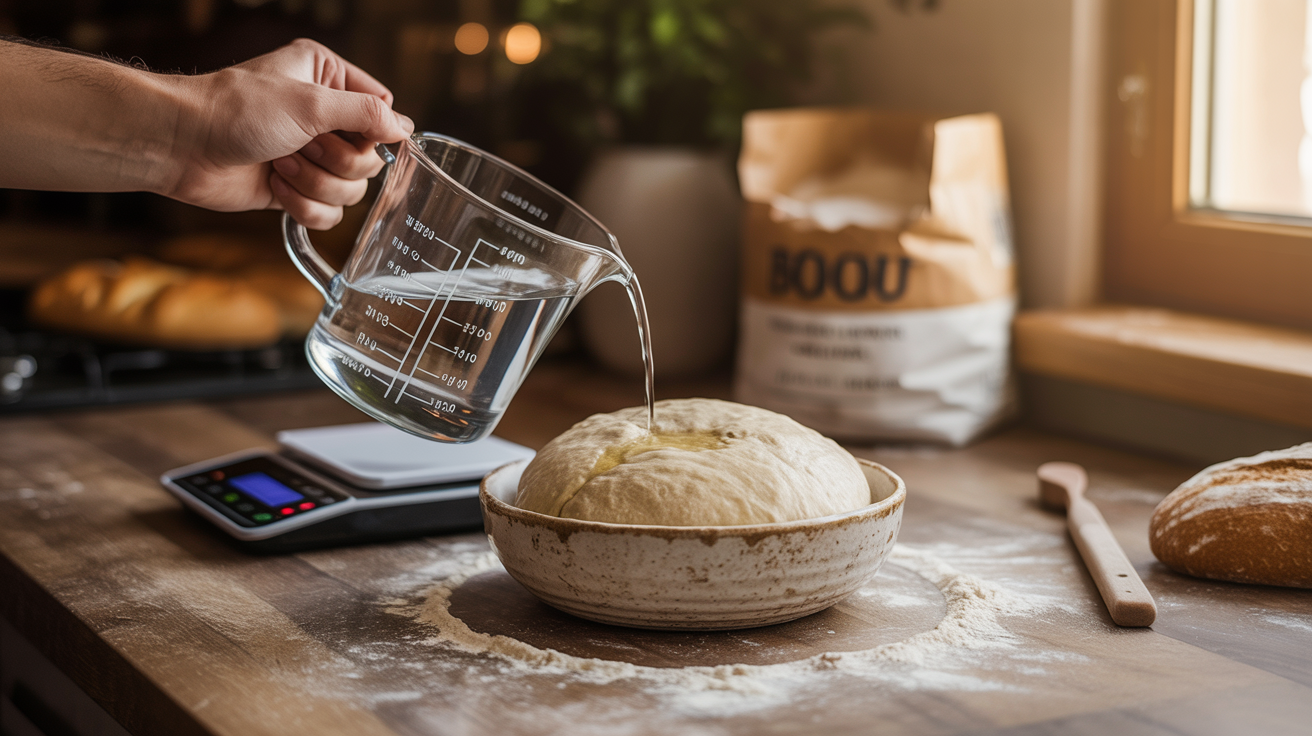
Why Jumping Hydration Fails
You’ve been baking a reliable 65% hydration sourdough for months. Loaves are tight-crumbed but predictable. You see an Instagram post with a gorgeous open-crumb 75% loaf and decide: “I’ll just add more water.”
Next bake: puddle. Flat bake. Dense, gummy crumb. What went wrong isn’t the flour or your starter — it’s the jump size. Hydration isn’t a dial you can crank. Your gluten, your handling technique, and your fermentation schedule all have to adapt together. The fix: step up gradually.
The Core Math: 65% vs 75% in Water
Baker’s math says hydration is water / flour. For a 500g flour recipe:
- 65%: 325g water
- 75%: 375g water
- Difference: 50g — a 15% increase in water volume.
Fifty grams doesn’t sound like much, but in dough terms it’s enough to change gluten strength, fermentation speed, shaping difficulty, and final structure. Go from 65→ 75% in one bake and every one of those variables shifts simultaneously.
The 2–3% Step-Up Method
Instead of jumping, work through these four intermediate steps across four bakes:
- Bake 1 (67%): 335g water. Everything else identical. Expect mostly the same feel, slightly softer.
- Bake 2 (70%): 350g water. Add one extra stretch-and-fold set. Slightly stickier at mix, smooth by fold 3.
- Bake 3 (72%): 360g water. Autolyse extended by 10 min. Dough feels loose at mix, comes together by fold 2.
- Bake 4 (75%): 375g water. Add second extra fold. May need wet hands for shaping.
Four bakes. One incremental change at a time. If any bake fails, drop back 3% and repeat — don’t push.
What to Adjust at Each Step
Autolyse length
- 65–67%: 30-minute autolyse is fine.
- 68–72%: extend to 45 minutes.
- 73–78%: extend to 60 minutes.
Stretch-and-fold count
- 65%: 3 sets every 30 minutes.
- 70%: 4 sets every 30 minutes.
- 75%: 4–5 sets, with first 2 sets tighter together (every 20 min).
Bulk fermentation length
Higher hydration ferments slightly faster — enzymes have more water to work with. Expect bulk times to shrink by 15–20 minutes per 5% hydration increase. Watch for bulk fermentation signs, not the clock.
Shaping technique
At 75%, dry-handed shaping fails. Switch to wet hands, a light bench dust, and a pre-shape rest of 20–30 minutes. See why your dough feels sticky for handling technique.
When to Pause the Climb
If at any step your dough shows these signs, don’t push higher next bake:
- Windowpane doesn’t form by your final stretch-and-fold.
- Shaped loaf spreads instead of holding its shape on the bench.
- Crumb comes out gummy, wet, or dense in the centre.
- Ear doesn’t open at scoring — dough has too much surface tension loss.
These mean gluten hasn’t caught up. Stay at current hydration for another 2 bakes before stepping up.
Flour Choice Matters
This method assumes you’re using bread flour (12–14% protein). If you’re on all-purpose flour, your ceiling is lower — around 72% comfortably, 75% with effort, 78%+ is unrealistic without extra-long autolyse.
See bread flour vs AP hydration for the 3% adjustment rule when switching flours.
The “By Feel” Check
At each step, the dough should feel:
- Smooth and cohesive by the end of stretch-and-folds.
- Slightly tacky but not gluey — leaves no thick residue on hands.
- Elastic with windowpane — stretches to thin translucent sheet without tearing.
- Domed and holding shape when pre-shaped on the bench.
If your 72% dough feels like the 65% dough used to at the end of bulk — you’re ready for 75%. If it feels soupy or wimpy, hold steady.
Worked Example: 4-Bake Hydration Climb
Starting recipe: 500g bread flour, 325g water, 10g salt, 100g starter (65%).
| Bake | Water | Hydration | Autolyse | Folds |
|---|---|---|---|---|
| 1 | 335g | 67% | 30 min | 3 sets |
| 2 | 350g | 70% | 45 min | 4 sets |
| 3 | 360g | 72% | 45 min | 4 sets |
| 4 | 375g | 75% | 60 min | 4–5 sets |
Bake one recipe per weekend and you’re at 75% in a month — with consistent bakes at each step.
FAQ
Can I jump 5% instead of 2–3%?
Some bakers with strong technique do, but you’re gambling. A 5% jump compounds variables. Stick with 2–3% until you can read dough feel by instinct.
Do I need to change my recipe’s salt or starter?
No — keep starter and salt percentages constant. Only water changes.
My 70% bake came out better than 65%. Should I skip 72%?
No. The next step still gives you information. Skipping risks hiding a weakness that shows up at 75%.
What if I already go to 85%?
Then the step-up from 75% to 85% still applies — see our 85% hydration technique guide.
Next Steps
Start with bake 1 this weekend. Log how the dough feels at each stage — that sense memory is what separates reliable bakers from frustrated ones. Use the sourdough ratio calculator to adjust recipes precisely, and pair this with the hydration math guide.